THE CHAIN JOURNAL
Independent Crypto Editorial

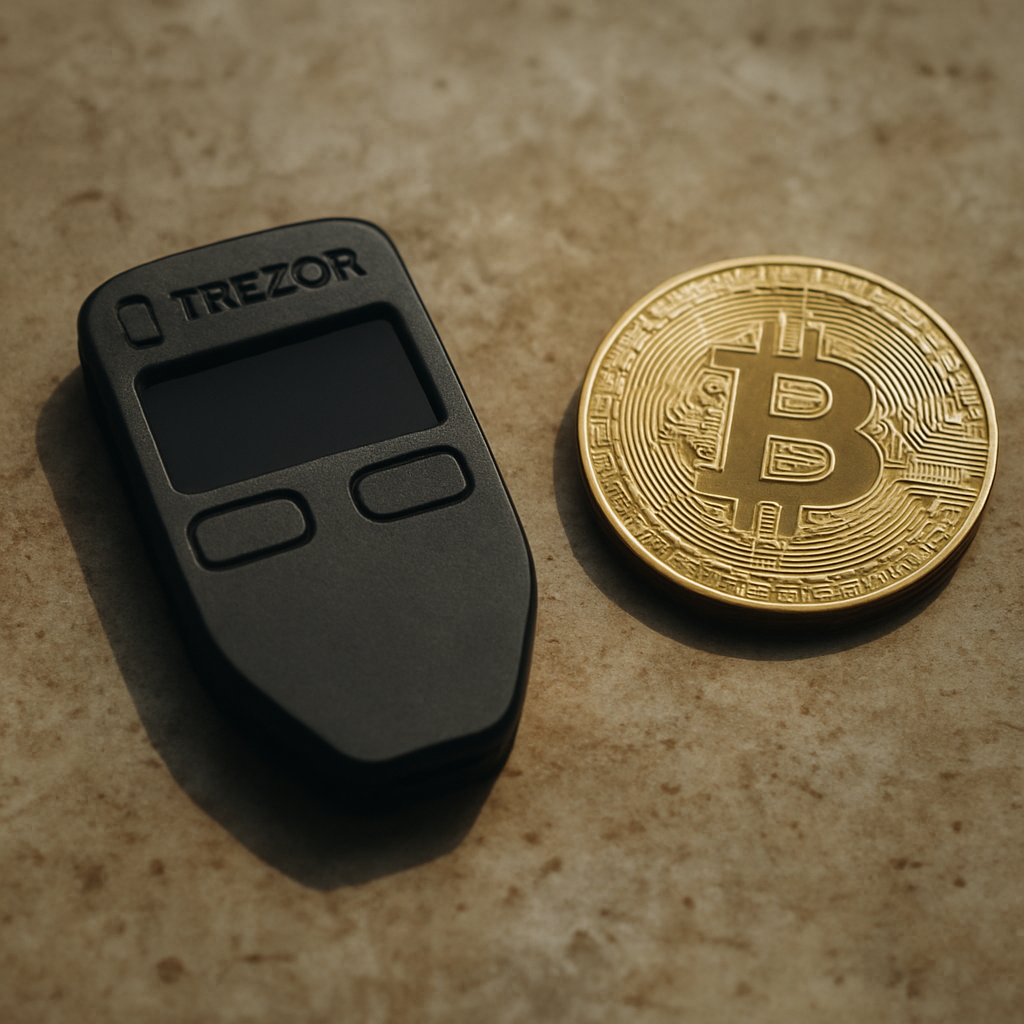
trezor usdt usdc yield expands with trezor morpho integration, adding stablecoin yield wallet access inside trezor suite defi.
Trezor USDT USDC yield is a small product shift with outsized implications. The real point here isn’t that Trezor now supports earning on stablecoins – it’s that the company has brought a once-friction-heavy DeFi action into the same interface where users already safeguard their private keys. That narrows the gap between custody and capital efficiency in a way few hardware wallet updates have managed. For years, these devices sold security first and opportunity second. Now the order is changing, and the more interesting question is whether users will treat this as mere convenience or as a quiet endorsement of on-chain yield inside a self-custody workflow.
The timing is not accidental. Stablecoin yield has migrated from niche DeFi behavior to a mainstream feature set, with wallets and custodians alike packaging access into unified dashboards. Trezor’s move follows a pattern already visible across the industry: users want exposure without the operational drag of separate apps, manual bridging, or repeated wallet approvals. That shift doesn’t make risk disappear – it only hides complexity behind a cleaner interface. For cautious users, Trezor USDT USDC yield will feel reassuringly familiar. For everyone else, it signals that the hardware wallet market is now competing on utility, not just storage.
Trezor’s latest Suite update places stablecoin yield positions directly in the Earn tab, which reveals something about the product’s direction: this is a vault evolving into a broader financial control panel. The immediate effect is practical. Users can review positions without leaving the wallet environment, and on some devices the feature appears in view-only mode, reducing the number of moving parts considerably. But it also centralizes user attention inside a branded interface. Trezor USDT USDC yield is less about introducing new yield logic than about making existing DeFi logic feel native – a distinction that matters. The same usability calculus is already reshaping institutional crypto adoption, where distribution often proves more decisive than protocol novelty.
The underlying rails point to Morpho, which has emerged as one of the cleaner examples of modular yield infrastructure spreading beyond specialist DeFi applications. The Trezor-Morpho integration matters because it lowers the activation energy for users who would never browse a standalone lending front end. As tracked by DeFi yield protocols, the market has steadily rewarded products that wrap yield inside familiar environments rather than asking users to assemble their own stack from scratch. That is the real context for Trezor USDT USDC yield: not a new asset class, but a new distribution model for an established one.
The market has long told itself that self-custody and DeFi belong in separate categories, but that story is becoming difficult to defend. Trezor USDT USDC yield suggests the boundary is collapsing into a single user journey – hold the keys, review the position, earn the yield, all without leaving the hardware wallet ecosystem. That is genuinely powerful, though it also encourages a subtler kind of risk-taking. Users may infer safety from the device itself, even though yield still depends on counterparty assumptions, market conditions, and protocol design. The real innovation isn’t the yield; it’s the packaging. For a useful parallel, consider crypto liquidity conditions, where distribution and balance-sheet behavior increasingly drive adoption rather than raw protocol performance.
In my view, that packaging is precisely why Trezor USDT USDC yield will matter more to product strategy than to yield hunters. Wallet brands understand that users extend trust to familiar interfaces far more readily than to unfamiliar protocol pages. That trust can accelerate adoption quickly, but it also compresses the distance between a custody tool and an investment product. Once that line blurs, support obligations, disclosures, and risk framing become core parts of the product – not afterthoughts. Trezor isn’t simply adding a feature; it’s deciding what kind of financial intermediary a hardware wallet is allowed to become.
For investors, Trezor USDT USDC yield should be read as a distribution story first and a yield story second. Hardware wallets are no longer purely about protection, and stablecoin yield is no longer confined to users willing to navigate DeFi manually. That broadens the addressable market for yield products substantially, but it also intensifies competition around trust, interface design, and risk disclosure. In practice, the winners will likely be platforms that can make yield feel simple without making it look risk-free – a distinction that will matter far more than the size of any advertised return.
The metrics worth watching are straightforward: whether Trezor moves beyond view-only access, whether additional stablecoins enter the mix, and whether competing wallet makers adopt the same playbook. If Trezor USDT USDC yield becomes a default expectation rather than a novelty, the next battleground shifts to fee capture, product transparency, and how clearly platforms communicate what users are actually taking on.
Focus: Trezor USDT USDC yield shows how custody products are becoming distribution layers for on-chain capital.
Lena Strauss, Regulation & Policy Reporter, The Chain Journal
A weekly briefing on Bitcoin price action, Ethereum, crypto market analysis, Bitcoin ETF flows, regulation, digital assets, and the narratives shaping crypto investing.
One sharp weekly read. No daily alerts. No recycled headlines.




