THE CHAIN JOURNAL
Independent Crypto Editorial

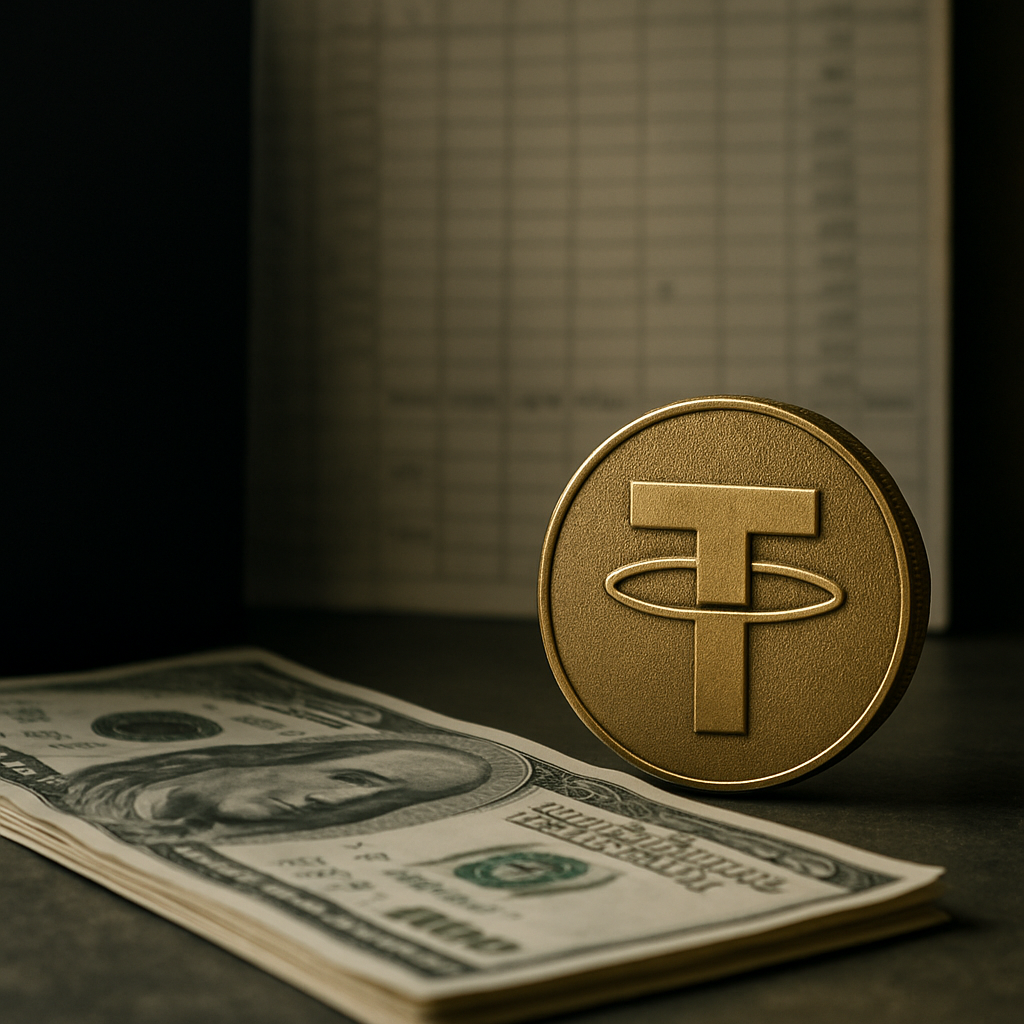
Tether freezes usdt again as BlockSec data tracks more blacklists, with usdt freeze tracker trends and tether blacklist usdt risks rising.
Tether freezes usdt more often now because the token sits at the center of on-chain liquidity and compliance pressure at the same time. BlockSec’s latest read on address activity suggests that more than $500 million moved into freeze status across 370 Ethereum and Tron addresses in a 30-day window, extending a 2025 total that exceeded $1.26 billion.
That is not a small operational footnote; it is a structural feature of how the largest stablecoin now functions. For traders, the signal is simple: tether freezes usdt when risk flags rise, and the market increasingly treats that capability as part of the asset’s design rather than an exception.
The deeper point is that USDT is no longer only a settlement rail. It is also a controlled liability on a public ledger, with blacklisting powers that can interrupt flows after the fact. That changes how desks, market makers, and compliance teams think about counterparty exposure.
It also means the usdt freeze tracker has become a useful proxy for enforcement intensity, not just a list of isolated incidents. As tracked by Tether stablecoin, USDT remains the reference asset for dollar liquidity across major chains.
Tether freezes usdt by blacklisting addresses so the tokens at those wallets stop moving, even though the chain itself keeps producing blocks normally. In practice, that means the freeze acts at the token layer, not the base network layer. The latest data points to a pattern that is broad rather than one-off, with enforcement spanning both Ethereum and Tron. The concentration matters because Tron has historically handled a large share of retail and cross-border USDT activity, while Ethereum remains important for institutional and exchange settlement.
A useful comparison is the wider compliance arc in 2025 and early 2026. Tether’s own public actions showed a steady escalation in coordinated freezes tied to illicit finance, sanctions screening, and law-enforcement requests. The same pattern helps explain why a tether blacklist usdt event now carries market relevance beyond the addresses involved. If a wallet is frozen, the immediate loss is access; the broader loss is predictability. That is why the tether freezes wallets mechanism has become a standing variable in risk models, not just an occasional headline.
Tether freezes usdt more aggressively today because stablecoin issuers face a different incentive structure than decentralized protocols. They need to preserve distribution, maintain exchange access, and demonstrate enforceable controls to regulators and banking partners. That makes freezing a policy tool, not merely a remedial action. In that sense, the market should stop treating these events as anomalies. They are evidence of a mature, centralized compliance stack operating inside a decentralized market architecture.
The numbers also suggest the scale is rising because usage is rising. When a token becomes the dominant working asset for trading, payments, and cross-border settlement, the surface area for illicit use rises too. That is why the usdt freeze tracker matters: it shows where enforcement is clustering and how quickly action follows suspicious movement.
For investors, the implication is not that USDT is unusable. It is that the tether blacklist usdt function is now part of the token’s risk premium, especially for funds moving through high-risk venues or thinly monitored corridors. That is a useful lens for anyone mapping stablecoin venue selection against operational risk. Investors who want a broader market context should also watch Stablecoin Regulation 2026, because policy and issuer behavior are now moving together.
Tether freezes usdt is becoming a predictable compliance variable, and markets should price it that way. For most users, the takeaway is not panic; it is segmentation. USDT still matters because it offers deep liquidity, but that same depth makes it a preferred instrument for both legitimate settlement and questionable flows. The result is a trade-off: more utility, but also more surveillance and more freeze risk. Investors who ignore that trade-off tend to overestimate the neutrality of stablecoin rails.
The next signals to watch are the pace of new freeze disclosures, the chain mix between Tron and Ethereum, and whether exchange desks start preferring alternative stablecoins for specific corridors. If tether freezes usdt keeps clustering around the same risk categories, market participants will adapt by tightening wallet screening, rebalancing venue exposure, and reducing duration in exposed addresses. The tether freezes usdt story is ultimately about infrastructure discipline, not drama.
Focus: tether freezes usdt now functions as a core stablecoin market signal, not an edge case.
Adam McCauley, Senior Blockchain Analyst, The Chain Journal
A weekly briefing on Bitcoin price action, Ethereum, crypto market analysis, Bitcoin ETF flows, regulation, digital assets, and the narratives shaping crypto investing.
One sharp weekly read. No daily alerts. No recycled headlines.




