THE CHAIN JOURNAL
Independent Crypto Editorial

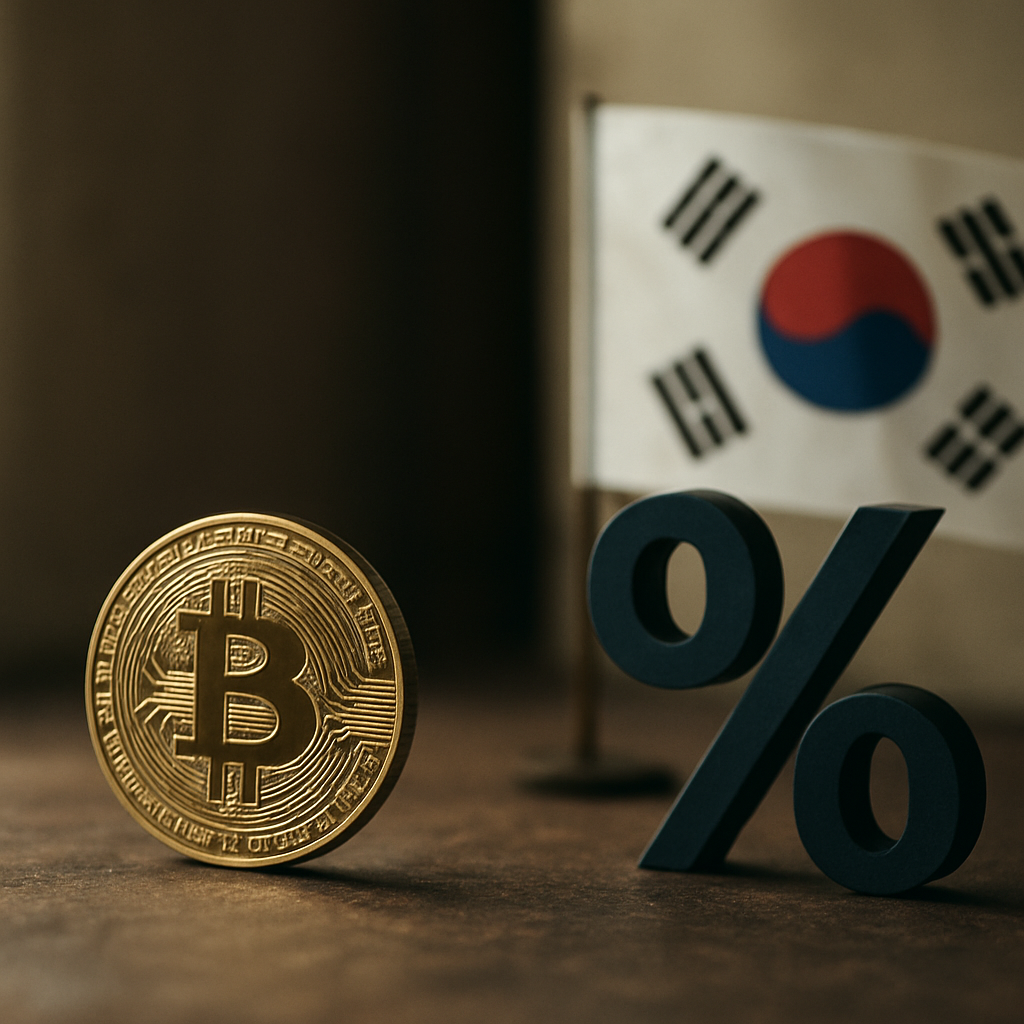
South Korea crypto tax 2027 is back on track. Here’s what south korea 22% crypto tax means for traders and timing.
South Korea crypto tax 2027 is no longer a theoretical policy date; it is becoming a planning input for traders, exchanges, and family offices that track Korean liquidity. The Finance Ministry’s reported confirmation matters because it reduces the probability of another last-minute deferral. That puts south korea 22% crypto tax back at the center of portfolio planning, especially for investors who trade actively and book frequent gains. The cleanest reading is simple: policymakers appear willing to let the tax arrive on schedule, even if parts of the market would prefer another extension.
The political significance is bigger than the rate itself. A tax regime that has been delayed repeatedly tends to distort behavior, because investors delay realization, shift activity offshore, or wait for legislative ambiguity to clear. South Korea crypto tax 2027 therefore acts as both a fiscal rule and a market-structure test. If implementation stays intact, it may also normalize crypto as a taxable asset class rather than a regulatory exception.
South Korea crypto tax 2027 refers to the planned levy on crypto gains that is expected to begin in January 2027. In practical terms, the reported framework keeps the headline rate at 22%, which includes the local component. That is high enough to influence trading behavior, but not so high that it would halt participation. For many market participants, the issue is not just the rate; it is how realized gains are measured, reported, and enforced.
The broader context is that South Korea has a history of postponing crypto taxation, which made the policy appear negotiable. That perception can change fast once a final date feels credible. For more background on how crypto taxation sits inside the broader regulatory matrix, readers can revisit crypto regulation news 2026. A rule that was once discussed in abstract terms now has a calendar attached, and that changes trader expectations immediately.
The real market question is not whether South Korea crypto gains tax january 2027 will exist in theory, but how it will change behavior at the margin. If the tax starts as scheduled, some traders will likely compress activity into tax-efficient windows, while others may move part of their execution to venues with clearer reporting footprints. That does not necessarily reduce overall participation, but it can change the composition of flows.
This is where the policy should be read alongside the structure of the market. Korea remains one of the more sophisticated retail crypto arenas in Asia, with deep interest in liquid majors and fast sentiment shifts. As tracked by crypto tax regulation, the data shows that compliance-driven rules often reshape timing first and volume later. In that sense, South Korea crypto tax 2027 is less about a one-time fiscal hit and more about a new behavioral baseline. It also interacts with broader investor caution, including the kind of rotation dynamics often discussed in crypto market sentiment.
Tax is usually only one part of the story. In markets where rule changes arrive after years of delay, the bigger effect is credibility. Once investors believe a policy will actually begin on the announced date, they start pricing it into position sizing, holding periods, and exchange selection. South Korea crypto tax 2027 may therefore matter as much for expectations as for revenue.
The strongest argument against overreacting is that markets adapt. Investors do not stop trading because a tax exists; they adjust structure. That means the early effects of South Korea crypto tax 2027 are likely to show up in reporting behavior, holding periods, and realized-profit timing before they show up in headline turnover. That is a more modest but more durable shift than a panic narrative would suggest.
There is also a policy-design issue. If the government wants the system to function, it needs clear definitions, simple reporting, and enforcement that does not create avoidable friction for legitimate users. The more complex the regime, the more likely it is to produce compliance gaps rather than clean collection. Readers comparing this to broader global standards can look at stablecoin regulation 2026 for a sense of how governments are moving from abstract oversight to operational rules. South Korea crypto tax 2027 may follow the same pattern: less rhetoric, more administration.
South Korea crypto tax 2027 should be treated as a scheduling event with portfolio consequences, not just a policy headline. The first 2 sentences matter because they tell investors where friction will appear: in realized gains, turnover, and timing discipline. For active traders, the likely response is to review cost basis tracking now, not after the rule is live. For longer-term holders, the key issue is whether the tax changes the attractiveness of local execution versus offshore alternatives.
The next checkpoint is administrative, not ideological. Watch for detailed implementation guidance, reporting mechanics, and whether exchanges are prepared to support the transition. South Korea crypto tax 2027 becomes truly market-relevant when compliance stops being a debate and starts being an operational workflow. If that happens on time, the market will adapt quickly.
Focus: South korea crypto tax 2027 is a credibility test for policy enforcement, not just a tax rate.
Lena Strauss, Regulation & Policy Reporter, The Chain Journal
A weekly briefing on Bitcoin price action, Ethereum, crypto market analysis, Bitcoin ETF flows, regulation, digital assets, and the narratives shaping crypto investing.
One sharp weekly read. No daily alerts. No recycled headlines.




