THE CHAIN JOURNAL
Independent Crypto Editorial

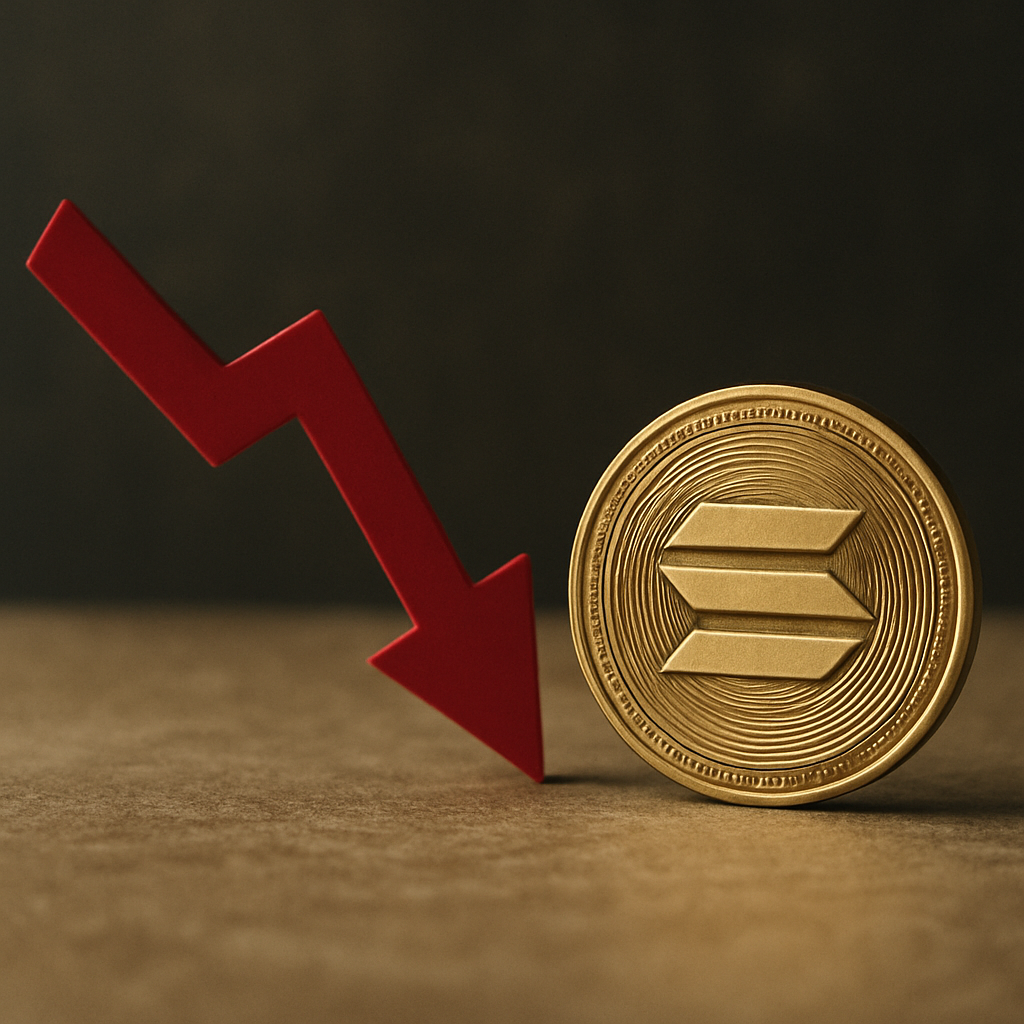
solana price analysis shows solana funding rate weakness, with solana futures signaling more downside as solana bearish sentiment builds.
The latest solana price analysis starts with a simple but uncomfortable fact: the solana funding rate has turned negative, and that typically means shorts are now the more crowded side of the trade. In practical terms, solana price analysis is no longer just about support levels on a chart – it is also about whether traders still believe the dip is worth buying. When funding moves below zero, the market is signaling that leverage has shifted, conviction has thinned, and sellers are willing to pay to stay positioned. That is not a healthy backdrop for an asset trying to defend a lower range. The question is whether this is a temporary flush or the opening act of a deeper repricing.
What makes the current setup particularly significant is that solana futures have been trading against a softer spot backdrop, not alongside a strong bid. Negative funding does not automatically mean panic, but it does mean the market has stopped rewarding aggressive longs. For a chain whose recent cycle was built on vibrant on-chain activity and speculative throughput, that distinction matters. In solana price analysis, the funding tape often reveals as much as the price tape – sometimes more – because it shows where pressure is building before the chart confirms it. Right now, that pressure looks defensive rather than opportunistic.
For solana price analysis, the market’s attention is naturally gravitating toward the $78 area – that is where buyers have previously shown some resolve and where the current range could begin to fracture if momentum deteriorates further. Recent derivatives data paint a weaker tone across solana futures, while broader ecosystem reports point to cooling trading intensity following the earlier memecoin-driven surge. One recent update put Solana’s Q1 DEX volume at roughly $284.5 billion – still an enormous figure, but measurably lower than the prior quarter. That matters because a token with weakening speculative throughput typically needs cleaner spot demand to stabilize. When that demand fades, solana price analysis shifts from a story about excitement to one about liquidity discipline.
The derivatives market tells a similar story. Negative funding on perpetuals means shorts are paying longs – a condition that tends to emerge when traders anticipate continued weakness or want to maintain hedges. Crucially, that condition can persist far longer than bulls expect. The market can stay bearish without fully capitulating, which is precisely why solana bearish sentiment deserves genuine respect rather than reflexive dismissal. On-chain usage has not disappeared, but the marginal buyer seems increasingly reluctant to chase price higher. In solana price analysis, that combination tends to produce a slow, grinding decline rather than a sharp, decisive break.
Negative funding is not a forecast in itself – it is a signal about positioning. In solana price analysis, the central question is whether that positioning reflects justified caution or excessive pessimism. The honest answer is probably somewhere between the two. Solana still commands scale, liquidity, and a substantial user base, but the market’s emotional center of gravity has shifted. The earlier trade had a clean logic: rising activity, rising fees, and a reflexive bid from momentum players. The current trade is more brittle. The ecosystem still functions, but the market is no longer willing to assume every dip will attract fresh speculative capital – and that is a meaningful change in character.
There is also a second-order effect that many traders underestimate. Once solana futures turn structurally weak, spot investors tend to wait for confirmation rather than stepping in early. That hesitation alone can deepen declines even when the underlying network remains active. In that sense, solana price analysis is partly a story about reflexivity: weaker derivatives conditions erode confidence, and lower confidence suppresses spot demand. For a broader read on positioning and crowding, the derivatives dashboard at funding rates derivatives is a useful reference, but the real lesson is simpler – when the market begins pricing in disappointment, it usually does so well before the narrative catches up.
The stronger version of the bearish case is not that Solana has stopped working. It is that the market may have overpaid for its growth narrative. Earlier in the cycle, the buzz around token launches, DEX activity, and ecosystem velocity made SOL feel like the cleanest high-beta expression of crypto risk appetite. But solana price analysis now has to separate temporary enthusiasm from durable demand. When activity cools while leverage remains elevated, price becomes vulnerable to air pockets – and that is precisely where charts can move faster than theses. In this context, the negative solana funding rate looks less like a technical footnote and more like a warning that the market is in the middle of a genuine recalibration.
A useful framework is to think in three layers:
– Spot demand: Is real buying replacing speculative turnover?
– Derivatives stance: Are traders paying to stay long, or are they leaning short?
– Ecosystem breadth: Are volumes and application use broadening beyond the hot trade?
Solana still scores well on infrastructure and liquidity, but the market is clearly demanding more proof on all three fronts. A helpful reference point comes from the broader thesis around Solana’s long-term investment case: strong networks can still become weak trades when the marginal buyer disappears. That is why solana price analysis should not conflate durability with immediacy. A resilient chain can still carry a fragile token price.
For investors, solana price analysis argues for discipline over drama. A negative solana funding rate does not guarantee a collapse, but it does signal that the market is no longer leaning comfortably in SOL’s direction. If solana futures remain weak while spot fails to absorb supply, the probability of a test at lower support levels rises meaningfully. If buyers do reclaim momentum, however, the overhang of negative funding can quickly become rocket fuel for a short squeeze. Until one of those scenarios plays out, the burden of proof sits firmly with the bulls.
Three things are worth watching closely: spot volume, open interest, and whether solana bearish sentiment begins fading as funding normalizes. If price loses the current range while funding stays negative, the market is likely still in the process of repricing risk rather than finishing it. If the opposite unfolds, this could shape up as a classic crowded-short reset – painful for late bears, rewarding for patient buyers.
Focus: solana price analysis now reflects a market trading less on faith and more on proof.
Antonio Quinn, Director & Lead Bitcoin Analyst, The Chain Journal
A weekly briefing on Bitcoin price action, Ethereum, crypto market analysis, Bitcoin ETF flows, regulation, digital assets, and the narratives shaping crypto investing.
One sharp weekly read. No daily alerts. No recycled headlines.