THE CHAIN JOURNAL
Independent Crypto Editorial

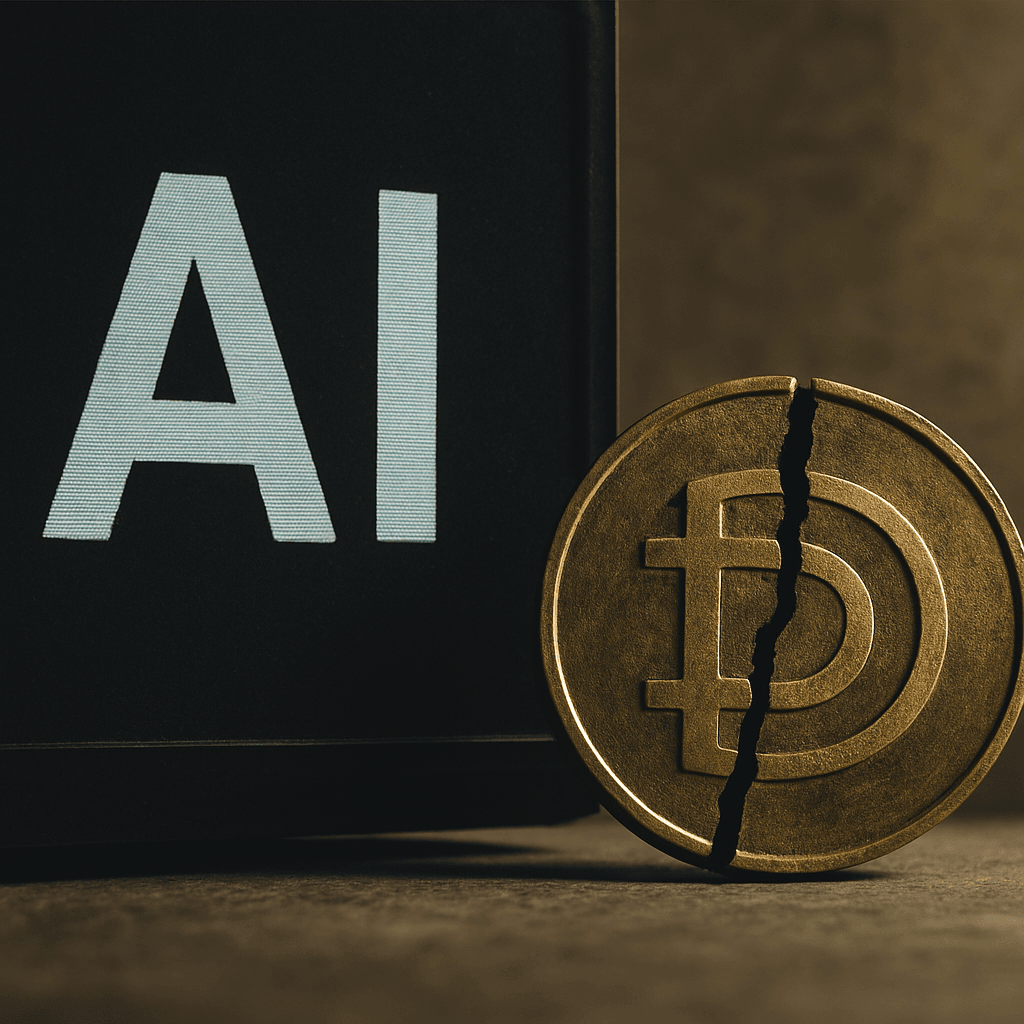
deFi hack risks look less apocalyptic in 2026, with ai crypto hacks easing and defi security news pointing to lower median losses.
deFi hack risks are still real, but the numbers now look less like a collapse and more like a maturing market learning – slowly and unevenly – how to absorb damage. The latest industry data shows total value stolen and median hack size both declining versus 2025, which undercuts the narrative that AI has unleashed some sudden DeFi catastrophe. That does not mean attackers have disappeared. It means the market may be seeing fewer broad, opportunistic incidents and more selective, high-conviction strikes. In practice, ai crypto hacks became a dominant narrative well before they became a mass outcome.
What matters is not whether hacks exist, but where the losses concentrate. The danger has migrated beyond simple smart-contract bugs into compromised keys, privileged access, front-end vulnerabilities, and social engineering. That shift shows up clearly in recent incidents and helps explain why headline trends can improve even as individual losses remain severe.
DeFi’s security debate has therefore changed shape. The market is no longer asking only whether code has been audited. It is asking whether the humans, keys, and operational controls surrounding that code can survive contact with a determined attacker. That is precisely where crypto hack analysis now does its most valuable work.
Recent reporting paints a more nuanced picture than the “hackpocalypse” framing suggests. Public hack trackers show a busy 2026, but they also show the distribution of losses has narrowed compared with the prior year. One large incident can still distort aggregate totals, yet median loss size matters more, because it reveals what a typical attack looks like far more honestly than any single outlier does. In that sense, market fear around defi security news has consistently outpaced the actual trend.
A useful reference point is DeFiLlama’s live hack dashboard, which tracks cumulative losses and recent incidents across the sector. As tracked by DeFi protocols security, the data shows attacks still clustering around protocol logic, bridges, and infrastructure rather than around some futuristic AI-exclusive exploit class. That is a meaningful detail: attackers are largely exploiting familiar weaknesses with sharper tooling, not engineering entirely novel ones.
The broader takeaway is that AI may be improving attacker efficiency at the margins, but it has not rewritten the underlying economics of DeFi exploits. Protocols that already suffered from weak access control, poor key management, or thin operational monitoring remain exposed. Better tooling does not fix structural fragility – it just helps attackers locate it faster.
The most dangerous assumption circulating in the market is that greater automation should produce dramatically worse losses. It sounds plausible, but it ignores how defenders adapt. Over time, projects have strengthened monitoring, tightened permissions, and built faster incident-response pipelines. The result is not perfect safety; it is a more selective battlefield. deFi hack risks therefore resemble a shifting pressure system less than an oncoming flood, moving from one weak point to the next rather than overwhelming the ecosystem at once.
There is also a meaningful second-order effect at play. As protocols harden their code, attackers increasingly target the operational perimeter – governance processes, cloud infrastructure, and human approval chains. That makes the threat considerably harder to model with traditional smart-contract checklists. It also means the market should be less impressed by audit counts and more focused on who can actually move funds, who holds pause authority, and how quickly abnormal activity gets flagged and contained. Put plainly, ai crypto hacks represent only one piece of a much larger control problem.
For a wider frame on how risk flows through on-chain activity, see on-chain transparency in crypto. The lesson is straightforward: public ledgers make exploitation visible faster, but visibility is not the same as prevention. It can limit damage after an event – it cannot substitute for rigorous controls before one.
deFi hack risks remain part of the cost of participating in open financial systems, but the latest data suggests the market is not entering an AI-fueled disaster phase. What is emerging instead is a more selective risk regime, one where the weakest operational links matter most. For investors, the right question is no longer whether a protocol has been hacked before – it is whether that protocol can defend its keys, governance, and admin pathways when genuine pressure arrives. The best projects will look boring in exactly the right ways.
Watch for shifts in median loss size, repeat incidents within the same protocol category, and whether teams disclose recovery steps promptly after an event. Pay attention to the quality of permissions, pause mechanisms, and treasury controls as well. Those signals tend to tell you far more than any marketing copy, and they will stay central to defi security news as the market continues testing how much risk it can actually price in.
Focus: deFi hack risks are easing at the margin, but the real story is that attackers are increasingly choosing softer human and operational targets.
Lena Strauss, Regulation & Policy Reporter, The Chain Journal
A weekly briefing on Bitcoin price action, Ethereum, crypto market analysis, Bitcoin ETF flows, regulation, digital assets, and the narratives shaping crypto investing.
One sharp weekly read. No daily alerts. No recycled headlines.




