THE CHAIN JOURNAL
Independent Crypto Editorial

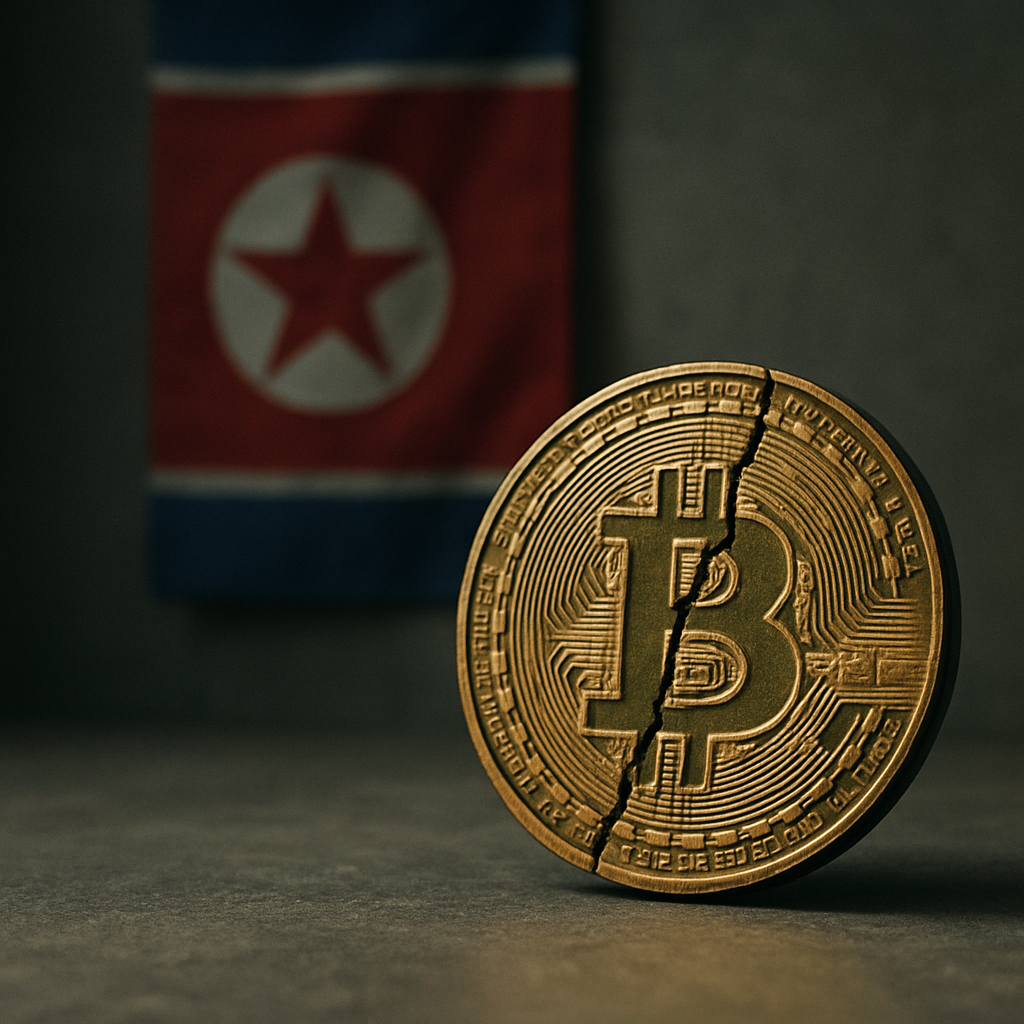
Crypto theft north korea hits new scale as north korea crypto hacks intensify and crypto laundering tightens around the CertiK report.
Crypto theft north korea is no longer best understood as isolated cybercrime. It now looks more like an industrial process: identify a weak point, move funds fast, fragment the trail, and push value through layers of laundering before anyone can freeze it. The scale matters. Roughly $2.06 billion of $3.4 billion in 2025 crypto hacks was linked to North Korea, according to the latest certik report.
That is not a marginal share – it is market-dominating behavior. The real signal is not just the size of the theft but the consistency of the pipeline behind it. When a state-linked actor can repeatedly extract and move capital at that scale, the crypto market is facing an enforcement problem, not merely a security one.
The deeper issue is behavioral adaptation. North korea crypto hacks have moved well beyond obvious phishing emails and simple wallet drains toward social engineering, contractor compromise, and even physical infiltration. Each step raises the cost of defense and lowers the odds of rapid recovery. Exchanges can patch software. They cannot easily patch human trust, offline access, or supply-chain exposure. In that sense, crypto theft north korea has evolved into a hybrid threat model – somewhere between cybercrime and intelligence-style operations – which makes standard compliance playbooks considerably less effective than many operators would like to admit.
The 2025 numbers reveal just how concentrated the damage has become. Roughly 60% of total crypto losses during the year can be traced to North Korean activity, even as the broader market still shed approximately $3.4 billion to hacks and theft combined. That concentration changes how risk should be priced. The market is not contending with random noise; it is dealing with a repeat offender that appears to optimize relentlessly for scale, speed, and laundering efficiency. The line between theft and laundering keeps narrowing too. Once funds disperse across multiple wallets and mixing services, recovery odds fall sharply – especially when the critical first hours after an exploit are squandered.
The policy context compounds the pressure. Warning signals are now arriving from both directions: security firms flagging operational weakness and law enforcement sounding the alarm on state-backed monetization. The most useful comparison here is not old-school exchange hacking but organized financial crime running on digital rails. For readers who want to understand the mechanics, the best starting point remains cryptocurrency transparency on-chain, because the ledger records movement even when the identities behind it stay obscured. Crypto theft north korea thrives precisely where that visibility ends and execution begins.
The dominant narrative says crypto crime persists because the industry is immature. That is only part of the story. The more uncomfortable reality is that many platforms still prioritize speed and user growth over resilience – a gap that is especially visible in custody design, identity verification, and treasury controls. In practice, attackers rarely need to break every layer. They need one weak operator, one rushed vendor, one compromised credential. That is why the scale of loss has outgrown the old language of “hack.” What we are looking at is a repeated extraction model that actively adapts to defenses as they are built.
There is also a geopolitical dimension that investors consistently underweight. North Korea crypto hacks are not purely motivated by greed; they are about sanctioned-state financing. That makes the incentives durable, even after individual tactics get burned. A more advanced defense stack needs to combine internal controls with external monitoring from the outset rather than bolting them on after incidents occur. For a useful framework on tracing illicit flows, see blockchain forensics compliance. The lesson from crypto theft north korea is blunt: the adversary does not need to be brilliant every day, only persistent enough to exploit the market’s weakest operational link.
Crypto theft north korea deserves to be treated as a structural risk premium, not a fleeting headline risk. If the 2025 data holds, the market must price in a world where a single state-linked cluster can account for a dominant share of annual losses while continuously refining its methods. That reality touches exchange valuations, custody providers, stablecoin infrastructure, and any treasury strategy that treats operational risk as a secondary concern. The investment consequence is straightforward: security quality now shapes counterparty quality. In crypto, those two questions are becoming inseparable.
Three signals are worth watching closely over the months ahead – faster fund-freezing coordination across jurisdictions, stricter exchange-level controls on address screening, and whether the next major incident originates from a wallet compromise rather than a contract exploit. If the attack surface continues migrating toward people and process, crypto theft north korea will keep eroding the sector’s trust premium, quietly and efficiently.
Focus: crypto theft north korea is now a compliance and market-structure problem, not just a cybersecurity problem.
Lena Strauss, Regulation & Policy Reporter, The Chain Journal
A weekly briefing on Bitcoin price action, Ethereum, crypto market analysis, Bitcoin ETF flows, regulation, digital assets, and the narratives shaping crypto investing.
One sharp weekly read. No daily alerts. No recycled headlines.




