THE CHAIN JOURNAL
Independent Crypto Editorial

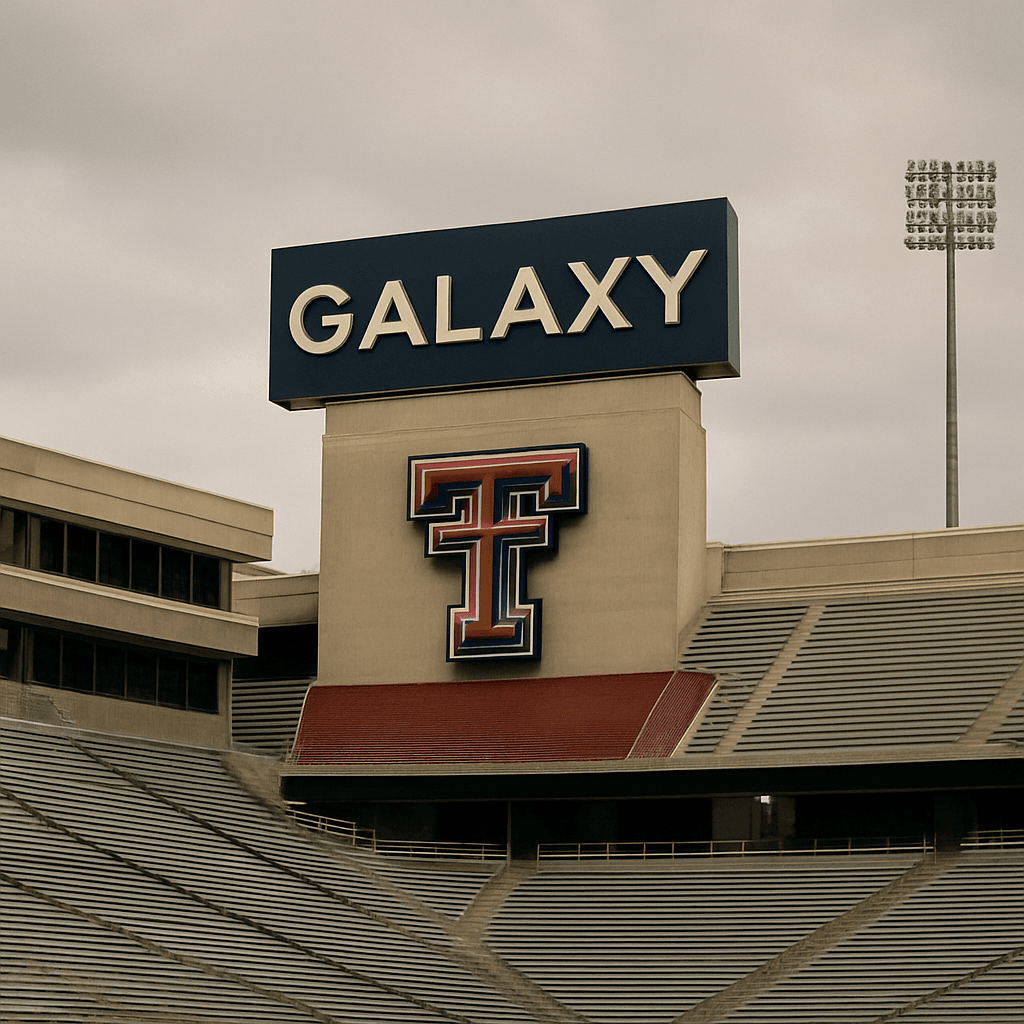
Crypto stadium naming rights enter a new phase as Galaxy Digital stadium deal expands Texas Tech ties and resets sponsor expectations.
Crypto stadium naming rights are no longer a speculative side story – they are becoming part of how digital asset firms buy visibility in the real economy. Galaxy Digital’s 15-year agreement with Texas Tech pushes that trend into a more traditional, and far more scrutinized, setting. The deal reportedly kicks off with the 2026 season and will rename the football venue Galaxy Stadium, binding a crypto-native brand to one of the most recognizable institutions in West Texas. For investors, the signal is less about a sign on a building than about the growing willingness of crypto firms to spend on durable, mainstream brand infrastructure. That matters because crypto stadium naming rights tend to reflect confidence in cash flow – not just confidence in narrative.
The broader context is equally important. Galaxy has spent years building a substantial presence in West Texas through data-center and energy-related assets, so the sponsorship doesn’t exist in a vacuum. It fits a clear pattern: firms that were born in digital assets now want physical anchors, local partnerships and reputational ballast. In that sense, crypto stadium naming rights function as a marketing expense, yes – but also as a strategic declaration. They say a company wants to be seen less as a trading vehicle and more as an operating business with genuine regional roots, particularly in a state that has emerged as a critical hub for crypto, power and infrastructure investment.
The headline numbers are hard to ignore. Reports point to a 15-year term valued at roughly $75 million, placing the agreement firmly in the top tier of college sports sponsorships. Texas Tech is also extending the partnership well beyond the stadium itself, with broader athletic and digital exposure likely to deepen the sponsor’s reach across football and basketball. That transforms the transaction from a vanity placement into a recurring media and brand channel. For a company that has worked to position itself at the intersection of digital assets and infrastructure, crypto stadium naming rights offer a different kind of balance sheet asset – one measured in attention and legitimacy rather than coins.
This is where the local backdrop becomes meaningful. West Texas has already established itself as a strategic zone for energy-intensive digital infrastructure, and Galaxy’s existing footprint there lends the sponsorship a plausible industrial logic. The company isn’t simply buying a nameplate; it’s reinforcing a regional story that connects power, land, compute and capital. That’s precisely why the Galaxy Digital stadium deal feels more durable than a short-lived promotional splash. It also helps explain why strong ETF inflows this quarter matter for market psychology: when the sector looks better capitalized, companies grow more willing to spend on long-horizon brand building. As tracked by Crypto market news, market confidence often travels faster than the fundamentals beneath it.
The dominant narrative frames sponsorships like this as pure marketing. That reading is too narrow. Crypto stadium naming rights also reveal which companies believe the industry can survive scrutiny, cycle risk and political noise long enough to make 15-year commitments feel rational. That is a far more demanding test than launching a campaign or posting a strong quarterly headline. It asks whether management teams genuinely expect their businesses to still be around – visible, funded and culturally acceptable – beyond a single market cycle. Viewed that way, the real story isn’t enthusiasm; it’s endurance. The companies making these bets are signaling that they want their brands to look boring in the best possible sense: stable, embedded and built to last.
The structural impact may ultimately be bigger than the sports angle suggests. When a crypto firm secures a naming-rights asset at a major university, it moves meaningfully closer to normal corporate sponsorship behavior. That can encourage rivals to follow, particularly those with treasury strength, public-market access or adjacent infrastructure businesses. It also creates a feedback loop touching recruiting, alumni visibility and donor perception. For Galaxy, the sponsorship reinforces the same Texas narrative running through its infrastructure strategy and data-center expansion – a connection that is anything but accidental. It suggests that crypto stadium naming rights are becoming shorthand for a broader thesis: crypto capital is increasingly buying permanence, not just optionality. For a deeper read on that institutional shift, see institutional crypto adoption.
Crypto stadium naming rights should be read as a confidence indicator, though not as a direct valuation catalyst. In the near term, the Galaxy Digital stadium deal tells investors that at least some crypto-linked companies now see enough stability in their business mix to commit capital to long-duration brand assets. That doesn’t eliminate execution risk. It does, however, point to a firmer institutional mindset than the sector typically gets credit for. If the market rewards balance-sheet discipline and visible operating scale, deals like this can help separate credible operators from pure narrative trades. Crypto stadium naming rights matter because they reveal which companies are betting the next cycle will last – and that it will be worth showing up for.
What to watch next is straightforward: whether the sponsorship expands into athlete partnerships, whether Texas Tech treats the deal as a platform rather than a one-off, and whether other firms in digital assets or infrastructure start copying the model. If more colleges sign similar agreements, the category may graduate from novelty to standard practice. If not, this remains a smart but isolated brand bet – one tightly tied to a single company’s Texas strategy.
Focus: Crypto stadium naming rights are becoming a test of whether digital-asset firms can behave like long-term industrial sponsors, not just trading narratives.
Antonio Quinn, Director & Lead Bitcoin Analyst, The Chain Journal
A weekly briefing on Bitcoin price action, Ethereum, crypto market analysis, Bitcoin ETF flows, regulation, digital assets, and the narratives shaping crypto investing.
One sharp weekly read. No daily alerts. No recycled headlines.