THE CHAIN JOURNAL
Independent Crypto Editorial

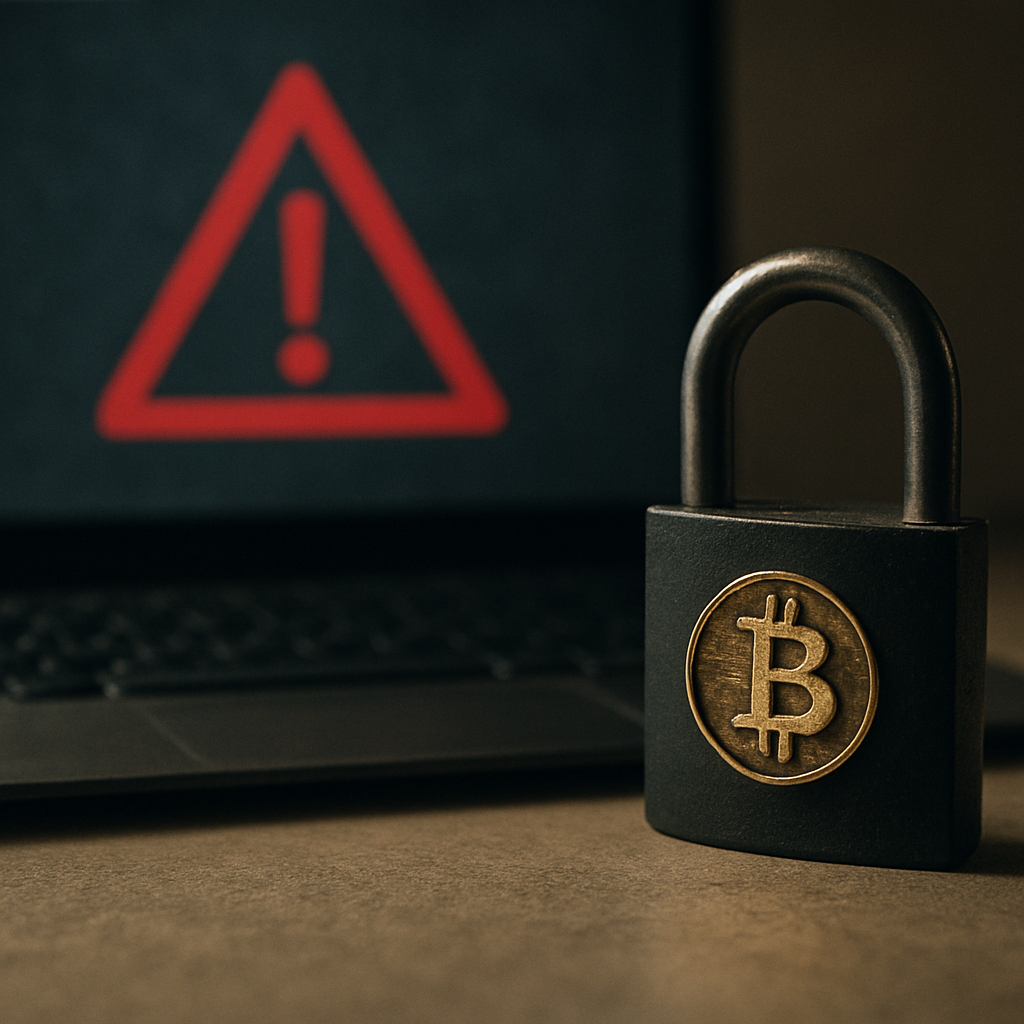
Crypto security news from Binance shows AI-powered security blocked $10.53B in losses, sharpening binance fraud prevention against crypto scams.
Crypto security news around Binance now reads less like a routine exchange update and more like a case study in how thoroughly fraud has industrialised. The company reports that its AI-powered security controls helped prevent more than $10.53 billion in user losses between 2025 and March 2026, while blacklisting roughly 36,000 malicious addresses in the same period.
That scale matters. Crypto scams have moved well beyond obvious phishing into layered combinations of impersonation, payment spoofing and social engineering – attacks that can land before a user has any idea something is wrong. In that environment, crypto security news is no longer a story about a single breach or a single recovery. It is about whether the first line of defence can keep pace with attacks that are now automated, adaptive and distributed across dozens of vectors simultaneously.
What stands out is not only the headline number but the logic behind it. Binance says more than half of its fraud controls now rely on AI, which suggests the exchange is treating abuse detection as core infrastructure rather than a back-office overlay. That is a rational response to a market where scams scale faster than any human review team can follow.
Broader industry data reinforce the point: crypto fraud remains a large, persistent revenue stream for organised criminals, not a fringe nuisance. For anyone tracking crypto security news, the central question is whether other venues can match that pace without generating so much friction that legitimate users start absorbing the cost.
Binance fraud prevention appears to combine address screening, behavioural scoring and real-time pattern recognition into a unified detection layer. The exchange says it intercepted 22.9 million scam and phishing attempts in the first quarter of 2026 alone – a figure that captures both the volume of incoming attacks and the degree of automation required to process them.
That is consistent with a broader shift visible across crypto security news: bad actors no longer need to succeed account by account when they can push millions of low-cost attempts through messaging apps, email and payment rails simultaneously. In that context, the raw count of blocked addresses matters less than the system’s ability to identify suspicious flows quickly enough to stop funds from leaving the platform.
Zooming out makes the data more credible, not less. Independent crime research estimates that roughly $17 billion was stolen through crypto scams and fraud in 2025, with AI-enabled schemes proving far more profitable than traditional approaches.
That backdrop explains why exchanges are leaning heavily into machine learning, and why Binance fraud prevention is now framed as a core business priority rather than a reputational afterthought. The industry has entered a phase where underinvesting in controls can cost more than building them. For anyone following crypto security news, that structural shift is the more important signal than any single statistic Binance chooses to publish.
The uncomfortable truth buried in crypto security news is that the fraud problem has become a product problem. When scammers can clone support-agent voices, fabricate payment confirmations and run personalised deception campaigns at industrial scale, manual review will always arrive too late.
AI can help close that gap, but it is not a magic shield – it only performs when exchanges also tighten permissions, strengthen identity verification and connect on-chain intelligence with off-chain behaviour. In that respect, Binance’s approach looks like an attempt to compress response time rather than eliminate risk entirely. The real advantage is speed: flag a suspicious transaction before settlement and the loss never fully crystallises.
That dynamic also helps explain why industry risk has shifted from isolated user mistakes to co-ordinated campaigns. As tracked by blockchain forensics compliance firms, scam operations increasingly blend technical compromise with psychological persuasion, making them far harder to stop with static rule sets. This is precisely where the market narrative tends to go wrong. Investors often treat security spending as defensive overhead, but in practice it can become a trust premium – a demonstrable edge for exchanges that can show lower loss rates, faster interdiction and stronger customer retention. Crypto security news, read carefully, is also a story about competitive positioning in an increasingly institutional market.
For investors, crypto security news deserves to be read as a balance-sheet issue, not a PR line. Binance’s figures suggest that AI-powered security can meaningfully reduce expected losses at scale, and that matters because trust is one of the few durable moats available to centralised exchanges. If the company can keep user losses contained while scammers intensify their tactics, it strengthens the case for deep investment in prevention over the cheaper alternative of reimbursing victims after the fact.
The more probing question is whether those gains hold as attackers adapt and detection systems grow noisier. Binance fraud prevention may look formidable today, but its real resilience will only be tested when scam operators start targeting the controls themselves rather than the users behind them.
The indicators worth watching are straightforward: quarterly figures for blocked attempts, the trajectory of blacklisted addresses and any disclosures about emerging fraud typologies. If crypto scams keep rising in volume while losses hold flat, the control stack is working. If losses begin to outpace intercepted attempts, the market should take that as a signal that the fraud environment has outrun the defences. Either way, crypto security news has become a material indicator of exchange quality – not a side note, but a metric that belongs in any serious assessment of operational risk.
Focus: crypto security news is becoming a measure of operating quality, not just incident response.
Arianna Vaz, Portfolio Strategy Analyst, The Chain Journal
A weekly briefing on Bitcoin price action, Ethereum, crypto market analysis, Bitcoin ETF flows, regulation, digital assets, and the narratives shaping crypto investing.
One sharp weekly read. No daily alerts. No recycled headlines.