THE CHAIN JOURNAL
Independent Crypto Editorial

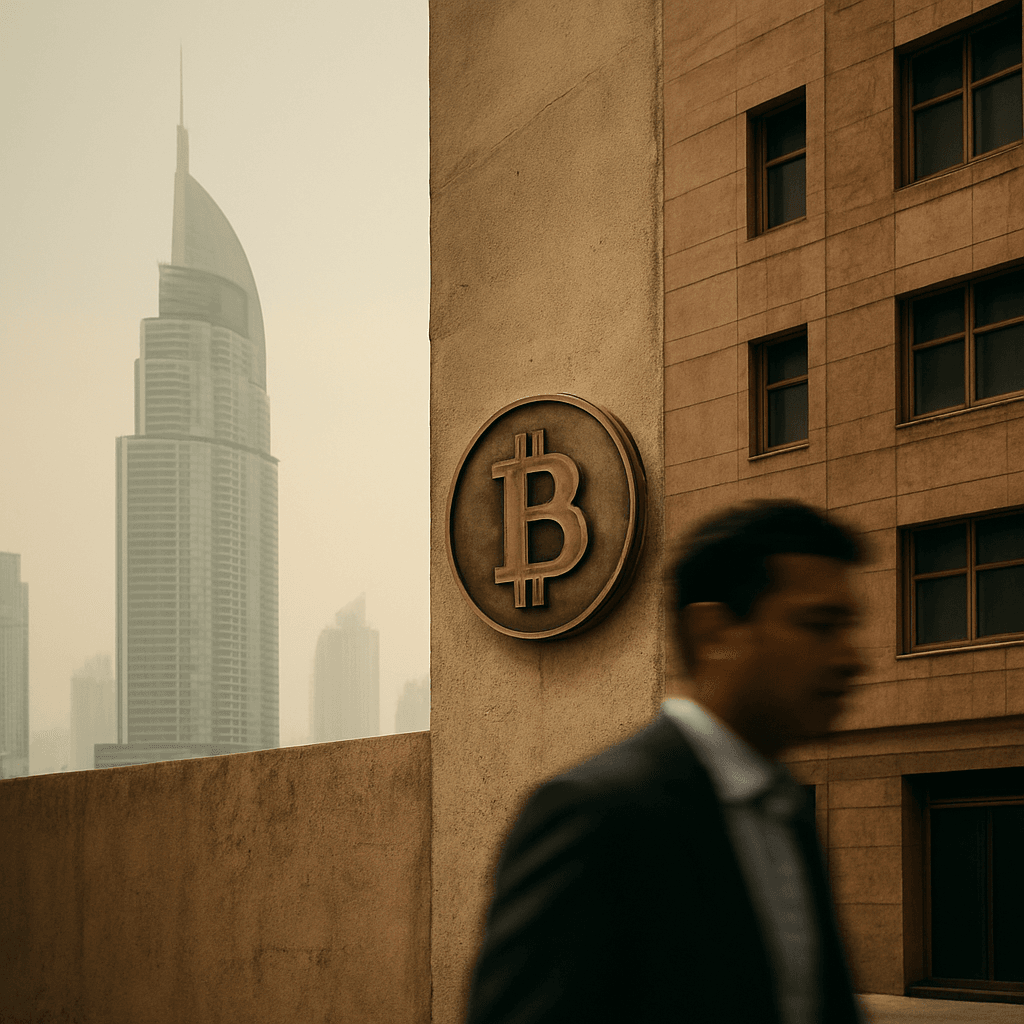
Crypto regulatory update explains why Dubai is gaining ground as a Dubai crypto hub while India crypto banks face tighter ring-fencing.
Crypto regulatory update in Asia is no longer a single story of liberalisation or crackdown. It is becoming a map of sharply different state choices, and the latest signal is clear: Dubai keeps winning the jurisdictional race while India keeps its banks at arm’s length from private tokens. In practice, that means capital, talent, and trading infrastructure are drifting toward places that offer clearer rules, even if those rules stop well short of complete freedom. The result is a market that rewards compliance-ready operators and punishes ambiguity. For investors, the message is straightforward – the policy premium is now a real part of valuation, and crypto regulatory update narratives carry as much weight as liquidity cycles.
Dubai’s rise is not accidental. The emirate has spent years building a framework where licensing, supervision, and enforcement all sit within the same coherent story, which is precisely why the Dubai crypto hub label now carries more substance than branding. That matters because institutional crypto does not follow vague rules; it follows predictable onboarding, assessable counterparty risk, and legible legal status. India, by contrast, is still choosing containment over integration. That divergence will shape regional flows for years to come. What looks like a regional crypto regulatory update on the surface is, in fact, a contest between two competing regulatory operating systems.
Dubai’s latest advantage comes from execution, not rhetoric. The local regulator’s register keeps expanding, giving market participants something measurable: a visible licensing path, a defined enforcement perimeter, and a market structure capable of supporting exchanges, brokers, custodians, and tokenisation firms without forcing any of them into grey-zone improvisation. The broader Gulf context reinforces this advantage – Dubai now sits inside a regional architecture that is considerably more open to regulated digital-asset activity than most Asian peers. That makes the emirate look less like a speculative outpost and more like a serious financial relay point. For anyone tracking crypto regulatory update trends, that distinction separates a promotional slogan from a durable business model.
India’s trajectory runs almost in the opposite direction. The central bank’s latest policy tone is to keep regulated lenders and financial institutions insulated from crypto exposure, even as trading activity persists outside the banking core. That stance does not eliminate demand; it simply routes it through less efficient channels, raising friction and complicating compliance for exchanges and users alike. The deeper problem is structural. When banks are instructed to keep their distance, the market can still function – but it becomes significantly more expensive to serve. Every crypto regulatory update out of New Delhi should therefore be read less as a market-access story and more as a capital-allocation warning.
The Russian angle is different again. The digital ruble is not a private crypto asset and should not be analysed as though it were Bitcoin in state clothing. It is better understood as a sovereign payment rail that Russia intends to scale in phases, with broad rollout scheduled from 1 September 2026. The state is not merely experimenting with a CBDC – it is laying infrastructure designed to move money through the banking system entirely on its own terms. For businesses, that could eventually mean faster settlement, more direct controls, and a payment layer governed far more by policy than by market sentiment. Any crypto regulatory update that includes Russia is therefore speaking to monetary architecture, not asset speculation.
The sanctions backdrop lends the story additional weight. When a country under sustained external pressure accelerates a state-controlled digital currency, the motivation is usually threefold: improved settlement efficiency, reduced external dependencies, and widened optionality in both domestic and cross-border payments. The implications for crypto markets are indirect but consequential. Sovereign digital currencies can normalise wallet-based transfers while simultaneously narrowing the space for permissionless alternatives – and that tension deserves its own analytical lens. Investors tracking this dynamic will find that our stablecoin regulation coverage offers the cleaner framework for understanding how policy hardens into market structure over time.
The strategic takeaway is that Asia is not converging on a single model. Dubai is constructing a commercially usable regime, India is prioritising banking-system insulation, and Russia is building a sovereign payment layer through CBDC tooling. Three jurisdictions, three distinct answers to the same question: who controls crypto-adjacent money flows? The answer will determine where liquidity concentrates, where firms choose to incorporate, and which markets attract the next wave of crypto infrastructure spending. Crypto regulatory update, in that sense, is rapidly becoming a capital markets theme – not a niche policy beat. Readers looking for the broader macro picture can find it in our 2026 crypto regulation guide, which tracks how these diverging frameworks are reshaping institutional positioning across the region.
Crypto regulatory update is now one of the clearest lenses through which to understand where risk is being repriced across Asia. Investors should stop treating regulation as background noise and start treating it as a filter – for which businesses can scale, which venues can win institutional mandates, and which jurisdictions will slowly bleed activity to friendlier markets. In that context, the Dubai crypto hub story is not about hype; it is about converting policy clarity into revenue potential. India’s bank insulation strategy may suppress formal adoption, but it will not suppress demand. It will simply redirect that demand into channels that are less efficient and less transparent than anyone should want.
What matters next is execution. Watch for new licensing rounds in Dubai, any further tightening of bank-side controls in India, and the pace of digital ruble infrastructure deployment as September 2026 draws closer. If those developments accelerate in tandem, crypto regulatory update will remain a decisive macro variable – not a background headline.
Focus: crypto regulatory update is increasingly the real map of Asian crypto power.
James Okafor, DeFi & Emerging Protocols Reporter, The Chain Journal
A weekly briefing on Bitcoin price action, Ethereum, crypto market analysis, Bitcoin ETF flows, regulation, digital assets, and the narratives shaping crypto investing.
One sharp weekly read. No daily alerts. No recycled headlines.




