THE CHAIN JOURNAL
Independent Crypto Editorial

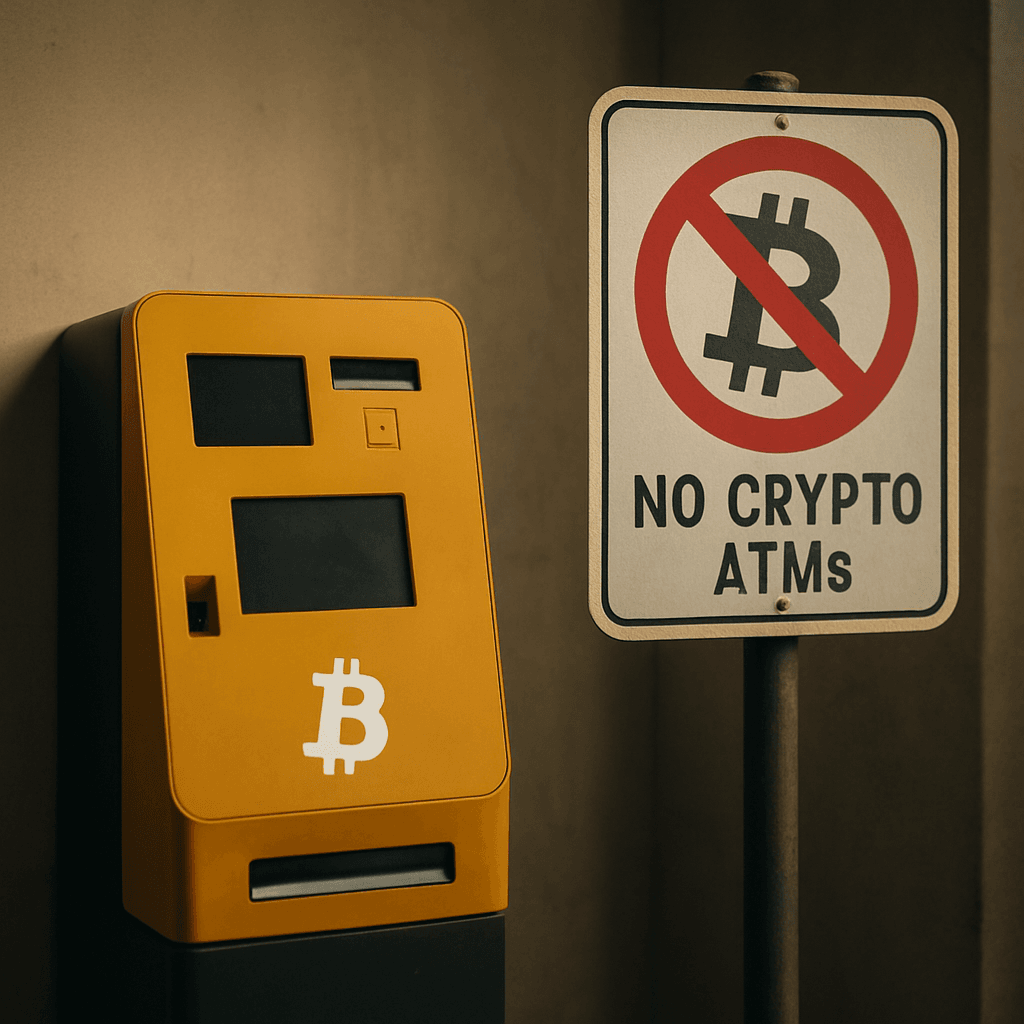
Crypto regulatory update: Tennessee and Georgia tighten crypto policy news as crypto ATM bans reshape compliance, fraud risk, and access.
The crypto regulatory update has moved from theoretical policy talk to hard operating reality. Tennessee’s ban is now in effect, Georgia’s tightened stance is adding friction, and together they’re accelerating a patchwork that makes the crypto ATM model increasingly difficult to scale – and legally precarious to defend. For users, the machines still look simple enough: insert cash, receive digital assets. For regulators, they look like something else entirely – a high-friction channel for scams, fee extraction, and inadequate customer controls. The point isn’t that every kiosk is abusive. It’s that the business model depends on speed, convenience, and limited reversibility, which sits poorly in a compliance environment that now demands slower verification and clearer consumer safeguards.
This crypto regulatory update also signals something broader: a fundamental shift in how states are weighing access against abuse. Lawmakers are treating kiosks less like neutral payment devices and more like a consumer-protection problem with financial-crime spillovers. That framing changes the economics immediately. A machine network running on thin margins cannot simultaneously absorb rising legal risk, local restrictions, and reputational damage. The pressure on crypto ATMs is not an isolated event – it’s a preview of how the next phase of crypto policy may target distribution rails before it ever targets the assets themselves.
Tennessee’s law makes the crypto ATM business materially harder to run, while Minnesota’s separate timeline gives operators until Aug. 1 to comply with its own ban. Minnesota officials have pointed to a surge in scam complaints and documented losses tied to kiosks, and that’s the political logic that keeps winning: policymakers can tell a clean consumer-protection story even when the underlying market is considerably more complex. In Georgia, the more pressing question isn’t simply whether a kiosk exists, but whether it operates inside a licensing perimeter that the state is actually prepared to enforce. The crypto regulatory update, in other words, is evolving into a state-by-state stress test for a business that once thrived on regulatory ambiguity.
That stress test is most visible in the fee structure. Crypto ATM users routinely pay far more than they would through a regulated exchange, and that gap becomes harder to justify when the transaction itself carries elevated scam risk. The market has already begun adjusting – operators are facing shrinking public tolerance and intensifying scrutiny. Investors should view this through the lens of crypto regulation 2026, because the most consequential variable is no longer demand for retail crypto access. It’s whether state policy will permit that demand to be met through physical kiosks at all.
The dominant narrative frames kiosk bans as a narrow consumer-protection fix. That’s only partly right. The deeper implication of the crypto regulatory update is that it’s teaching lawmakers where enforcement is easiest: at the point of cash conversion. Once a kiosk turns cash into token exposure, it becomes far simpler to police than decentralized activity – which makes it an attractive target. That doesn’t mean every future crypto rule will be this blunt; it means regulators are choosing the least ambiguous pressure point first. The result is a creeping squeeze on the retail on-ramp, even as broader institutional adoption continues to expand elsewhere.
There’s a structural message here for the wider market as well. Regulatory pressure on kiosks may accelerate consolidation among compliant operators, but it could just as easily push lower-intent users toward online exchanges or peer-to-peer channels that carry their own risks. That trade-off sits at the heart of bitcoin government policy: restrict one access point and usage doesn’t disappear – it migrates. The same logic runs through the larger compliance landscape tracked by SEC crypto regulation, where the market has repeatedly learned that distribution, disclosures, and supervision now matter as much as the underlying asset. For bitcoin specifically, the lesson is straightforward: access channels have become a policy variable, not a fixed feature of the landscape.
The crypto regulatory update is, first and foremost, an operating-risk story – and only secondarily a token-price story. In the near term, state-level bans and restrictions are likely to pressure kiosk operators, payment intermediaries, and any venue that depends on cash-heavy retail flow. For bitcoin itself, the effect is less direct but still tangible: tighter on-ramps and off-ramps can reduce casual participation at the margin and raise the cost of retail acquisition. That doesn’t automatically alter the long-term thesis, but it does reshape the distribution network that supports it. Investors who tune out crypto policy news tend to notice the consequences only after margins have already compressed.
The signposts worth watching are fairly clear: additional state bills, enforcement actions against operators, and whether major kiosk networks begin shrinking their footprints or pivoting toward stricter compliance models. If comparable rules continue to spread, the market may be forced to price in a slower, more regulated retail adoption curve than many participants had assumed. The crypto regulatory update is no longer a story about one machine type – it’s a question of whether lawmakers are willing to tolerate cash-to-crypto conversion as a mass-market product at all.
Focus: crypto regulatory update now matters because the state-level squeeze is shifting where, how, and at what cost retail crypto access can exist.
Lena Strauss, Regulation & Policy Reporter, The Chain Journal
A weekly briefing on Bitcoin price action, Ethereum, crypto market analysis, Bitcoin ETF flows, regulation, digital assets, and the narratives shaping crypto investing.
One sharp weekly read. No daily alerts. No recycled headlines.




