THE CHAIN JOURNAL
Independent Crypto Editorial

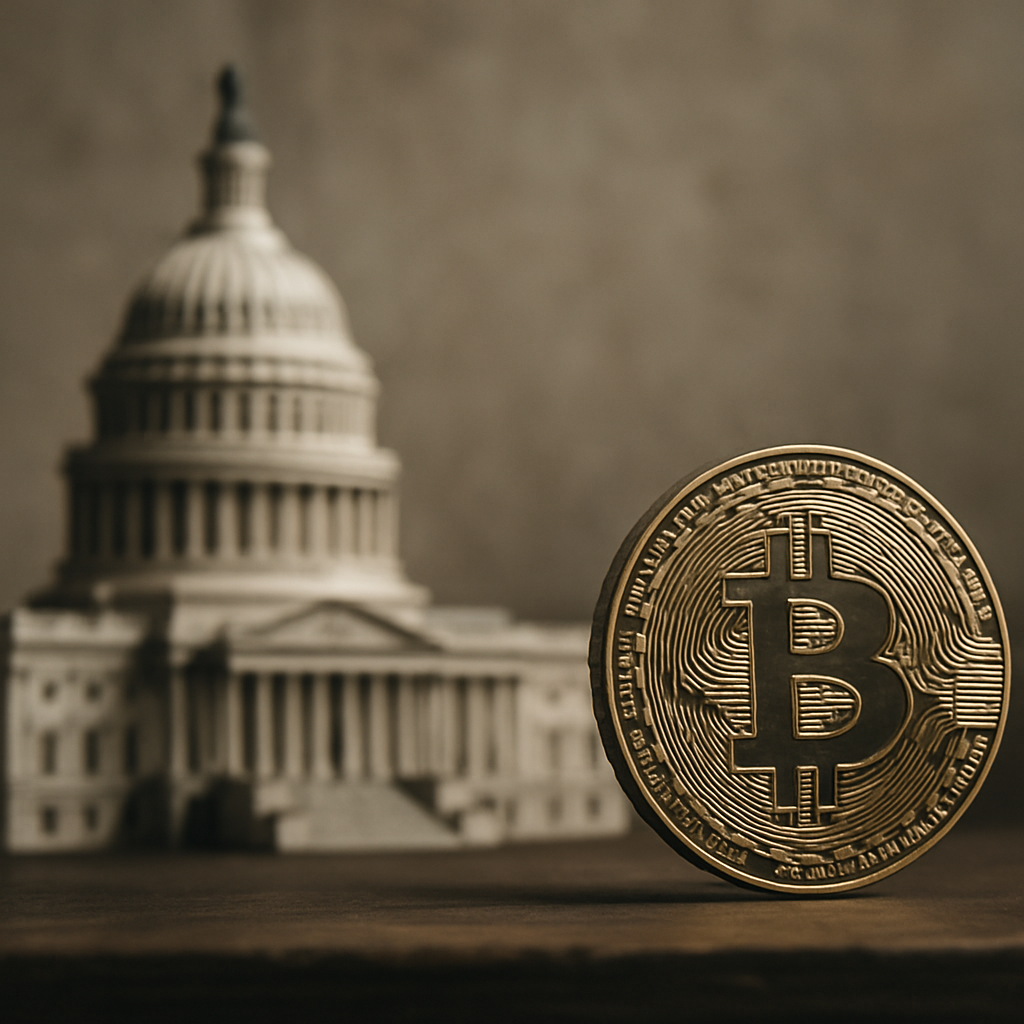
crypto regulatory update turns political as Senate timing slips, with crypto policy news and bitcoin government policy now in focus.
In this crypto regulatory update, timing may matter more than the text itself. The Senate still has a path to a market-structure bill, but the window is narrowing fast – and August now looks less like a political target than a practical cutoff. Miss that window, and the bill risks drifting into election season, where floor time grows scarce and the appetite for compromise tends to evaporate. For markets, the stakes are real: the absence of regulatory clarity keeps the US crypto premium suspended between hope and hesitation. The price impact isn’t an immediate function of law – it’s a function of delayed capital allocation.
The deeper issue is that the market is no longer waiting on a single vote. It’s pricing a sequence of votes, amendments, and procedural delays. That’s precisely why this crypto regulatory update carries more weight than a routine headline about committee progress. Investors are less interested in ceremonial momentum and more focused on whether the Senate can hold sufficient bipartisan support to survive debate, reconciliation, and the brutal arithmetic of the calendar.
The bill’s recent committee advance is meaningful – but it doesn’t clear the highest hurdle: the floor. A 60-vote threshold is a fundamentally different test from a committee majority, and that gap is exactly where most market-structure efforts stall out. The Senate’s internal math is further complicated by ethics language, competing consumer protection demands, and the perennial question of how to divide authority between agencies. The issue was never whether Washington wants oversight. It’s how much friction the process can absorb before the bill loses its momentum. That tension is the central fact in this crypto regulatory update.
The SEC has already moved to clarify how federal securities laws apply to certain crypto assets, reducing one layer of uncertainty even as Congress continues arguing over the broader framework. As tracked by SEC crypto regulation, the data reveals a regulator willing to draw boundaries while lawmakers debate them. That creates a subtle but consequential dynamic: the longer Congress waits, the more agencies, exchanges, and issuers are forced to navigate a patchwork of partial signals rather than a single, coherent statute.
Markets often treat regulation as binary – passed or failed. That framing is too simple. A delayed bill can still reshape expectations around custody standards, listing requirements, and jurisdictional clarity, even if it never reaches a final vote. But delay carries its own cost. Every additional month extends the period in which institutional adoption must push forward without a stable federal framework beneath it. That’s why this crypto regulatory update deserves to be read through the lens of positioning rather than politics. If the Senate misses the August target, the next meaningful opportunity may not be a clean second chance – it may be a more crowded, less predictable legislative calendar with far less room to maneuver.
There’s also a narrative trap worth naming. Crypto bulls have a tendency to treat any committee action as proof of inevitability. It isn’t. Legislative momentum can decay quickly once the story shifts from drafting to coalition management. For readers tracking broader institutional flows, it’s worth weighing this policy backdrop against strong ETF inflows – because institutional demand may remain healthy even as lawmakers fall further behind it. That divergence is the real story: capital can move faster than Congress, but it still punishes regulatory ambiguity over time.
For investors, this crypto regulatory update makes the case for patience on headline-driven trades and discipline on longer-term positioning. A Senate floor vote before August would likely be read as evidence that Washington can still deliver a workable framework this year. If the timeline slips past that point, traders should expect the conversation to shift – away from enactment and toward election timing, agency guidance, and which corners of the sector can realistically thrive without statutory backing. Put plainly, the market should be preparing for a longer transition, not a tidy resolution.
The signals worth watching are specific: whether Democrats hold their votes, whether ethics provisions get folded in, and whether the August recess quietly becomes a de facto deadline. Track committee follow-through, not public optimism. The core lesson from this crypto regulatory update is straightforward – process risk can move markets almost as decisively as policy substance.
Focus: This crypto regulatory update makes clear that legislative timing, not ideology, has become the real market variable.
Monica Ramires, Senior Markets Analyst, The Chain Journal
A weekly briefing on Bitcoin price action, Ethereum, crypto market analysis, Bitcoin ETF flows, regulation, digital assets, and the narratives shaping crypto investing.
One sharp weekly read. No daily alerts. No recycled headlines.