THE CHAIN JOURNAL
Independent Crypto Editorial

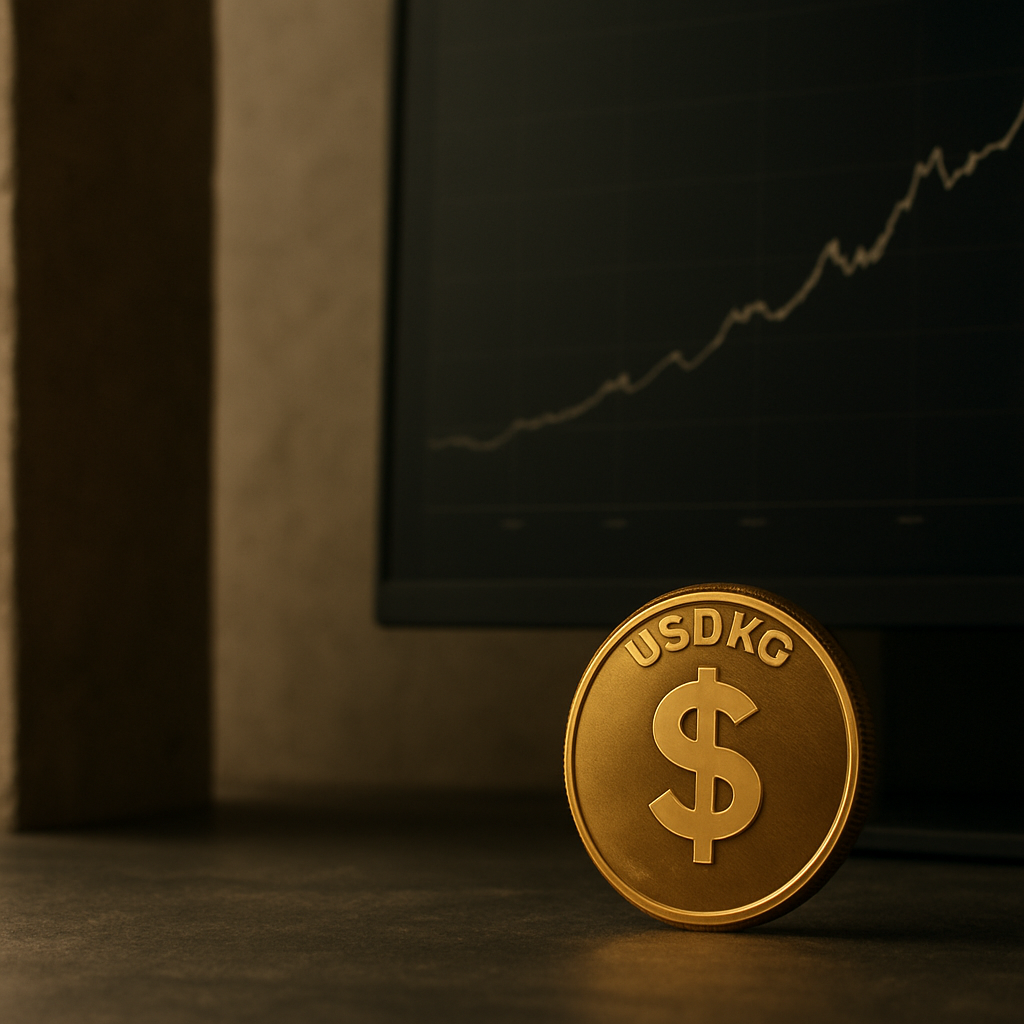
Crypto regulatory update: OSL lists a gold-backed stablecoin as Hong Kong tightens stablecoin regulation and reshapes exchange competition.
The latest crypto regulatory update from Hong Kong is not really about a single trading pair. It is about a market trying to turn policy clarity into product differentiation. OSL’s decision to list USDKG – a gold-backed stablecoin issued in Kyrgyzstan – demonstrates how a licensed venue can treat compliance as a competitive moat rather than a constraint. In a year when Hong Kong has begun issuing stablecoin licences, the message is clear: regulated distribution now matters as much as the token itself. For traders and institutions alike, the practical question is whether this becomes a niche instrument or a precedent for broader reserve-backed settlement rails.
This crypto regulatory update also lands against a revealing backdrop. Hong Kong’s stablecoin regime now treats issuance as a licensed activity, and the city continues to build its identity as a serious digital-asset hub. That matters because listings on a Hong Kong crypto exchange do more than expand access – they signal which assets can survive a tighter compliance screen. The underlying bet here is not on gold as a narrative asset. It is on gold as a reserve primitive that fits a stricter market structure.
The HKMA moved from framework-building to licence-granting in April 2026, marking a more mature phase of stablecoin regulation in the city. Meanwhile, OSL has continued expanding its stablecoin business – including USDGO – suggesting the exchange is assembling a regulated stack rather than chasing one-off listings. USDKG differs in design, but the logic is consistent: if issuers can prove reserves, controls and redemption mechanics, exchanges can package those instruments for professional investors without undermining the compliance narrative.
The appeal of a gold-backed stablecoin is straightforward. It pairs a familiar store-of-value asset with blockchain transferability, and it hands policymakers a cleaner story than the loosely supervised token models that defined earlier cycles. The harder question is whether the market actually needs another reserve-linked token in a world still dominated by dollar liquidity. As tracked by stablecoin market data, the center of gravity remains firmly with dollar-pegged instruments – which means non-dollar models must earn adoption through use case, not symbolism.
OSL’s move also reflects Hong Kong’s broader experiment: proving that regulation can attract product flow rather than repel it. If that sounds obvious, it isn’t. Many jurisdictions have tightened stablecoin regulation without producing a credible secondary market. Hong Kong is attempting both simultaneously, and the initial roster of licensed issuers suggests the city is willing to privilege governance, auditability and institutional access over speed to market.
A crypto regulatory update of this kind should be read less as a product endorsement and more as a stress test for market structure. Gold-backed tokens solve one problem while creating another. They reduce dependency on a single fiat base, but they introduce asset-management complexity, custody questions and valuation drift whenever the underlying metal moves sharply. That profile makes them better suited to niche treasury applications, cross-border collateral and pilot settlement than to mass retail payment.
The key analytical point is that token design now matters as much as exchange access. OSL, like other regulated platforms, is no longer simply a venue for speculation – it is becoming a gatekeeper for which reserve assets can enter a compliant market stack. That is precisely why this listing belongs inside the larger crypto regulatory update cycle rather than on its periphery. It is a reminder that the next phase of adoption may be shaped by infrastructure decisions far more than by meme-driven demand. Broader positioning in the sector has also been influenced by strong ETF inflows this quarter, which has pulled institutional attention firmly toward regulated wrappers.
Regulatory competition adds another dimension. Hong Kong is building a model in which licences, disclosures and reserve oversight raise the bar for market entry. That can slow product proliferation – but it can also improve survivability. In that sense, the city’s crypto strategy looks less like a speculative boom and more like a controlled experiment in financial plumbing.
For investors, the practical lesson from this crypto regulatory update is that compliance is becoming a product feature, not merely a legal checkbox. Assets that can withstand stricter reserve standards, transparent custody and exchange-level scrutiny will likely gain a real distribution advantage. That is not a guarantee that every gold-linked token will scale – far from it. What it does mean is that the market will increasingly reward instruments built for the new rulebook rather than the old offshore playbook.
Three signals are worth watching closely: the pace of new listings on licensed venues, whether redemption liquidity holds up during volatile gold moves, and whether Hong Kong’s stablecoin regulation begins drawing more institutional issuers into the city’s orbit. If OSL can make USDKG genuinely useful beyond its novelty value, the listing will prove far more consequential than its initial trading volume suggests.
Focus: This crypto regulatory update shows that licensed distribution may become the real moat in digital assets.
Lena Strauss, Regulation & Policy Reporter, The Chain Journal
A weekly briefing on Bitcoin price action, Ethereum, crypto market analysis, Bitcoin ETF flows, regulation, digital assets, and the narratives shaping crypto investing.
One sharp weekly read. No daily alerts. No recycled headlines.