THE CHAIN JOURNAL
Independent Crypto Editorial

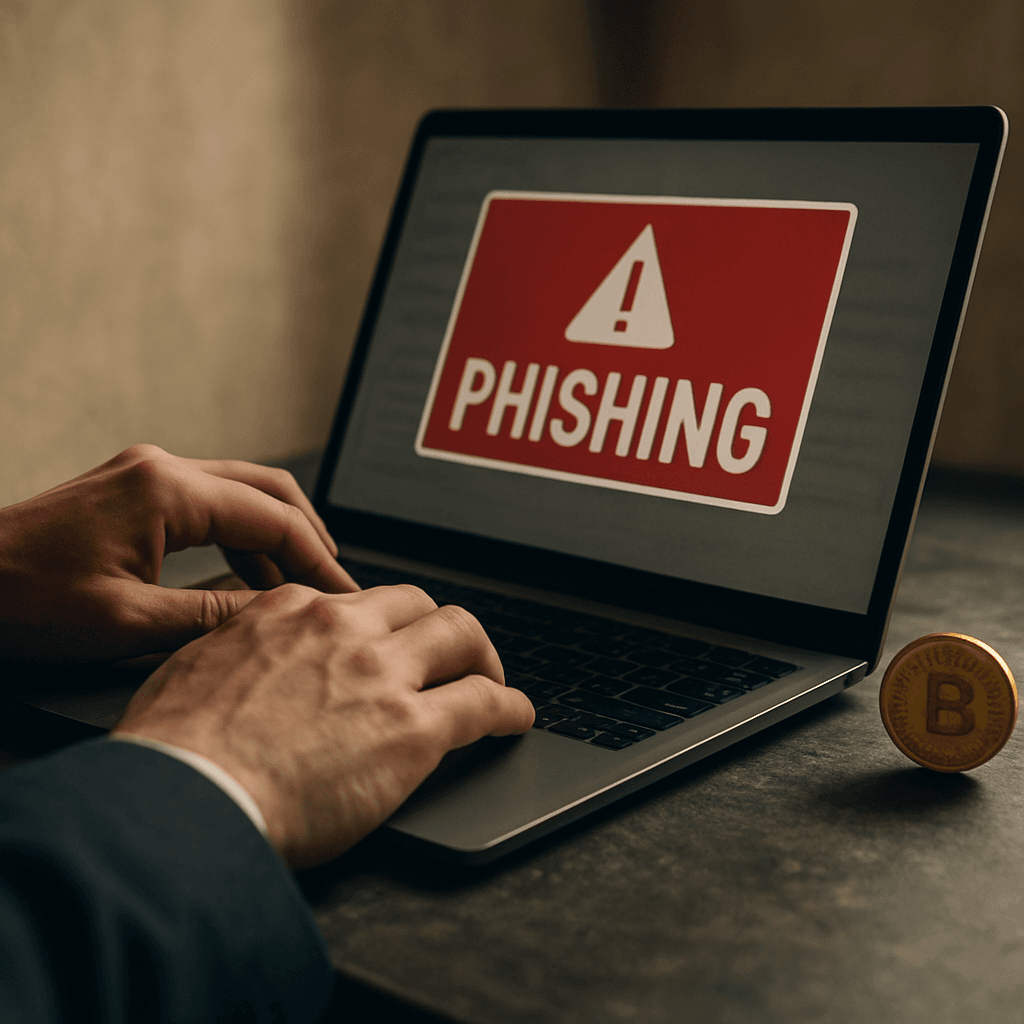
Crypto regulatory update in Hong Kong raises phishing barriers for exchanges, with crypto policy news signalling higher compliance costs.
The latest crypto regulatory update from Hong Kong is less about optics than operational friction. Regulators have told crypto platforms and online brokers to adopt phishing-resistant login standards within 12 months – a timeline that signals genuine hardening of market infrastructure, not a symbolic nudge. For investors, the immediate question isn’t whether the policy sounds sensible; it’s whether compliance teams can implement it without slowing onboarding, inflating support costs, or creating new points of failure. In a market where account compromise typically begins with weak authentication, crypto phishing protection is moving from a nice-to-have to a regulated baseline. That shift matters because Hong Kong wants to keep its digital-asset market open while demonstrating it can police access with greater discipline than many offshore venues.
The broader context is straightforward. Hong Kong has spent the past two years constructing a credible regulated crypto market, and it cannot afford to let security lapses hollow out that effort. This crypto regulatory update fits squarely within that pattern. Authorities are treating phishing not as a consumer nuisance but as a systemic risk capable of eroding confidence across trading platforms, broker-dealers, and the wider licensing regime. The market implication is equally clear: platforms already running stronger authentication, device controls, and transaction verification should absorb the change more comfortably than smaller operators still dependent on legacy login flows. In that sense, crypto policy news out of Hong Kong is increasingly a story about market structure, not just rulemaking.
Hong Kong’s move lands alongside a broader tightening of cyber and onboarding standards that has been building for months. The city’s regulator has recently reinforced account-opening controls, phishing detection, and anti-fraud procedures, while simultaneously pushing firms to confront AI-enabled cyber threats. That context matters because the latest crypto regulatory update is not an isolated directive – it sits inside a multi-layered enforcement posture. The regulator has also flagged that phishing incidents in the local financial sector remain material, with attacks rising sharply through 2025 and continuing to shape supervisory priorities. The cost to platforms extends well beyond the technical. Product teams will have to rethink login journeys, account recovery processes, and customer education all at once. The likely result is a slower but meaningfully cleaner access stack.
Why this matters goes beyond compliance theatre. Any market pursuing institutional capital cannot afford the perception that a stolen phone, a cloned SIM, or a spoofed website can still open the door. That is especially true for a city positioning itself as a regulated hub for virtual assets rather than a permissive gateway. The latest crypto regulatory update should therefore be read as a deliberate effort to reduce the attack surface before larger capital allocators scale their exposure. For a useful reference point on the regulator’s wider direction, see stablecoin regulation 2026, where the same preference for tighter controls over faster growth is becoming increasingly visible.
The temptation is to treat this as a purely defensive move – but that framing is too narrow. The real story in crypto regulation 2026 is that well-regulated venues may gain a meaningful competitive edge as lower-quality operators struggle to meet increasingly costly security expectations. Stronger identity verification, sharper anti-phishing tooling, and more robust account controls could become genuine differentiators rather than compliance overhead. That is not a bearish signal for the sector; it is a sorting mechanism. Institutions generally prefer venues where security standards are explicit and enforceable, even when those standards add friction. Retail users may grumble about inconvenience, but the trade-off is hard to argue with when unauthorized access can wipe out a balance in minutes.
There is a second-order effect worth watching. Platforms that can credibly demonstrate stronger crypto phishing protection stand to win considerably more trust in a market still haunted by scams and impersonation attacks. The same logic runs through the regulator’s broader treatment of online brokerage and trading controls, and it aligns with the direction described in cryptocurrency transparency on-chain, where visible, enforceable controls increasingly matter to both supervisors and sophisticated users. For Hong Kong, the question has never really been whether the city can attract activity. It is whether it can attract activity without inheriting the weak security culture that has damaged other hubs.
The investor reading of this crypto regulatory update is fairly direct: security spending is becoming a cost of market access, and that reality will favor better-capitalized platforms. In the near term, the upgrade cycle may compress margins – particularly for smaller firms forced to overhaul authentication, device verification, and fraud monitoring simultaneously. Over the medium term, however, the effect could be a healthier market structure, lower incident rates, and a more credible pitch to institutions that weigh operational resilience just as heavily as return potential.
What should investors monitor from here? First, whether Hong Kong firms disclose concrete implementation timelines rather than vague assurances. Second, whether the regulator follows this crypto regulatory update with further action on account recovery and transaction authentication. Third, whether the security improvements ultimately coincide with steadier platform usage rather than a meaningful drop in activity. The best-case outcome isn’t friction-free growth – it’s growth that holds up when tested.
Focus: crypto regulatory update is becoming a test of which platforms can turn security into a durable advantage.
Clara Reyes, Markets & Data Reporter, The Chain Journal
A weekly briefing on Bitcoin price action, Ethereum, crypto market analysis, Bitcoin ETF flows, regulation, digital assets, and the narratives shaping crypto investing.
One sharp weekly read. No daily alerts. No recycled headlines.