THE CHAIN JOURNAL
Independent Crypto Editorial

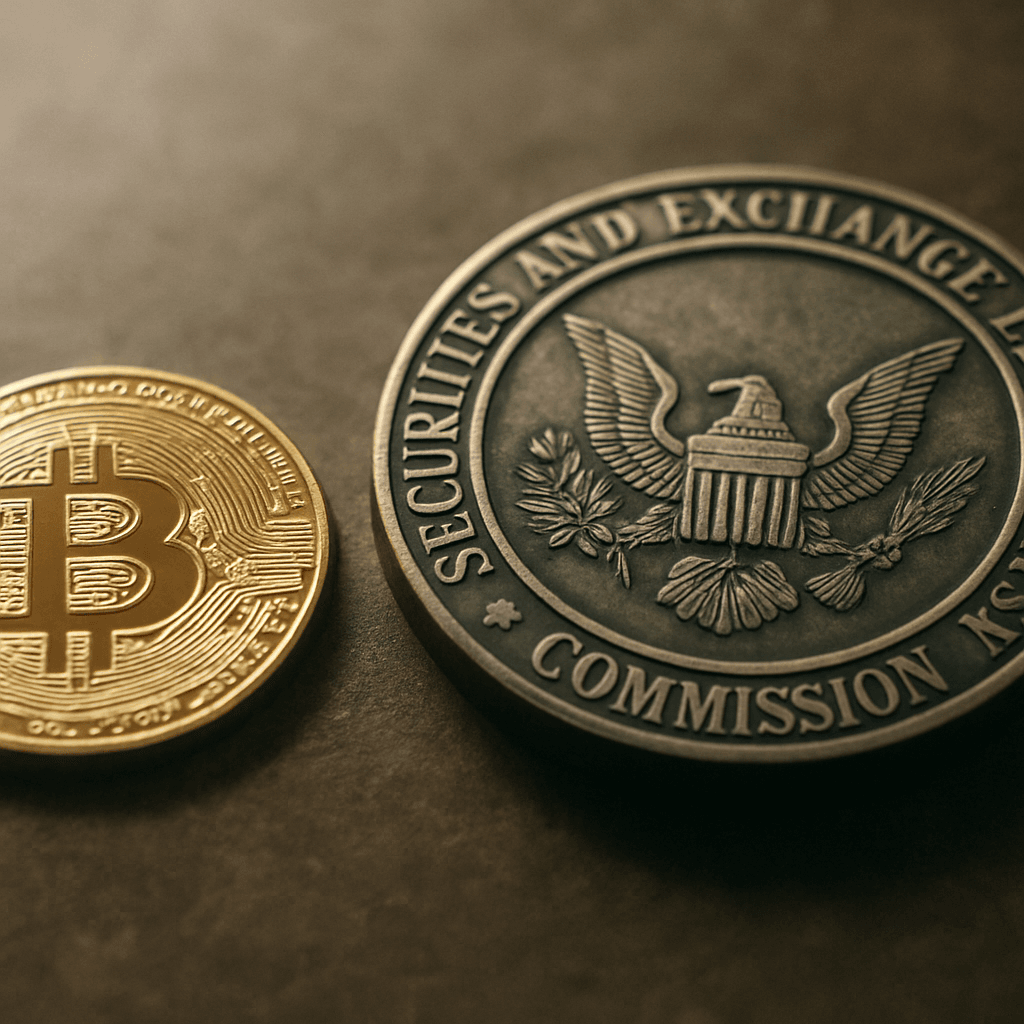
Crypto regulatory update: SEC shifts toward clearer crypto policy news, with 2026 crypto regulation and bitcoin legal implications for markets.
The latest crypto regulatory update from the SEC matters because it changes the baseline for how the market should price legal risk. The agency’s 2026 agenda now points to proposed rule changes tied to crypto broker-dealers, digital assets on national securities exchanges, and potential safe harbors. That is not a cosmetic shift. It suggests the SEC wants a framework that can classify assets, venues, and intermediaries more cleanly, rather than leaving the industry to infer its boundaries from enforcement actions. For bitcoin and the broader token market, that kind of crypto regulatory update can compress uncertainty premia – even if it does not immediately make every asset easier to trade. The key question is whether rulemaking arrives faster than the market’s usual habit of front-running headlines.
Context matters here. Earlier this year, the SEC issued interpretive guidance drawing a sharper line between crypto assets that qualify as securities and those that do not, while also addressing how certain tokens can shift in and out of securities status depending on transaction structure. That is a meaningful departure from the old litigation-first playbook. It also aligns with a broader push to create a more legible path for custody, issuance, and venue access. For readers tracking crypto policy news, the signal is clear: the agency is trying to reduce ambiguity without surrendering oversight. That is a narrow corridor, and the market should assume the SEC will still defend it aggressively.
The crypto regulatory update carries greater weight when paired with the SEC’s own language around tokenized securities, broker-dealer interfaces, and trading on regulated venues. The agency has already signaled its desire for a firmer regulatory foundation under digital assets, and it has published material on how certain non-security tokens can still fall under securities laws in specific contexts. In practice, the coming rules are likely to focus less on “crypto” as a monolith and more on functional categories: issuance, custody, trading, and settlement. That approach is consistent with the broader logic behind crypto regulation news 2026, where the real issue is not whether policy exists, but whether it creates a workable market structure.
There is also a market microstructure angle worth considering. If the SEC is serious about clearer pathways for broker-dealers and exchanges, the compliance stack around tokenized instruments could deepen faster than many traders expect. That would favor assets and venues capable of demonstrating operational discipline, while disadvantaging projects that still rely on regulatory fog as a competitive moat. The SEC’s public materials on SEC crypto regulation make one thing plain: the agency is not trying to abandon control – it is trying to codify it. For investors, that is better than silence, but it is not the same as broad permissiveness.
Markets tend to treat any crypto regulatory update as a binary bullish or bearish event. That framing is too crude. What actually matters is whether the policy path lowers the cost of capital for compliant participants and raises it for everyone else. If the SEC carves out routes for broker-dealers, tokenized securities, and narrow safe harbors, the beneficiaries will be firms that already operate like regulated financial institutions. The losers will be venues and token issuers whose business models were built around jurisdictional friction. In that sense, this is less about “approval” and more about selection – a more structured market can still be a punishing one.
That is precisely why investors should connect this story to Bitcoin ETF Institutional Flows. When policy clarity improves, institutions tend to gravitate toward assets and wrappers that already fit within existing controls, rather than chasing speculative exposure through weaker channels. The same logic holds for tokenized securities and exchange access: legal clarity historically rewards scale, custody strength, and reporting quality. The deeper implication of this crypto regulatory update is that the next phase of adoption may look less like a retail mania and more like a steady reallocation toward compliant infrastructure. That is a slower process, but a far more durable one.
The crypto regulatory update should not be read as a promise of easy upside. It is a signal that the SEC is working to translate crypto into a rule-bound market structure – a process that typically benefits the strongest balance sheets first. If that trajectory holds, bitcoin may maintain its relative advantage given that it already sits closest to the “non-security” end of the classification spectrum, while many smaller tokens face a considerably harder path. Investors should be thinking about venue quality, custody standards, and the legal durability of revenue models – not just price momentum.
What to watch next is procedural rather than theatrical. Track the SEC’s rule proposals, comment periods, and any movement on safe harbor language. Watch whether broker-dealer and exchange access broadens for tokenized assets. If those pieces advance, the market will likely re-rate compliance-ready infrastructure well before it re-rates narrative-heavy tokens. The crypto regulatory update is a framework story first and a price story second.
Focus: The crypto regulatory update is most important because it shifts the market from guessing about enforcement to pricing the quality of legal structure.
Adam McCauley, Senior Blockchain Analyst, The Chain Journal
A weekly briefing on Bitcoin price action, Ethereum, crypto market analysis, Bitcoin ETF flows, regulation, digital assets, and the narratives shaping crypto investing.
One sharp weekly read. No daily alerts. No recycled headlines.