THE CHAIN JOURNAL
Independent Crypto Editorial

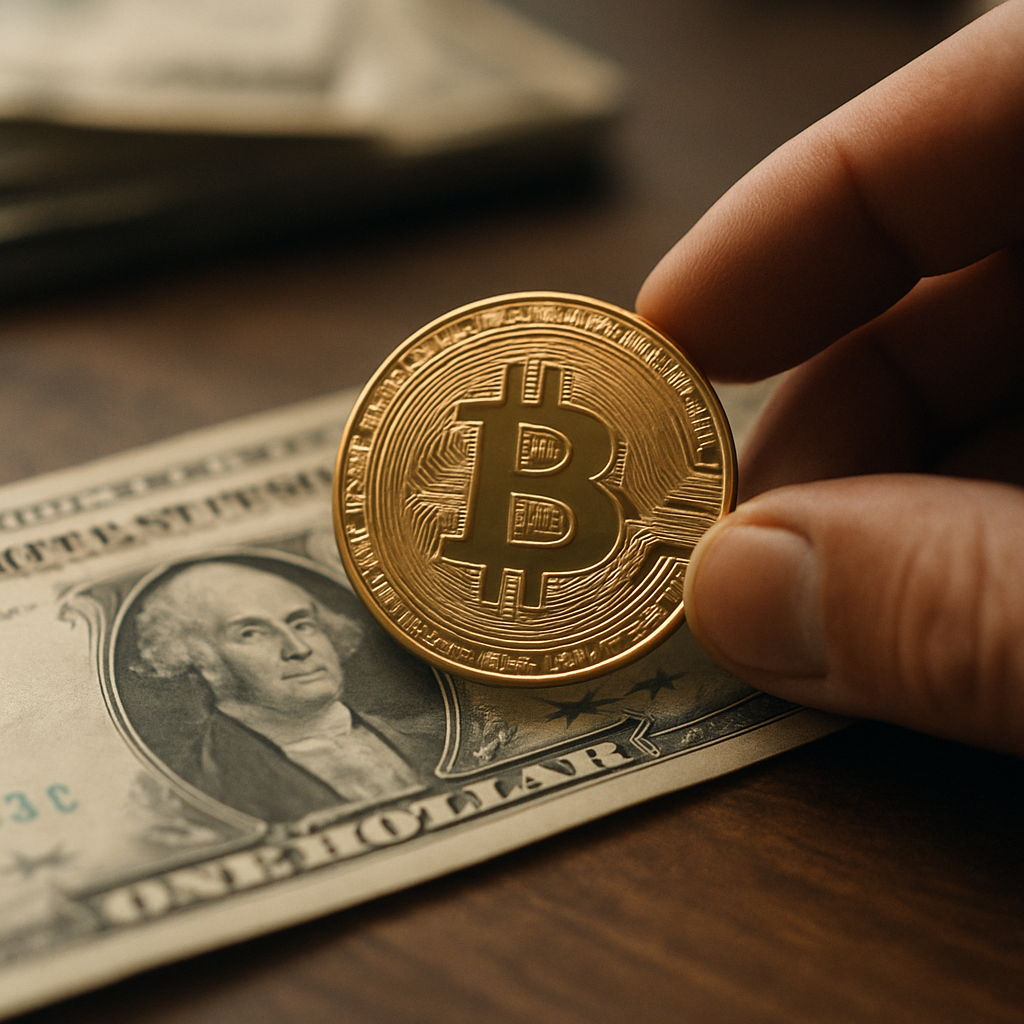
Crypto adoption in the US is climbing again, with bitcoin adoption and crypto payments showing a shift from speculation to utility.
Crypto adoption in the US is no longer best understood as a simple wager on price. The latest household survey points to roughly 1 in 10 adults having used crypto in 2025 – the strongest reading since 2022 – suggesting the market has retained its social footprint even after a punishing cycle. For Mauricio Pompilii Marquez, that matters because usage data tells you more about durability than any headline tracking daily volatility. The key point isn’t that everyone is transacting on-chain; it’s that a meaningful minority still considers digital assets practical enough to keep in circulation. That’s a fundamentally different signal from pure trading enthusiasm, and it keeps crypto adoption in the US relevant even when prices are grinding sideways.
The composition of that use is more revealing than the headline number itself. The survey indicates that buying and holding still dominates, but payment usage persists among people who value speed, privacy, and lower costs. Put differently, Americans using crypto are not behaving like a homogeneous retail bloc. Some treat it as a speculative asset, others as a payment rail, and a small but notable group as both. That mix matters because markets routinely confuse attention with adoption. Attention fades quickly; embedded behavior rarely does.
Federal Reserve data show that crypto adoption in the US climbed back to levels not seen since 2022, with around 10% of adults reporting use in 2025. Among those who used crypto for payments, more than 25% said the recipient or business preferred it – a crucial distinction, because that payment choice often reflects counterparty demand rather than ideological commitment. The Fed’s broader household research also shows that digital-asset use for transactions remains a niche behavior even as overall Americans using crypto ticks higher. That tension between broad awareness and narrow utility is precisely where the real analysis lives. (federalreserve.gov)
That’s why the conversation should shift from “Will people use crypto?” to “Where does it actually solve a problem?” The Federal Reserve’s 2025 household report was fielded in October 2025 and published in May 2026, which means it captures a phase when liquidity conditions, risk appetite, and payments experimentation were all shifting simultaneously. Strong ETF inflows this quarter also helped keep the asset class visible to mainstream investors, preserving the sector’s credibility even when retail conviction wavered. Federal Reserve data reinforces the same pattern: usage grows fastest when it solves an existing payment problem rather than inventing a new one. The next leg of crypto adoption in the US will likely be driven less by novelty and more by utility that survives friction.
The market still overstates the importance of raw adoption counts. A household survey can show that crypto adoption in the US is rising without proving that the asset class has become payment infrastructure at scale. What it can demonstrate is a gradual normalization process: more adults know what crypto is, more have tried it, and some now view it as a functional option rather than a curiosity. That’s a meaningful shift – but it isn’t the same as mass usage. In my view, the bullish case is not that crypto replaces cards or bank transfers tomorrow; it’s that crypto becomes a parallel option in narrow but persistent use cases. That’s a far more realistic path for bitcoin adoption and for the broader payments stack.
The structural implication follows naturally. If usage is increasingly driven by merchant preference, privacy concerns, or settlement speed, then adoption will trace pockets of genuine need rather than any single viral narrative. Investors should therefore be careful about extrapolating from Americans using crypto to revenue growth across the entire sector. The strongest beneficiaries may well be companies and networks that reduce friction – not necessarily the loudest tokens. The persistence of crypto payments suggests the market has moved beyond the “does it work?” phase and well into the “where does it make sense?” phase. Bitcoin’s store-of-value thesis remains part of that framework, but it’s no longer the only one.
Crypto adoption in the US is improving, but the investable takeaway is more selective than the headline implies. The data point to a market where crypto payments remain a secondary use case while holding and trading still dominate behavior. For investors, that means the focus belongs on infrastructure, liquidity access, and payment rails – not on the assumption that rising usage automatically lifts every asset equally. The most durable opportunities are likely concentrated among businesses that capture real usage without depending on mass retail enthusiasm to sustain them.
The variables worth watching are whether payment use continues climbing in the next Fed survey cycle and whether more merchants begin preferring settlement in digital assets. If crypto adoption in the US expands on the back of utility rather than speculation, the market structure becomes sturdier and far less dependent on sentiment spikes. That, more than any price target, would be the real signal to track.
Focus: Crypto adoption in the US matters most when it converts from a survey statistic into repeated, embedded behavior.
Mauricio Pompilii Marquez, Macro & Commodities Analyst, The Chain Journal
A weekly briefing on Bitcoin price action, Ethereum, crypto market analysis, Bitcoin ETF flows, regulation, digital assets, and the narratives shaping crypto investing.
One sharp weekly read. No daily alerts. No recycled headlines.




