THE CHAIN JOURNAL
Independent Crypto Editorial

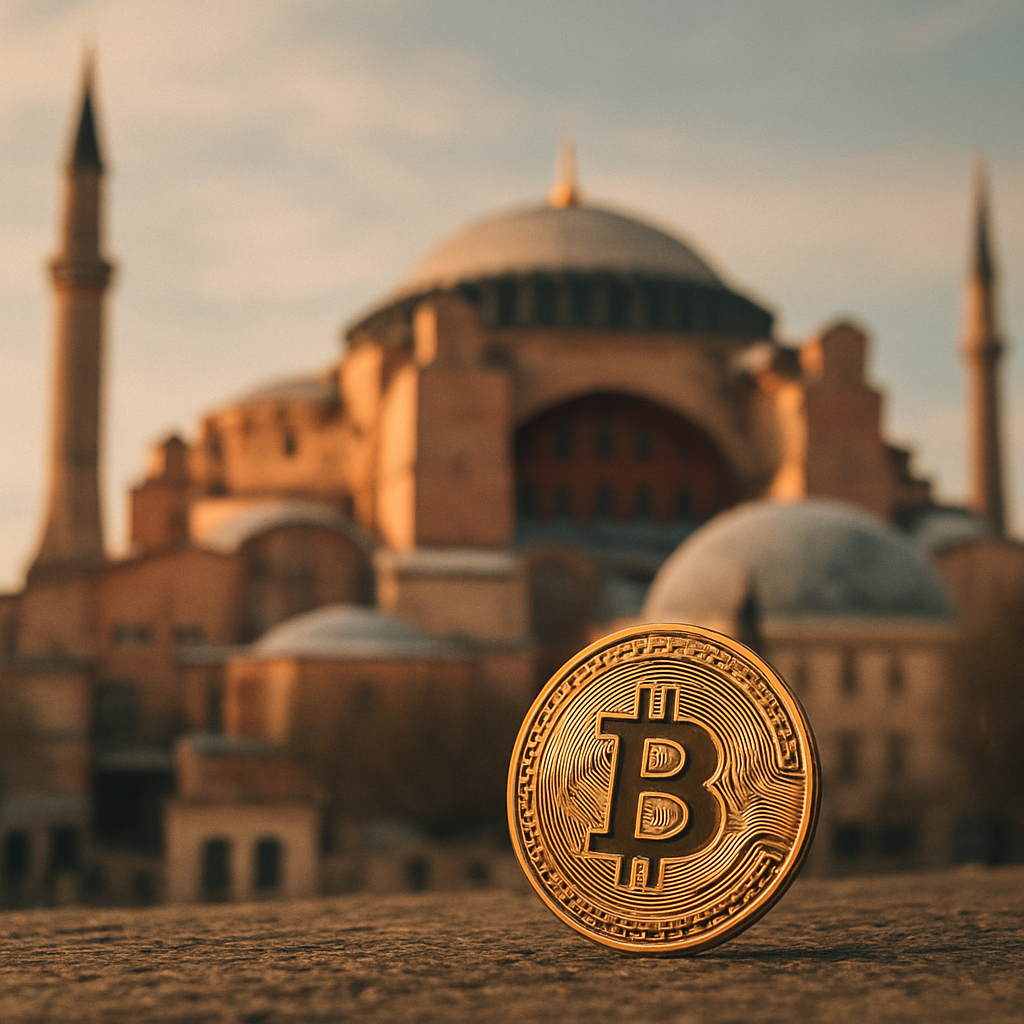
Crypto adoption in Turkey keeps rising as Istanbul Blockchain Week returns, with policy, payments and Web3 activity converging in June.
Crypto adoption in Turkey is no longer a niche story about traders and volatility. It now sits at the intersection of payments, policy, and institutional positioning – which is precisely why Istanbul Blockchain Week matters more than another conference crowding an already busy calendar.
The event’s return on 2-3 June 2026 at the Hilton Bomonti Hotel gives the market a concrete checkpoint for how far the local ecosystem has actually progressed. Interest clearly exists. The real question is whether crypto adoption in Turkey is becoming durable enough to support builders, capital allocators, and regulators all at once.
That distinction matters because Istanbul has quietly become a regional test case. Türkiye combines a large retail user base, persistent inflation memory, and a regulatory framework that reads as cautious rather than hostile. In that environment, Turkey crypto adoption tends to be driven less by speculation than by functional demand: savings protection, remittances, and access to dollar-denominated exposure. The return of Istanbul Blockchain Week therefore reads less like a marketing exercise and more like an attempt to anchor an ecosystem that already has users but still lacks the institutional rails to sustain them.
The clearest recent picture of crypto adoption in Turkey is that the country remains one of the more active markets globally, with on-chain and exchange activity reflecting a broader mix than a simple Bitcoin-only profile.
Chainalysis’s latest global adoption research flags Türkiye as a market with a notably diversified on-ramp structure – an important distinction, because it implies repeated usage rather than speculative turnover. That is the kind of pattern capable of supporting a real event economy around Web3 event Istanbul, not just a one-off hype cycle. In practical terms, expect the audience to include founders, exchanges, wallet providers, and policy observers hunting for signal, not slogans.
None of this has developed in a regulatory vacuum. The Central Bank of the Republic of Türkiye has continued to emphasize supervision of payment and electronic money institutions while maintaining restrictions on crypto assets in consumer payments. That combination is telling. It pushes the market’s center of gravity toward investment, trading, and infrastructure rather than checkout-level use. It also explains why Turkey crypto adoption keeps drawing conference-stage attention: the market is active enough to matter, yet constrained enough that policy still shapes every path forward.
The deeper point is that crypto adoption in Turkey has become as much a macro and policy story as a community one. A market can post strong engagement numbers and still remain structurally fragile if users are relying on crypto primarily as a defensive asset. That is why the digital Turkish lira project deserves attention alongside the conference itself.
The central bank has continued its CBDC development work, signaling that Turkish authorities are not indifferent to digital money – they are simply determined to shape it within a controlled architecture. For builders, that creates both opportunity and friction in roughly equal measure. For investors, it provides a clearer map of where genuine product-market fit may eventually surface. One useful reference point is the pattern seen in strong ETF institutional inflows, which demonstrated how quickly capital forms around a credible regulatory wrapper; the Turkish equivalent will ultimately depend on local rules, not just local enthusiasm.
There is a broader market lesson here too. If crypto adoption in Turkey continues expanding while payment restrictions stay in place, the most valuable layer may never be consumer checkout at all. Custody, trading infrastructure, compliance tooling, and tokenized financial services that can operate comfortably within the existing ruleset – that is where the real buildable surface lies. Serious conferences exist precisely to surface what a market can actually absorb.
The event’s agenda spanning DeFi, trading, regulation, mining, and venture capital suggests the local conversation is maturing well beyond retail enthusiasm and into genuine sector allocation. For those tracking broader participation trends, underlying crypto liquidity conditions remain a critical lens for understanding how quickly attention and capital rotate when a market starts developing real depth.
For investors, crypto adoption in Turkey should be read as a selective opportunity rather than a blanket bullish signal. Demand is clearly present, but demand alone does not translate into clean regulatory access or scalable payment infrastructure. The most credible upside likely sits in businesses that solve real constraints: compliant exchanges, settlement infrastructure, treasury tools, analytics platforms, and localized financial interfaces. Istanbul Blockchain Week may not transform the landscape overnight, but it can reveal which categories the market itself considers investable – and that is often the more actionable signal anyway. If the local ecosystem continues attracting institutional participants, Turkey crypto adoption has a realistic path from cyclical phenomenon to something more structural.
The markers worth watching are straightforward: speaker caliber, sponsor mix, and whether the agenda shifts from broad narrative to specific deployment questions. Serious discussion around custody, tokenization, and regulated rails would confirm that crypto adoption in Turkey is genuinely moving up the value chain. If the event remains anchored to generic brand visibility, the market stays active but early. That distinction, subtle as it sounds, matters considerably to anyone making a medium-term bet.
Focus: Crypto adoption in Turkey is becoming a policy-and-infrastructure story, not just a trading story.
Lena Strauss, Regulation & Policy Reporter, The Chain Journal
A weekly briefing on Bitcoin price action, Ethereum, crypto market analysis, Bitcoin ETF flows, regulation, digital assets, and the narratives shaping crypto investing.
One sharp weekly read. No daily alerts. No recycled headlines.




