THE CHAIN JOURNAL
Independent Crypto Editorial

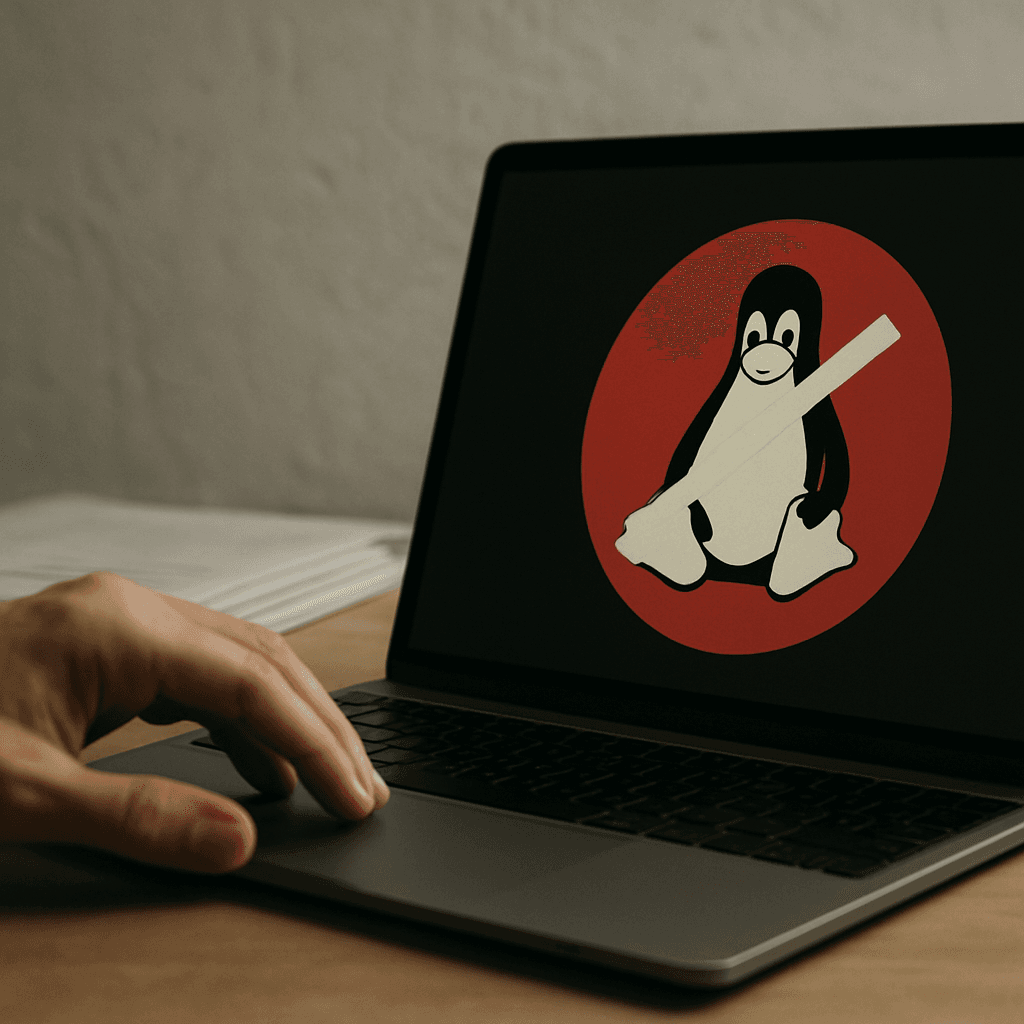
Copy Fail puts Linux security under pressure: CISA added CVE-2026-31431, and a 10-line Python proof of concept raised fresh patch urgency.
The copy fail linux vulnerability matters because it turns a local foothold into root access with unnerving efficiency. CISA added the flaw to its Known Exploited Vulnerabilities catalog, which signals that defenders should treat it as an active operational risk, not just a theoretical kernel bug. Recent technical reporting says the issue, tracked as CVE-2026-31431, affects the Linux kernel’s crypto subsystem and can be triggered with a remarkably small Python proof of concept. That combination matters for every environment that runs Linux at scale: cloud workloads, CI pipelines, container hosts, and shared servers all inherit the same exposure if patching lags.
What makes this case stand out is not just severity, but simplicity. Researchers say the exploit does not depend on a complicated race condition or exotic timing. Instead, it abuses a logic flaw to alter the page cache of readable files, including binaries that can later execute with elevated privileges. In practice, that means the gap between “low privilege” and “full control” can be shorter than many teams assume, especially in environments that still allow broad local code execution.
CVE-2026-31431 affects a broad range of Linux distributions that ship kernels from roughly 2017 onward, according to recent vendor and security-team analysis. Microsoft said the flaw impacts major distributions including Ubuntu, Amazon Linux, Red Hat Enterprise Linux, and SUSE, while other coverage has also linked the issue to widespread container and cloud use. The key technical detail is local privilege escalation: an attacker needs local code execution first, but after that the bug can help turn an unprivileged session into root. Microsoft also said it has observed early testing activity and flagged the likelihood of wider exploitation pressure as defenders race to patch.
The broader lesson is uncomfortable but important: Linux security often fails at the seam between assumptions. Teams assume local access stays bounded, that container separation holds, or that a “high” severity bug still needs more complexity to matter. Copy Fail undercuts those assumptions. It shows how a narrow kernel logic error can become a systems issue, especially where untrusted workloads, developer shells, or multi-tenant hosts exist side by side.
It changes the conversation more than the code path. A local privilege escalation bug is not new, but this one stands out because it combines reach, reliability, and ease of exploitation. That combination is what pushes defenders out of the comfortable category of “important but manageable” and into “patch now, verify later.” In security terms, the exploit works like a pressure test on least privilege itself. If an organization already gives users, build jobs, or containers meaningful local execution, then the bug can turn a limited breach into a full host compromise much faster than many playbooks assume.
The deeper structural issue is that Linux now sits underneath far more finance, infrastructure, and application logic than most users notice. One kernel flaw can affect cloud nodes, internal tooling, observability platforms, and the systems that settle or route critical workloads. That is why CISA’s catalog entry matters beyond the security niche. It tells operators to treat the bug as part of operational continuity, not just patch hygiene. For teams that rely on Linux-backed environments, the question is no longer whether the flaw is real. It is whether the organization can identify exposed systems before someone else does.
For investors, the signal is straightforward: cybersecurity debt inside Linux-heavy infrastructure can translate into real execution risk, even when the underlying application stack looks stable. The market often prices software resilience as if the operating system is a solved layer. It is not. Any portfolio exposed to cloud hosting, developer tooling, container services, or enterprise security vendors should assume that emergency patch cycles can create short-term friction, but also selective opportunity for firms that help with hardening, monitoring, and rapid response. The investment case is not panic. It is preparedness.
What to watch next is practical rather than dramatic: vendor patch uptake, detection coverage, and whether major cloud and enterprise operators issue follow-up advisories. The more quickly administrators validate mitigations and confirm kernel versions, the faster the immediate risk decays. If patching trails and exploitation broadens, the issue stops being a niche Linux story and becomes a wider resilience test.
Focus: The real story is not that Linux has another bug; it is that a tiny local flaw can still punch through modern infrastructure with far less effort than the market expects.
Mauricio Pompilii Marquez, Macro & Commodities Analyst, The Chain Journal
A weekly briefing on Bitcoin price action, Ethereum, crypto market analysis, Bitcoin ETF flows, regulation, digital assets, and the narratives shaping crypto investing.
One sharp weekly read. No daily alerts. No recycled headlines.