THE CHAIN JOURNAL
Independent Crypto Editorial

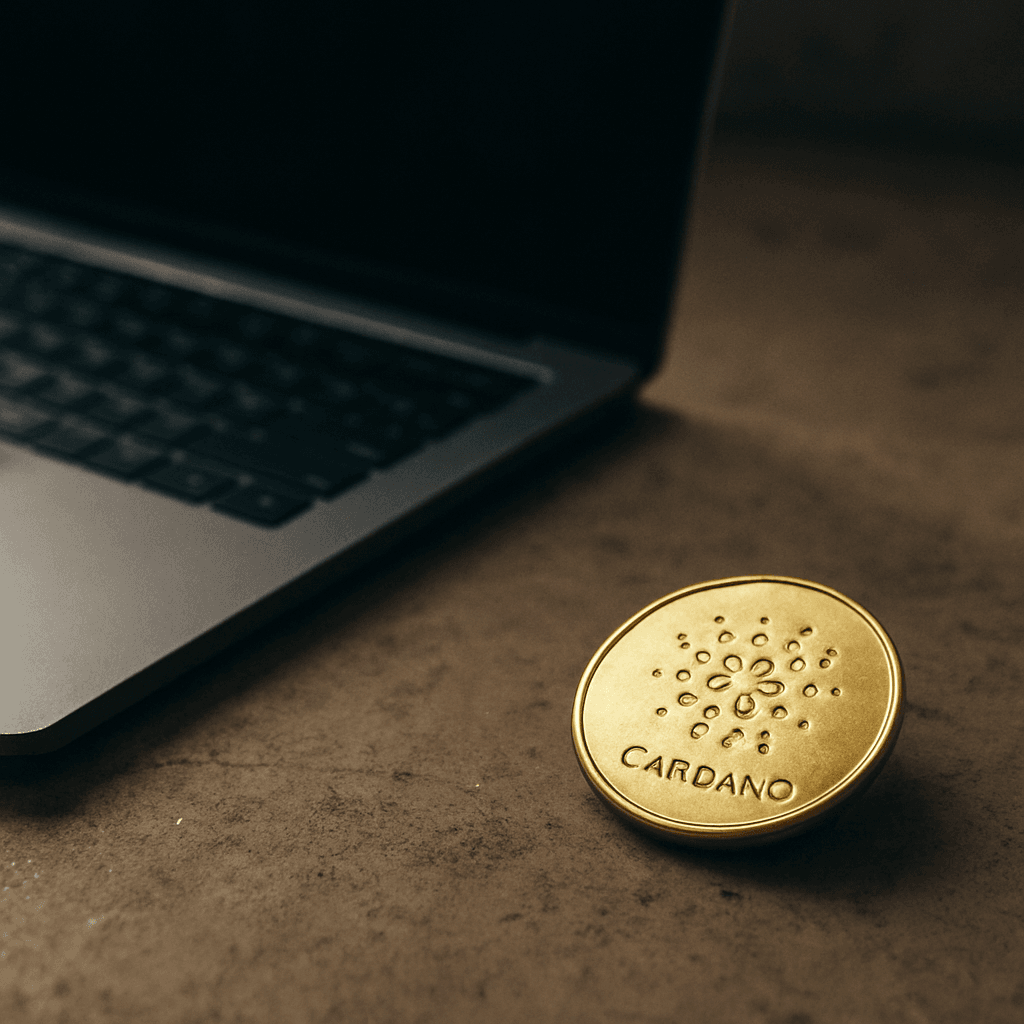
Cardano wallet exploit shows address-level risk, while SecondFi exploit and cardano security breach fears raise questions on ADA custody.
The cardano wallet exploit at SecondFi is a useful correction to a common market reflex: when something goes wrong, traders assume the chain failed. Here, the evidence points elsewhere. The issue appears to have originated at the address level, not inside Cardano’s base layer – and that distinction matters precisely because users tend to outsource their security assumptions to the brand name of the blockchain they’re using. The reported drain across 374 addresses and the subsequent effort to secure 129 million ADA reveal both the scale of the response and the fragility of wallet tooling when key generation or address handling breaks down. The cardano security breach narrative is therefore incomplete without separating protocol integrity from application-layer risk.
The secondfi exploit also lands at a delicate moment for ADA holders. Wallet incidents carry a second-order effect that often exceeds the direct financial damage: even when only a subset of users is hit, the broader ecosystem absorbs a trust discount. SecondFi’s own guidance urged caution around recovery phrases and migrations – exactly the kind of operational ambiguity that amplifies panic. In practice, markets price these events not just on funds lost but on whether the team communicates clearly, freezes the right endpoints, and can explain what was actually compromised. That is where the ada wallet hack becomes a governance story as much as a security one.
The immediate numbers are large enough to command attention. SecondFi reported securing 129 million ADA after attackers drained funds from 374 addresses, with the affected balance previously estimated at roughly 16 million ADA. Those figures suggest a broad user surface rather than a single surgical breach – this was not the kind of exploit that hits one contract and disappears. It spread through wallet assumptions. That is why the cardano wallet exploit deserves to be read alongside broader infrastructure failures across crypto, not dismissed as an isolated Cardano problem. The weakest layer, time and again, is the one that handles keys, permissions, or recovery paths.
A second point carries equal weight: a blockchain can remain fully intact while user funds are still exposed. That pattern has surfaced repeatedly across other ecosystems, where the fault sits in wallet code, bridges, or front-end infrastructure rather than in consensus. For readers tracking operational risk, the relevant shift is from protocol debates to custody mechanics – specifically, how quickly a team can quarantine bad addresses, communicate migration rules, and preserve user confidence. That is also where cryptocurrency transparency on-chain becomes more than a slogan. It becomes the only practical way to audit what happened without relying on marketing language.
The deeper lesson from the cardano wallet exploit is that self-custody doesn’t eliminate intermediaries – it relocates the risk. Users may hold their own keys in theory, but they still depend on wallet builders, key-generation libraries, signing flows, and recovery guidance. If any of those layers fails, the outcome mirrors a custodial breach: funds move without permission. That is why framing this purely as a narrow secondfi exploit misses the point. The lesson is structural. When a wallet stack breaks, trust in the ecosystem weakens even if the chain’s validator set never blinks. That distinction is easy to miss in bullish narratives and impossible to ignore after the fact.
There is also a selection effect at work. Protocol-level hacks tend to dominate headlines because they look dramatic, but repeated wallet and infrastructure incidents often do far more cumulative damage. They teach users to hesitate before signing, to distrust migration flows, and to question whether an address derived today will behave the same way tomorrow. The same dynamic has shaped how traders assess other ecosystems after successive security events. For a more technical benchmark, tracking market sentiment shifts can help separate genuine panic from noise – especially when headline loss figures and actual on-chain flows diverge. Ultimately, the ada wallet hack is not only a recovery story; it is a question of whether the ecosystem can preserve routine usage once confidence has taken a hit.
The cardano wallet exploit should not be read as evidence that Cardano’s base layer is broken. It should be read as evidence that wallet design still carries outsized market risk. In the near term, ADA holders should watch whether SecondFi can explain the failure clearly, ring-fence affected balances, and demonstrate that the issue doesn’t recur in freshly derived addresses. If those steps stall, trust damage can linger well beyond the original event. The cardano security breach label will keep circulating, but what investors should actually focus on is whether the failure was contained at the edge or whether it exposed something deeper in the operational stack.
What comes next is straightforward: post-mortems, migration guidance, and independent auditor confirmation of the root cause. If SecondFi’s response remains inconsistent, the market will treat that as a negative signal for wallet quality across Cardano more broadly. That is precisely why the cardano wallet exploit matters to investors who never touched SecondFi directly.
Focus: The cardano wallet exploit is a reminder that security risk often lives in the wallet layer, not the chain itself.
Monica Ramires, Senior Markets Analyst, The Chain Journal
A weekly briefing on Bitcoin price action, Ethereum, crypto market analysis, Bitcoin ETF flows, regulation, digital assets, and the narratives shaping crypto investing.
One sharp weekly read. No daily alerts. No recycled headlines.