THE CHAIN JOURNAL
Independent Crypto Editorial

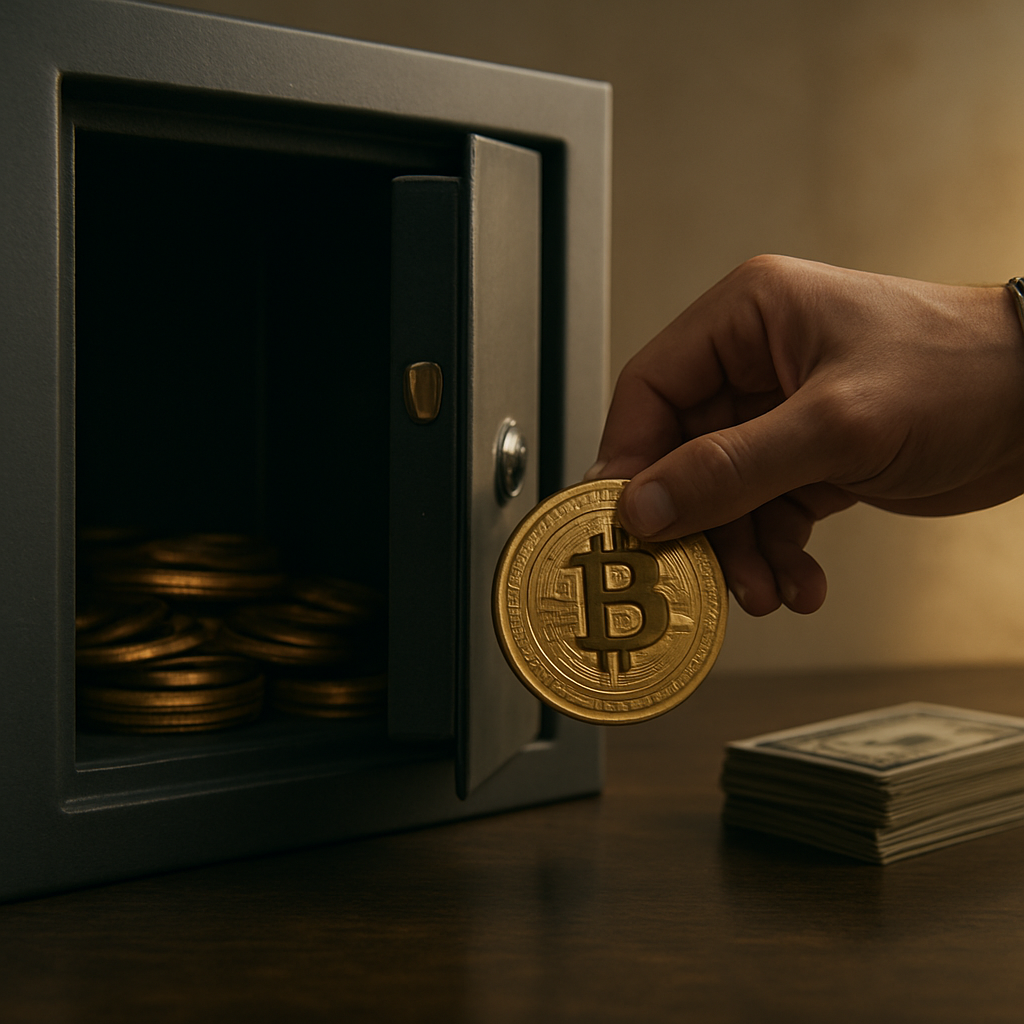
bitcoin whale transfer to bitcoin OTC desks may reflect miner profit taking, with bitcoin on-chain activity offering clues on supply pressure.
The latest bitcoin whale transfer from a Satoshi-era miner is not just a curiosity – it is a reminder that old supply still matters. A wallet linked to an early miner moved 2,650 BTC, roughly $203 million, to OTC desks while leaving 6,000 BTC completely untouched. That is not the behaviour of a holder abandoning the asset; it is the behaviour of a seller who wants to avoid stampeding through public order books. Markets often read these moves as a warning, but the real message is more straightforward: deep holders still control a meaningful share of liquid supply, and when they finally move, price discovery can shift quickly.
What makes this bitcoin whale transfer particularly telling is the choice of venue. OTC desks exist to absorb large blocks without triggering immediate exchange-side impact, which signals that the seller cares about execution quality more than optics. That distinction matters, because bitcoin has been trading in a relatively tight band around the high-$70,000s – a range where a single large block sale can expose just how much passive demand actually sits beneath the surface. In that sense, the transfer reveals as much about market structure as it does about any individual miner’s intentions.
The on-chain footprint is clean and legible: 2,650 BTC moved in multiple tranches to FalconX and Cumberland, while the originating wallet still holds 6,000 BTC. That split is significant. A miner seeking to reposition custody alone would have little reason to involve OTC counterparties; a miner chasing execution quality almost certainly would. This is where the bitcoin whale transfer becomes a genuine signal – not because it guarantees selling pressure, but because it fits a well-worn pattern traders have seen before: dormant coins tend to wake up precisely when holders want to monetise size with minimal slippage. For a broader framework on how institutional flows interact with coin supply, see our analysis of strong ETF inflows this quarter.
The surrounding context is equally important. Mining economics have tightened considerably in recent months, and public miners increasingly treat bitcoin treasuries as working capital rather than untouchable balance-sheet assets. Some sell to fund expansion, others to preserve operational flexibility, and some simply because volatile revenue cycles make sitting on large reserves increasingly difficult to justify. That environment helps explain why a bitcoin whale transfer from an early miner should be read alongside miner profitability data rather than in isolation. It also reinforces a straightforward truth: when old supply moves, the decision usually reflects balance-sheet logic far more than a change in long-term conviction.
A bitcoin whale transfer of this scale tends to puncture the lazy “whales are always bullish or always bearish” narrative. That framing is simply too blunt. A large transfer can represent distribution, hedging, treasury management, or OTC settlement – sometimes all at once. The real market problem is not the transfer itself but the uncertainty that trails behind it. If the buyer on the other side is an institution, coins merely change hands and the net effect is close to neutral. If the flow turns persistent, it becomes a supply overhang that gradually weighs on price. The clearest mental model is to think of it as a transfer of optionality from one strong hand to another. For a useful longer-term lens on why this dynamic persists, our piece on Bitcoin Store of Value explores how dormant supply continues to shape investor psychology long after coins go quiet.
There is a structural point here that deserves more attention than it usually gets. Bitcoin’s total supply may be fixed, but its liquid supply is anything but static – it shifts whenever long-dormant coins re-enter active circulation. That is precisely why seasoned traders watch old wallets so closely. As tracked by On-chain Bitcoin activity, on-chain data can reveal when theoretical selling pressure is about to become real execution. Should this transfer be followed by additional coins leaving cold storage, markets will lean more heavily on spot demand, ETF absorption, and broader risk appetite than on abstract scarcity arguments to hold price levels.
The bitcoin whale transfer carries weight because it sits at the intersection of supply dynamics, execution behaviour, and market psychology. For investors, that combination is more consequential than any headline dollar figure. A single large OTC move does not automatically signal a trend breakdown – but it does confirm that certain long-dated holders are willing to monetise into strength, or near-strength, rather than waiting for a euphoric bid that may never arrive. In a market that still depends on thin marginal demand at the edges, that willingness to sell quietly can matter more than it first appears. The honest takeaway is that bitcoin remains a liquidity-sensitive asset, not a mechanical scarcity story that runs on autopilot.
What to watch next is not the transfer itself but what follows. If the same wallet continues sending coins out, or if OTC flows later surface on public exchanges, the supply signal strengthens considerably. If the remaining 6,000 BTC stays put, this may prove to be nothing more than a one-off portfolio decision by a holder rebalancing after years of dormancy. Either way, the bitcoin whale transfer is a valuable reminder that old coins are never truly sleeping – they are simply waiting.
Focus: The bitcoin whale transfer is less a panic signal than a test of market depth.
Antonio Quinn, Director & Lead Bitcoin Analyst, The Chain Journal
A weekly briefing on Bitcoin price action, Ethereum, crypto market analysis, Bitcoin ETF flows, regulation, digital assets, and the narratives shaping crypto investing.
One sharp weekly read. No daily alerts. No recycled headlines.




