THE CHAIN JOURNAL
Independent Crypto Editorial

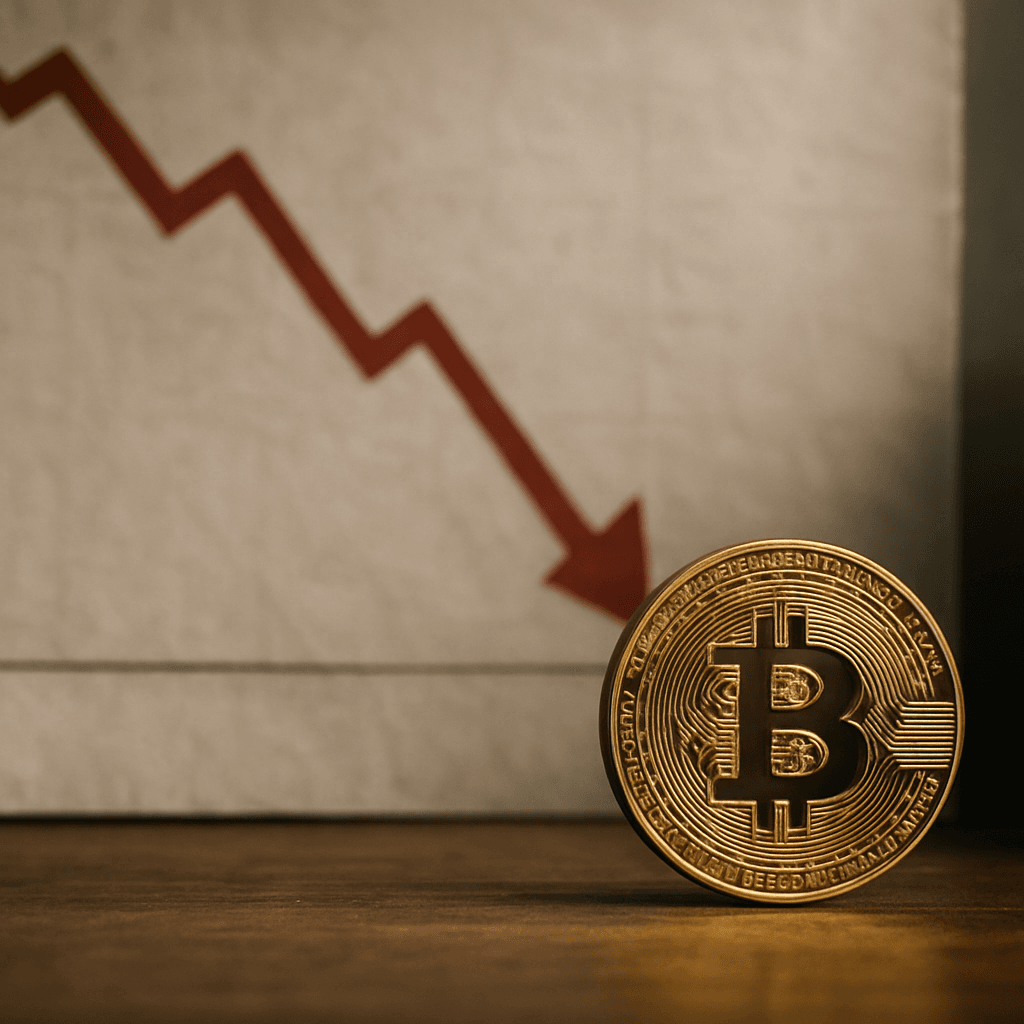
bitcoin treasury company Nakamoto slides after reverse stock split, while NAKA stock and bitcoin holdings expose the risks of leverage.
The latest move by bitcoin treasury company Nakamoto is less about optics than survival. A reverse split can lift the share price on paper, but it does nothing to repair the deeper problem: investors are no longer willing to pay a premium for a public vehicle whose equity has been hollowed out by dilution, weak sentiment, and a steadily shrinking margin of trust. In that sense, the bitcoin treasury company trade has shifted from narrative to arithmetic. Once the market stops rewarding the wrapper, the wrapper itself becomes the risk. The company’s reported 5,058 bitcoin holdings still carry weight, but only as one input in a far harsher valuation equation.
The stock’s nearly 67% year-to-date decline tells a cleaner story than any marketing deck ever could. A company can hold BTC and still trade like a distressed special situation if the equity structure looks fragile enough. That is precisely what makes this bitcoin treasury company episode instructive – it illustrates how quickly the “digital asset treasury” model can pivot from growth proxy to refinancing problem. For investors, the real question is no longer how many coins sit on the balance sheet. It is how much of that value can actually survive the capital structure wrapped around it.
Why is the bitcoin treasury company reaching for a reverse stock split now? Because compliance pressure has a habit of arriving before the market fully admits failure. Nasdaq’s minimum-bid requirements force management teams to act once the share price drifts too far below the listing threshold, and reverse splits are the fastest mechanical fix available. But mechanical is the operative word. A split can shrink the share count and nudge the quoted price higher; it cannot manufacture confidence. In a sector already defined by violent swings, a reverse stock split tends to read as a warning signal rather than a genuine reset.
The broader context compounds the concern. The digital-asset treasury trade still lives and dies by liquidity, and that liquidity has been uneven across the sector. As tracked by crypto market prices, sentiment has remained acutely sensitive to every move in Bitcoin, which means public treasury equities tend to amplify the underlying swing rather than absorb it. That is why NAKA stock matters beyond the story of a single company – it functions as a stress test for the entire model. When a public vehicle consistently underperforms the very asset it holds, the market starts asking whether the structure adds value or simply layers on leverage.
The mistake many investors make is treating a bitcoin treasury company as a cleaner form of direct BTC exposure. In practice, it is a layered bet: first on Bitcoin itself, then on management discipline, then on financing conditions, and finally on whether equity holders remain patient enough to absorb the distance between issuance and appreciation. That is why these vehicles can trade at deep discounts even when the underlying asset stays intact. The market is not only pricing coins – it is pricing execution, dilution risk, and the probability of survival.
The most telling comparison is with better-capitalized peers that have continued accumulating while preserving relative credibility. One useful frame here is the broader treasury trend supported by strong ETF inflows this quarter. Institutional demand still exists, but it is being allocated with far greater selectivity, and not every listed vehicle earns a free pass simply because it carries bitcoin holdings on its books. In that environment, the companies most likely to win are those that can raise capital without dismantling shareholder economics. The ones most likely to lose are those that mistake balance-sheet size for market quality.
For investors, the bitcoin treasury company model remains viable – but only under considerably stricter conditions than the previous cycle implied. A reverse split may buy time, yet time is not the same as value. The more important question is whether the company can preserve optionality without leaning on repeated equity issuance, aggressive financial engineering, or a market that remains perpetually forgiving. If the honest answer is no, then the discount being assigned is rational, not emotional. The market is now demanding proof that a publicly listed Bitcoin wrapper deserves to exist at all.
Three things are worth watching closely: whether the reverse split actually stabilizes NAKA stock, whether management meaningfully narrows the gap between reported bitcoin holdings and equity performance, and whether the company can avoid getting trapped in an endless loop of compliance-driven fixes. In this market, credibility functions as a capital asset. Once it is gone, it is considerably harder to rebuild than a share price.
Focus: bitcoin treasury company status only matters if the market still trusts the structure behind it.
Antonio Quinn, Director & Lead Bitcoin Analyst, The Chain Journal
A weekly briefing on Bitcoin price action, Ethereum, crypto market analysis, Bitcoin ETF flows, regulation, digital assets, and the narratives shaping crypto investing.
One sharp weekly read. No daily alerts. No recycled headlines.