THE CHAIN JOURNAL
Independent Crypto Editorial

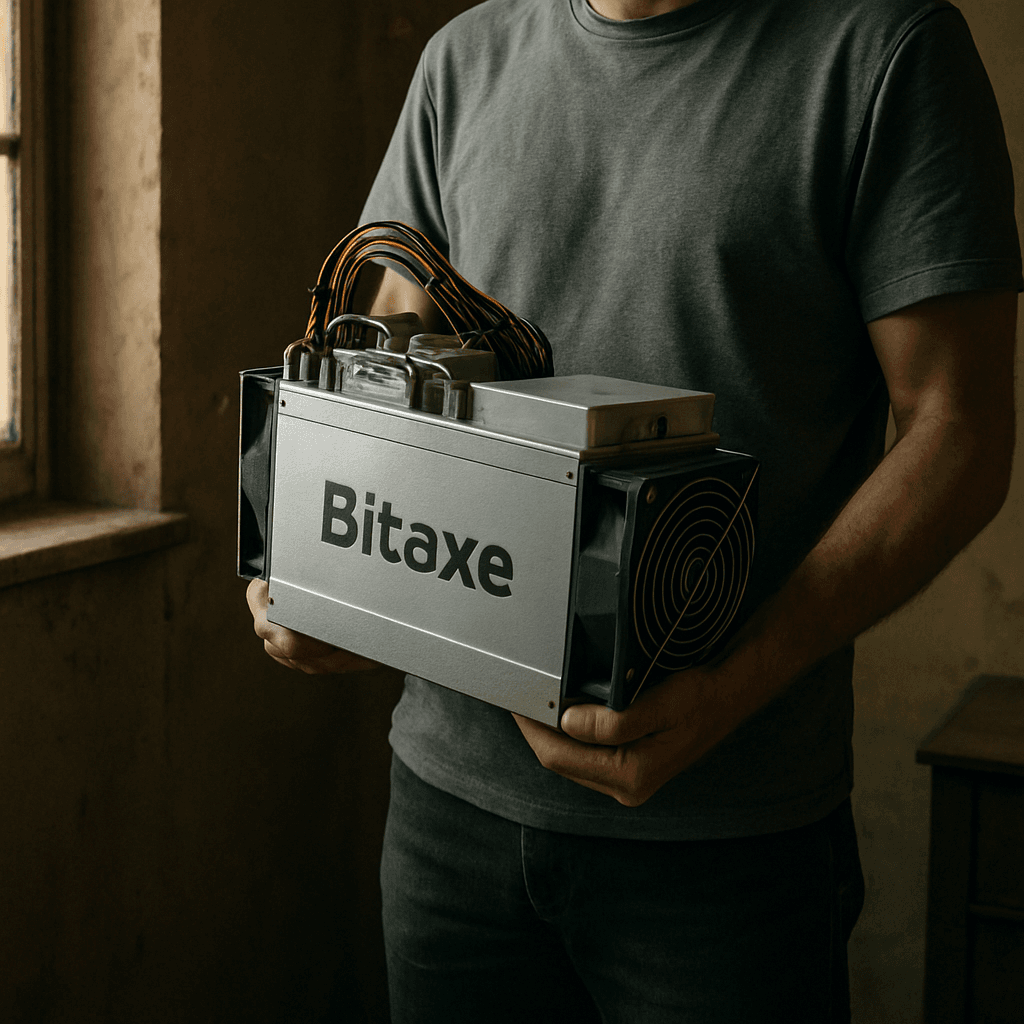
bitcoin solo mining just paid out $200K as a solo bitcoin miner used a bitaxe miner, reviving debate over bitcoin block reward odds.
bitcoin solo mining rarely reads like a rational strategy, and this latest block win does nothing to change that. A hobby-level miner reportedly found a full bitcoin block reward using a low-cost bitaxe miner, pulling roughly $200,000 in value from a single solve. The headline grabs attention, but the economics are no mystery: Bitcoin’s network keeps getting harder, and the probability curve remains brutal for small operators. This is less a story about a new business model than about a statistical outlier who happened to be holding the right ticket at the right moment.
That said, the outlier matters, because it shows how low the barrier has fallen for participating in bitcoin solo mining. Open-source hardware, lightweight pool setups, and cheap controllers have thrown the door open to hobbyists who once had no seat at a table dominated by industrial warehouses. Yet every fresh success also serves as a reminder of just how exceptional these wins are at the network’s current scale. A solo bitcoin miner can still get lucky – luck just isn’t a strategy.
The recent block win fits a broader pattern: solo miners have logged a series of rare payouts over the past year, including several six-figure hits. That doesn’t mean the odds have structurally improved. It means people keep testing the frontier of bitcoin solo mining because the upside is vivid and the cost of entry has become both emotionally and financially manageable. The right comparison isn’t to industrial mining – it’s to buying a very small, very asymmetric lottery ticket.
More important is the shape of the payout itself. A miner who lands a block captures the full reward – subsidy and fees combined – rather than splitting the pot with a pool. That asymmetry is precisely what makes a solo bitcoin miner attractive to tinkerers and speculators alike. But it also explains why expected value stays weak for most participants. Without careful attention to hash rate, power cost, and time horizon, bitcoin solo mining quickly becomes a story about hope rather than edge. The network has never rewarded enthusiasm on its own.
Part of the reason these stories keep surfacing is that the hardware frontier has become unusually accessible. A bitaxe miner is tiny compared with an industrial ASIC array, yet it still gives its owner a direct shot at block discovery – something far more tangible than renting cloud hashpower or buying a mining stock. The psychology matters here. People don’t need to be profitable on average to keep playing when the payoff distribution is this skewed. That asymmetry is the real appeal of the game.
Even so, the market should resist the urge to romanticize the result. bitcoin solo mining doesn’t scale into an alternative mining industry; it functions more like a proof-of-participation mechanism for enthusiasts who knowingly accept long odds. The broader mining stack remains the domain of efficient fleets, cheap power, and disciplined treasury management. One lucky block doesn’t reorganize that hierarchy – it simply demonstrates that Bitcoin’s architecture still accommodates randomness inside a brutally competitive system. For deeper context on how network fundamentals shape that competition, see Bitcoin Macro Analysis.
For investors, bitcoin solo mining is best read as sentiment data, not operating data. The latest block win illustrates how elastic the mining narrative can be relative to the underlying economics. A solo bitcoin miner can still generate an eye-catching headline, but industrial miners continue to own the cash-flow math, the long-term power contracts, and the balance-sheet discipline that actually moves markets. The real takeaway is that Bitcoin remains open enough for improbable success, yet constrained enough that the odds stay deeply unfavorable for most small operators – a dynamic worth tracking alongside Bitcoin ETF Institutional Flows as capital continues shifting toward more structured exposure.
What to watch next is whether hobbyist wins like this one stay isolated or begin clustering around specific tools, pools, or hardware designs. If more block finds arrive through accessible setups like a bitaxe miner, the story evolves from novelty into a genuine participation trend worth monitoring. For live context on network behavior, the most useful lens remains Bitcoin mining metrics, which frame difficulty, miner activity, and revenue pressure in real time.
Focus: bitcoin solo mining is not becoming efficient; it is becoming more visible.
Clara Reyes, Markets & Data Reporter, The Chain Journal
A weekly briefing on Bitcoin price action, Ethereum, crypto market analysis, Bitcoin ETF flows, regulation, digital assets, and the narratives shaping crypto investing.
One sharp weekly read. No daily alerts. No recycled headlines.