THE CHAIN JOURNAL
Independent Crypto Editorial

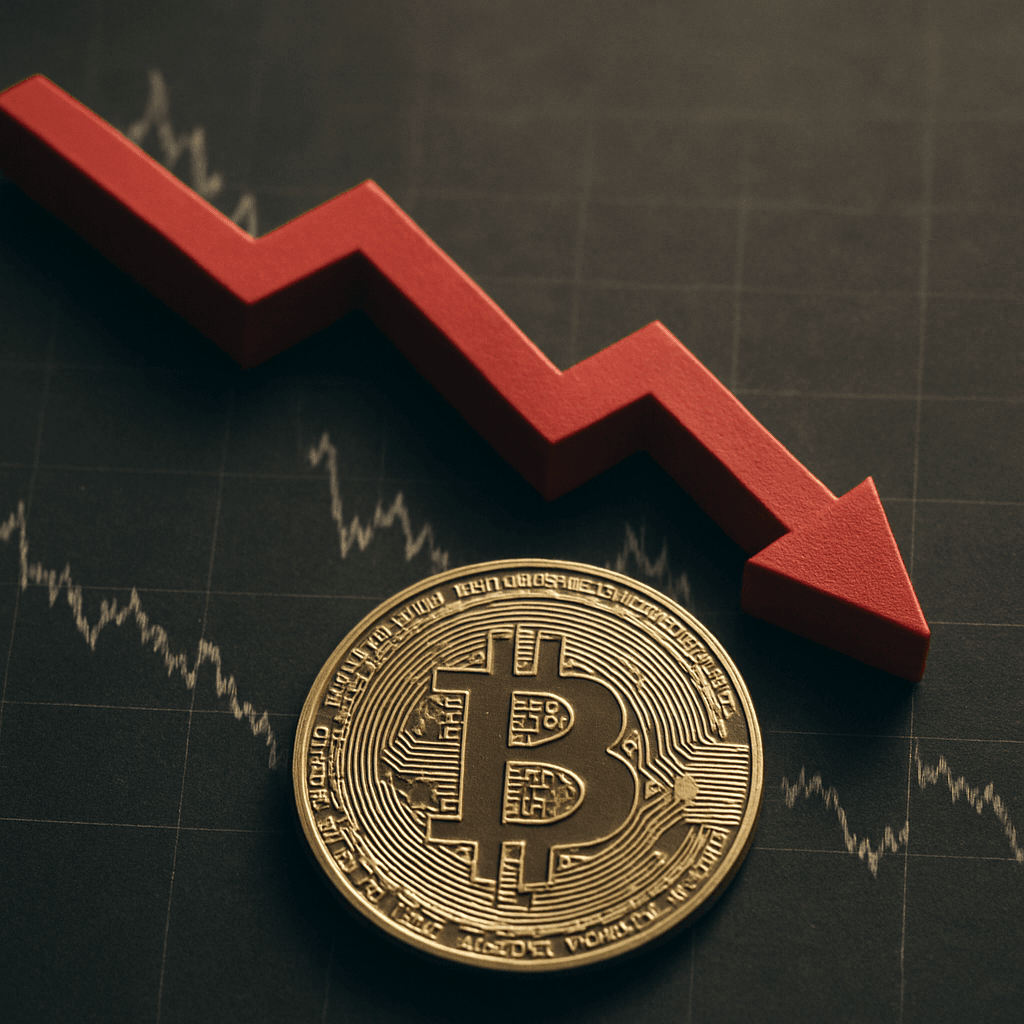
bitcoin price analysis deepens as bitcoin market update shows thinning demand, while bitcoin outlook hinges on whether sellers exhaust.
bitcoin price analysis now carries a cleaner message than the usual market noise: holders are under less unrealized pressure, but the market has not finished repricing risk. A 43-month low in the profit-and-loss ratio tells us more about compression than capitulation. In plain terms, the crowd is no longer sitting on the same level of excess gain it had when bitcoin traded near its cycle highs — and that matters, because crowded profit often feeds distribution. For now, the setup looks closer to a broad reset than a classic washout. That distinction is central to any serious bitcoin price analysis, because it separates temporary relief rallies from durable lows.
The important detail is not the headline number alone, but what it implies about positioning. When a market shifts from abundant paper profit toward a flatter cost basis, forced selling can slow — yet conviction does not automatically return. That is why the current bitcoin market update should be read alongside broader liquidity and risk appetite, not in isolation. The data point is constructive, but it does not erase the possibility that bitcoin can still drift lower if larger sellers keep using strength to unload inventory. That is precisely why the bitcoin outlook remains conditional rather than triumphant.
The cleanest read is that bitcoin is moving through a late-stage compression phase, not a confirmed recovery. Recent on-chain studies reveal a market where supply in profit has been squeezed, realized-price gaps have narrowed, and sentiment has turned cautious — but where the ingredients of a hard capitulation have not yet fully materialized. On that basis, the move feels more like a transition from euphoric pricing to a more balanced, institutional market. A separate layer of context comes from strong ETF inflows this quarter, which can support price even as old speculative leverage unwinds. That tension is exactly why the current bitcoin price prediction debate remains so divided.
The key implication is that the market may be forming a wider base rather than a single clean pivot. In a base-building process, price can spend weeks or months oscillating between optimism and disappointment before the trend fully repairs. That pattern is consistent with the broader on-chain picture, especially when compared with earlier cycle lows that featured sharper panic and faster forced liquidation. As tracked by on-chain analytics metrics, the data shows that supply has not vanished; it has simply become more expensive for buyers to chase. That difference matters considerably for the next leg.
The bullish reading says sellers are getting tired. The more disciplined reading says the market has simply moved from overheated to wounded. Those are not the same thing. In several previous cycles, durable lows formed only after the market first cleared leverage, then price, then confidence — in that order. Today, the structure looks more selective. Long-term holders are not necessarily panicking, but the absence of broad emotional surrender means the market can still test patience. That is exactly why premature bottom calls so often fail. For a bitcoin price analysis that respects history, the question is not whether the chart looks cheaper, but whether the supply overhang has truly been absorbed.
There is also a structural shift worth noting. Bitcoin no longer trades as a pure retail reflex; it moves inside a slower, more institutional decision cycle. That can reduce the speed of crashes but also prolong the digestion phase. When large allocators buy on committees and rebalance on schedules, price can drift inside wide ranges instead of snapping back in a straight line. This is where the bitcoin price outlook 2026 becomes more useful than any single day’s commentary, because it forces investors to think in ranges rather than react to headlines. The message is uncomfortable but practical: a slower bottom is still a bottom — it is just far harder to trade.
Bitcoin price analysis should now be framed around process, not prophecy. The 43-month low in the profit-and-loss ratio suggests the easy-money phase has already been spent, while the harder work of absorbing supply may still be underway. For investors, that typically means two things simultaneously: less upside to chase blindly, and less reason to fear that every pullback signals a structural break. The market may be closer to a tradable base than it was several months ago, but the bitcoin outlook is still being constructed, not declared. Patience and position sizing matter far more than bravado.
What to watch next is straightforward: whether spot demand can keep pace with any renewed distribution, whether realized losses stop widening, and whether price can defend nearby support after each failed breakout attempt. If the market can hold its range while turnover improves, the case for a durable floor strengthens meaningfully. If not, the current bitcoin price analysis will look like another pause inside a larger reset — and the process begins again.
Focus: bitcoin price analysis points to a market that is closer to balance, but not yet fully cleansed.
Mauricio Pompilii Marquez, Macro & Commodities Analyst, The Chain Journal
A weekly briefing on Bitcoin price action, Ethereum, crypto market analysis, Bitcoin ETF flows, regulation, digital assets, and the narratives shaping crypto investing.
One sharp weekly read. No daily alerts. No recycled headlines.




