THE CHAIN JOURNAL
Independent Crypto Editorial

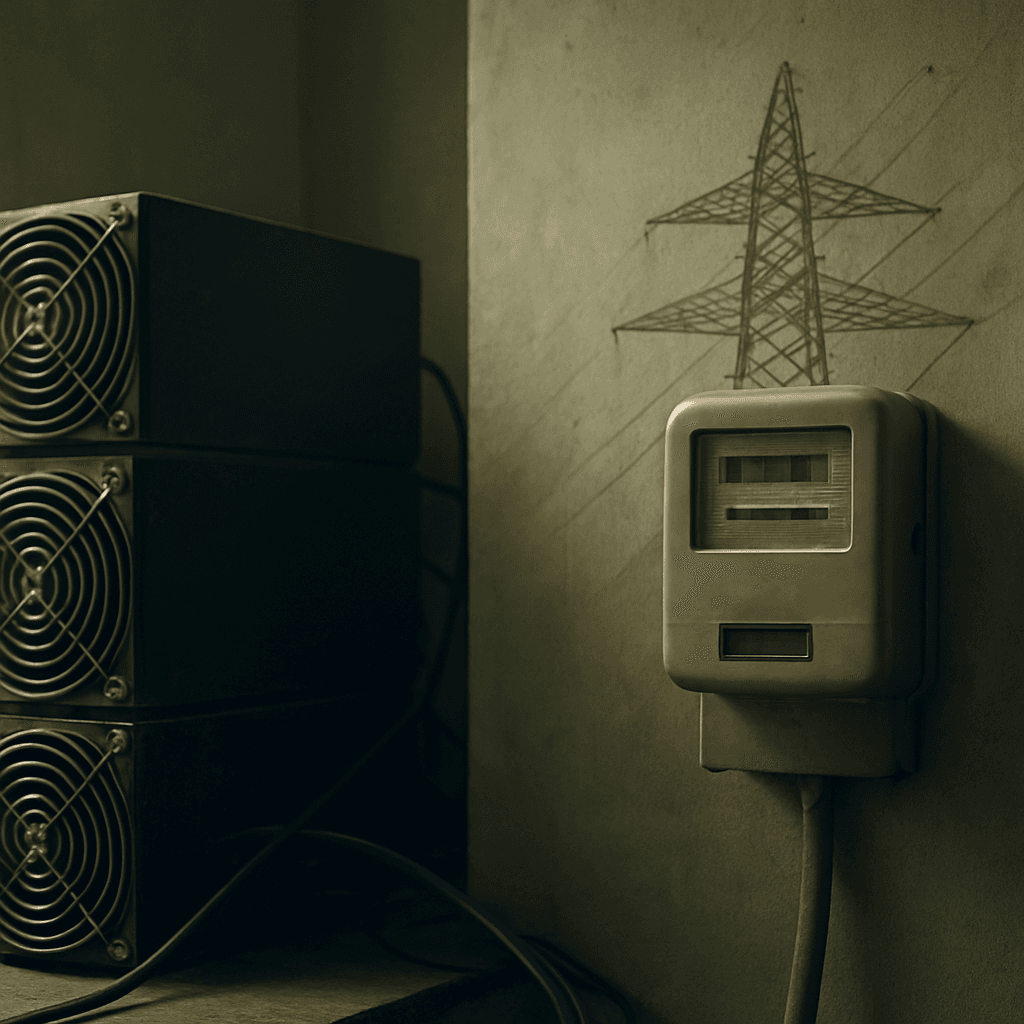
bitcoin miners ai infrastructure shifts fast as bitcoin miners power edge and bitcoin mining ai data centers turn grid access into revenue.
Bitcoin miners ai infrastructure is no longer a side story; it is becoming the core valuation question for the sector. The market is forcing miners to decide whether a substation, a transmission line, and a cooled site are worth more than the machines sitting on top of them. That shift matters because compute demand from AI operators is colliding with a power market that is already tight in the best locations. In that environment, a miner’s power edge functions as a form of optionality: not every operator can sell it, but those who can may command a meaningful premium.
The old model treated energy as an input. Bitcoin miners ai infrastructure treats energy access as an asset class. That sounds elegant in a pitch deck, but the economics are messier. A campus built for ASIC rigs is not automatically ready for liquid-cooled AI racks, high-density networking, or the uptime standards enterprise customers demand. Even so, the market has clearly begun repricing grid access for bitcoin miners as the scarce variable – not coin output itself. As tracked by blockchain infrastructure analysis, infrastructure narratives tend to harden when capital chases constrained capacity, and this one is following that pattern closely.
The recent math is not subtle. Through early 2026, several mining operators have publicly leaned into AI hosting and high-performance computing because standalone mining margins remain under serious pressure. One market estimate placed the average cash cost of producing a single bitcoin near $79,995 in late 2025, while another put average production costs around $88,000 in March 2026 – both well above spot levels that hovered in the high-$60,000 range at the time. Those numbers explain why bitcoin mining ai data centers have moved from promotional language into corporate strategy. When the core product struggles to cover the electricity bill, the real estate starts looking more valuable than the hash rate.
This is where the narrative gets genuinely interesting. A miner holding power contracts, land, and interconnection rights can often market itself as a future data-center landlord rather than simply a coin producer. That does not mean every site converts cleanly – it means buyers now weigh grid access, cooling capacity, and permitting speed alongside operating rigs. The phrase bitcoin miners ai infrastructure is useful precisely because it captures that blend of legacy mining and new infrastructure demand. For investors, the key question is not whether AI demand exists. It clearly does. The question is whether a given campus can be upgraded without burning through too much time and capital in the process.
The dominant market narrative holds that miners are simply pivoting from Bitcoin to AI and everything will rerate higher. That version is too clean. The more accurate read is that bitcoin miners ai infrastructure is producing a bifurcated industry: a small group with premium sites, strong utility relationships, and reliable financing access on one side, and a larger group stuck with stranded power that cannot easily attract enterprise tenants on the other. The winners may ultimately look less like crypto miners and more like specialized energy landlords with a digital revenue layer on top – a subtle but important distinction that changes how earnings should be modeled.
The bottleneck here is execution, not enthusiasm. Converting a mining campus into a credible AI site typically means far more than swapping out hardware. It can require higher-density power delivery, upgraded cooling infrastructure, better fiber connectivity, and contracts built to satisfy far stricter service-level expectations. That is precisely why bitcoin miners ai infrastructure stories often sound larger than near-term economics can justify. The market gravitates toward simple reratings, but infrastructure businesses tend to scale in stages – interconnection first, then tenant demand, then capital deployment, and only after all of that, durable margin. The most useful comparison is not mining itself but any constrained infrastructure business where location and permitting create the competitive edge.
Bitcoin miners ai infrastructure should be read as a balance-sheet story, not a hype trade. The real asset is frequently the power position itself, and the bitcoin mining ai data centers thesis only holds when that power can be monetized at a higher return than pure mining delivers. In practice, that means the strongest operators will be those capable of funding conversion without destroying shareholder value along the way. Too much dilution or expensive debt, and the transition can erase the benefit of the new revenue stream before it ever materializes.
Three things are worth watching closely: signed AI hosting contracts, concrete evidence of actual site conversion rather than marketing slides, and whether electricity economics improve enough to preserve meaningful optionality. Operators that can continue mining while leasing excess capacity to AI tenants may have the cleanest setup of all. Those that overpromise on future data-center economics risk ending up with expensive land and very little near-term cash flow to show for it. The market is no longer paying for hash rate alone; it is paying for bitcoin miners ai infrastructure that can be converted into durable, sellable power capacity.
Clara Reyes, Markets & Data Reporter, The Chain Journal
A weekly briefing on Bitcoin price action, Ethereum, crypto market analysis, Bitcoin ETF flows, regulation, digital assets, and the narratives shaping crypto investing.
One sharp weekly read. No daily alerts. No recycled headlines.




