THE CHAIN JOURNAL
Independent Crypto Editorial

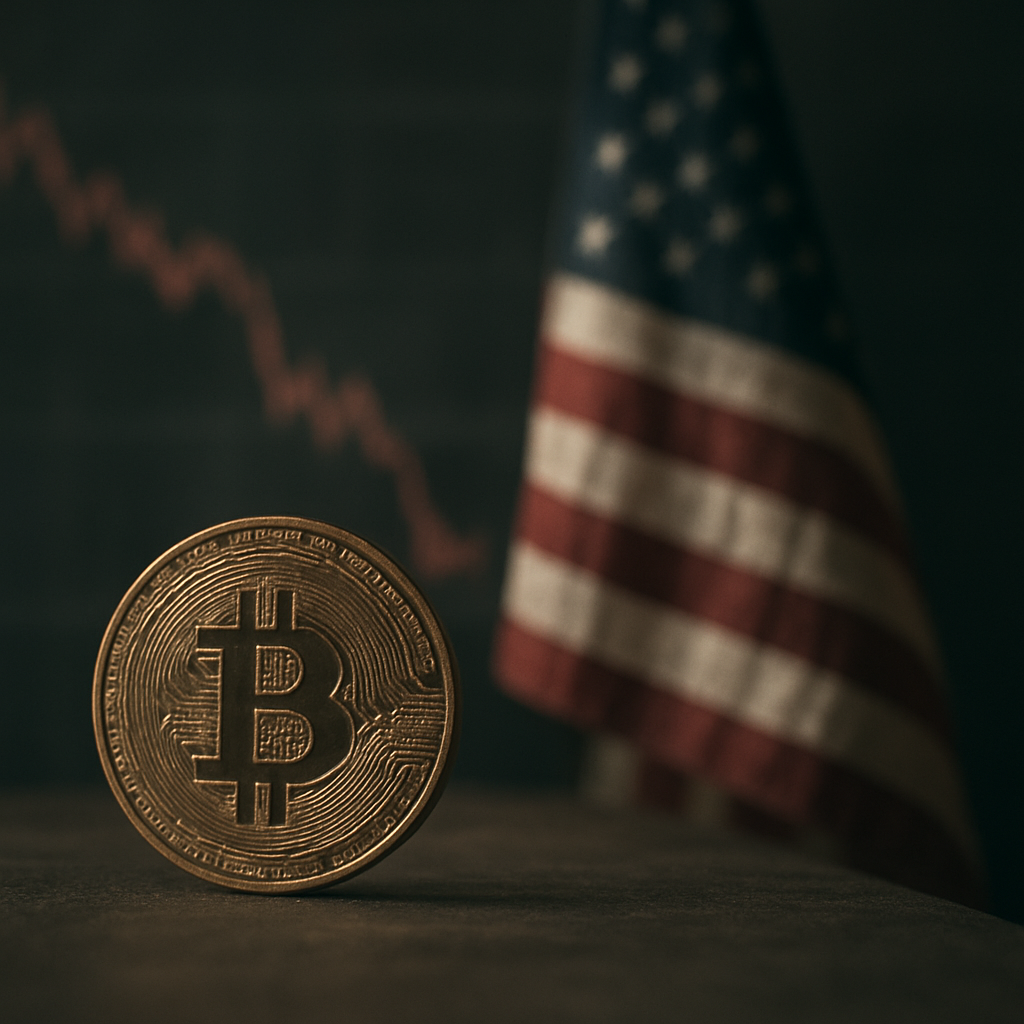
Bitcoin geopolitical risk deepens as Iran tensions hit prices. Bitcoin safe haven claims face pressure while crypto and geopolitics drive flows.
Bitcoin geopolitical risk is no longer a theoretical overlay – it is a direct input into intraday pricing, and the latest slide toward $76,000 makes that uncomfortably clear. Trump’s “clock is ticking” line on Iran did not single-handedly drive the move, but it handed traders a clean reason to de-risk into a market already leaning fragile. The response fits a familiar pattern: when uncertainty accelerates faster than liquidity can absorb it, Bitcoin behaves less like a macro hedge and more like a high-beta risk asset. That does not kill the long-term thesis, but it does demand a more disciplined reading of bitcoin geopolitical risk as a short-term volatility catalyst.
The headline itself matters less than what sits beneath it. Bitcoin had already been struggling to hold momentum through a series of sharp swings tied to the Iran conflict, and the leg lower arrived as sentiment deteriorated across crypto, equities, and energy simultaneously. In that kind of setup, bitcoin geopolitical risk becomes self-reinforcing: one shock erodes appetite, thinner order books absorb the resulting flow poorly, and the next sell-off lands faster and harder than the one before it.
Recent market data suggest this correction is something more than a knee-jerk headline reaction. Bitcoin was trading in the $76,000-$77,000 range following the latest escalation – a zone that now carries weight because it sits close to the lower boundary of the current risk band. Markets have also been watching whether spot ETF demand can provide a stabilizing floor. The strong ETF inflows that helped underpin price action earlier in the cycle have a flip side: when that institutional bid softens, the market loses one of its most reliable shock absorbers. That dynamic is precisely why traders have begun treating bitcoin geopolitical risk as a flow story rather than simply a war story.
Sentiment readings add another layer to the picture. The Fear and Greed Index shows a decisive rotation away from complacency and back toward caution – not a capitulation signal on its own, but a clear sign that positioning remains vulnerable. In practical terms, Bitcoin continues to trade as a liquid, globally accessible risk asset during periods of acute stress, which means bitcoin geopolitical risk can override the store-of-value narrative for days or even weeks at a stretch.
The central debate is whether conflict ultimately strengthens the bitcoin safe haven case or undermines it. The honest answer is that both outcomes are possible – just not simultaneously. In the initial wave of geopolitical shock, traders typically sell what they can, not what they believe in. That means Bitcoin can fall alongside equities, oil-sensitive names, and high-beta altcoins even when the longer-run argument for crypto and geopolitics remains structurally intact. In a market still dominated by leveraged positioning, liquidation pressure consistently outranks narrative in the short run.
This episode also reveals that the bitcoin war hedge thesis is conditional rather than absolute. If the conflict broadens, if sanctions deepen, or if capital controls tighten across affected regions, Bitcoin can genuinely become more useful as a tool for value transfer and preservation. But in the immediate market reaction, risk reduction is the dominant force – and that force does not pause to consider long-term fundamentals. The clearest interpretation, then, is not that “Bitcoin failed,” but that bitcoin geopolitical risk still cuts in both directions: it can generate real-economy demand for the asset while simultaneously punishing its price on centralized exchanges.
Bitcoin geopolitical risk has graduated from a side note into a baseline variable in any serious trading model. In the near term, investors would be wise to treat $76,000 as a genuine decision zone rather than an arbitrary round number – and to recognize that further deterioration in U.S.-Iran tensions could extend the move toward the mid-$60,000 range if forced selling begins to compound. The broader lesson is that Bitcoin can still serve a meaningful strategic role in a portfolio, but only when liquidity, sentiment, and macro conditions are not all working against it at once. Right now, the market is treating bitcoin geopolitical risk as a mandate to reduce leverage first and relitigate the thesis later.
The watchlist from here is relatively clean: crude oil’s reaction, Treasury volatility, the direction of ETF flows, and whether downside volume expands or quietly fades. If Bitcoin stabilizes while broader risk assets recover, the market will be signalling that the damage was largely sentiment-driven and containable. If it surrenders $76,000 on heavy volume, then bitcoin geopolitical risk is still the one setting the terms.
Focus: bitcoin geopolitical risk is exposing just how fragile the safe-haven narrative remains when real stress arrives.
[Arianna Vaz], [Portfolio Strategy Analyst], The Chain Journal
A weekly briefing on Bitcoin price action, Ethereum, crypto market analysis, Bitcoin ETF flows, regulation, digital assets, and the narratives shaping crypto investing.
One sharp weekly read. No daily alerts. No recycled headlines.




