THE CHAIN JOURNAL
Independent Crypto Editorial


RaveDAO’s RAVE token is now a case study in how quickly crypto narratives can turn on themselves. What looked like a breakout in a fast-moving altcoin has become a live dispute over whether the move was driven by organic demand or coordinated trading. The reason this matters goes beyond one token: when a market is dominated by a narrow float, aggressive leverage and exchange-driven attention, price discovery can stop looking like discovery at all. It starts looking like a stress test of who can exit first.
The latest twist is not simply that RAVE fell hard after its surge. It is that two large exchanges, Binance and Bitget, are reportedly examining the trading patterns that preceded the move. RaveDAO has denied involvement in manipulation, arguing against the idea that the team engineered the surge and subsequent collapse. That denial does not resolve the question. It instead shifts the focus to structure: who owned the supply, where liquidity sat, and how much of the price action was amplified by derivatives.
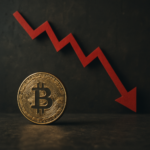
The broad outline is clear enough. RAVE climbed explosively before reversing sharply, with multiple reports describing a violent drawdown after the token’s peak. Some market trackers placed the top around the high teens to upper twenties in dollar terms, before the token retraced dramatically in a matter of hours and days. Precise levels have varied across venues, which is itself part of the story: when liquidity is fragmented and order books are thin, the same asset can show very different prints depending on where it trades. In that kind of market, volatility becomes feedback.
Context from recent coverage points to several ingredients that make manipulation accusations plausible, though not proven. Analysts cited highly concentrated token ownership, with a small number of wallets holding a very large share of supply. They also pointed to transfers into exchange wallets and unusually heavy liquidation activity as the rally accelerated. On social media, on-chain researchers framed the episode as a classic pump-and-dump structure. That is still an allegation, not a verdict. But it is enough to explain why exchanges would be forced to review the tape closely.
For exchanges, the reputational issue is bigger than one token. If a heavily concentrated asset can rip higher on leveraged demand and then collapse into accusations of insider control, the exchange does not merely face trading noise; it faces questions about market integrity. That is especially true when futures activity and spot activity interact in a tight loop. A small supply base, a crowded short book, and attention from influential traders can create a reflexive squeeze that looks organic on the way up and corrosive on the way down. That is the uncomfortable truth many traders prefer to ignore.
The deeper market lesson is that crypto still struggles with the same old problem in a more sophisticated wrapper: price can be manufactured faster than trust can be verified. Tokens with weak circulating supply, high concentration, and rapid exchange expansion are especially vulnerable. They attract volume, but not necessarily durable demand. When the flow turns, the market finds out whether there was a community beneath the chart or only a thin layer of speculative capital waiting for a headline. In RAVE’s case, the answer now matters to every exchange listing committee.
Investors should treat RAVE less as a directional bet and more as a liquidity warning. A token can rise for reasons that have little to do with lasting adoption, and the faster the move, the more important it becomes to ask who is providing liquidity on both sides. If a rally depends on concentrated holdings, derivative positioning and exchange attention, the downside can be brutal even without a formal finding of misconduct. The chart may recover, but trust often takes longer to rebuild than price.
What to watch next is straightforward: any formal findings from Binance or Bitget, fresh wallet analysis around supply concentration, and whether RAVE can hold stable trading without another liquidation cascade. If volume fades while volatility remains high, that would suggest speculation is still doing the heavy lifting. If the exchanges confirm suspicious patterns, the story will move from market drama to governance failure.
Focus: The real risk is not just manipulation; it is how easily a shallow token market can imitate legitimate price discovery before collapsing under its own structure.
Adam McCauley, Senior Blockchain Analyst, The Chain Journal
A weekly briefing on Bitcoin price action, Ethereum, crypto market analysis, Bitcoin ETF flows, regulation, digital assets, and the narratives shaping crypto investing.
One sharp weekly read. No daily alerts. No recycled headlines.