THE CHAIN JOURNAL
Independent Crypto Editorial

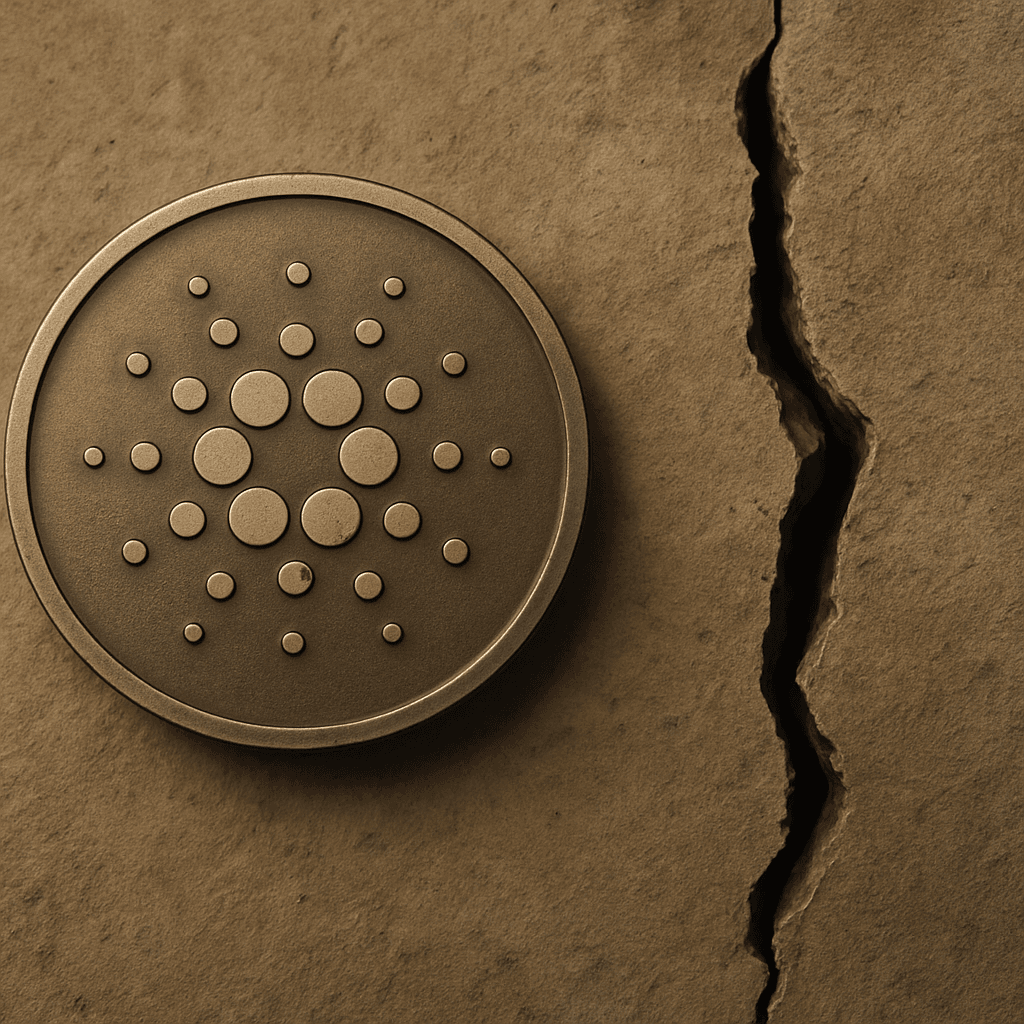
Cardano hard fork cuts smart contract costs and sets up Ouroboros Leios, with implications for fees, throughput and builder activity.
The cardano hard fork is not just another governance milestone – it is a reminder that this chain still treats engineering discipline as a genuine market differentiator. The latest upgrade lowers the cost of running smart contracts while laying groundwork for Ouroboros Leios, the next step in the network’s scaling roadmap. That matters because execution cost is no cosmetic variable. It shapes whether developers build, how complex applications can realistically become, and how much friction users absorb every time they interact with on-chain logic. In that sense, the cardano hard fork is less about headlines and more about quietly removing a recurring tax on activity.
The market tends to prize speed over architecture, but Cardano has consistently made the opposite trade-off. The cardano hard fork fits that pattern exactly. If the network can tighten costs without weakening determinism, it reinforces one of its few durable claims: predictable execution. That predictability carries real weight in a cycle where competing chains are chasing throughput narratives that still depend on subsidized usage or fragile fee markets.
At its core, the cardano hard fork is designed to refine the cost model rather than reprice the entire network from scratch. Cardano’s fee system remains deterministic – transaction charges tied to fixed protocol parameters, with script execution layered on top whenever smart contracts are involved. The practical result is that developers can estimate costs with greater confidence, while the chain trims some of the overhead associated with contract-heavy activity. Not a dramatic redesign, but a meaningful one for any application that depends on repeated execution at scale.
What matters next is the bridge to broader capability. The cardano hard fork has been positioned as an intra-era transition, which significantly reduces ecosystem disruption compared with older-style migrations. In plain terms, it is a plumbing upgrade with strategic intent. As with earlier protocol changes, the real value lies in what the system can absorb once the update settles. If the chain wants genuine DeFi traction, lower cardano smart contract costs are a prerequisite – not a bonus feature. That is why this upgrade deserves to be read alongside Ethereum Price Outlook 2026: both ecosystems are still navigating the same fundamental tension between cost, activity, and developer gravity.
The strongest case for the cardano hard fork is not immediate transaction growth – it is optionality. Cardano has spent years building a reputation for formal methods and deliberate upgrades, but markets eventually demand throughput, not just elegance. Ouroboros Leios is designed to push the network toward a more ambitious performance profile by separating functions that currently sit too close together in the pipeline. If that works as intended, the chain could shift from being merely reliable to something materially more competitive.
Even so, investors should resist the easy narrative that every upgrade automatically generates demand. The cardano hard fork lowers barriers, but barriers and adoption are not the same thing. Builders care about tooling, liquidity, and user distribution just as much as protocol theory. The network still needs a credible path from reduced fees to genuinely active usage. For that reason, this upgrade is best viewed through the lens of Crypto Market Sentiment: when risk appetite stays weak, technical progress alone rarely re-rates a token for long.
The cardano hard fork should be read as a cost-of-capital event for the broader ecosystem. It will not instantly transform ADA into a higher-beta growth asset, but it can meaningfully improve the economics of building on the chain – and that is where durable value tends to accrue. In a market that routinely overpays for narrative and underprices infrastructure, a lower-cost execution layer can matter far more than a flashy announcement ever will. If the chain continues pairing measured upgrades with visible developer traction, the medium-term setup quietly improves.
The signals that follow will matter more than the upgrade itself. Watch whether cardano hard fork momentum translates into higher script activity, whether wallet and tooling teams adapt quickly, and whether the broader launch trajectory for Ouroboros Leios holds to schedule. As tracked by Cardano protocol updates, the market will reward execution only if usage follows the engineering – and not a moment sooner.
Focus: The cardano hard fork matters because it tries to make Cardano cheaper to use before it tries to make it faster.
Antonio Quinn, Director & Lead Bitcoin Analyst, The Chain Journal
A weekly briefing on Bitcoin price action, Ethereum, crypto market analysis, Bitcoin ETF flows, regulation, digital assets, and the narratives shaping crypto investing.
One sharp weekly read. No daily alerts. No recycled headlines.