THE CHAIN JOURNAL
Independent Crypto Editorial

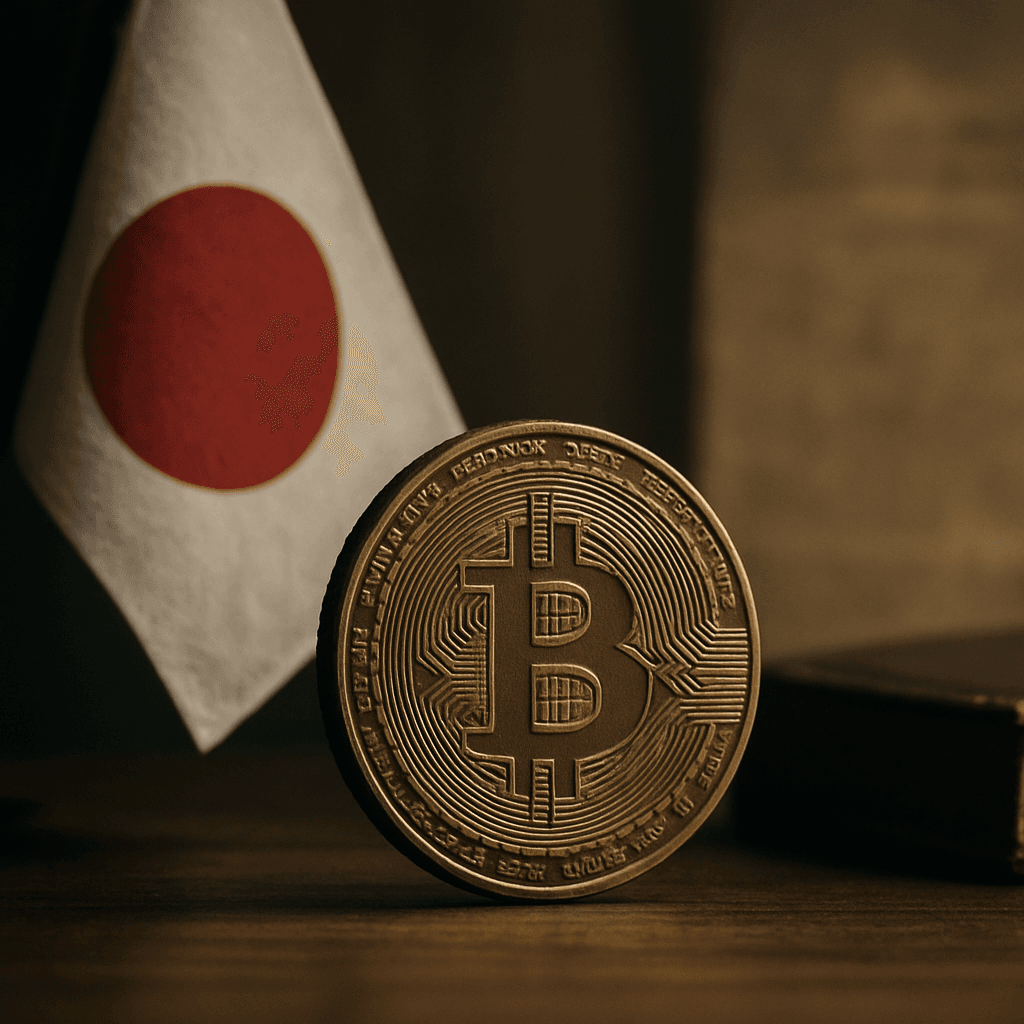
Crypto regulatory update in Japan adds insider-trading rules and tougher oversight, reshaping crypto policy news and bitcoin legal risk.
Japan’s crypto regulatory update is not just a compliance footnote – it is a signal that the country is finally treating digital assets as market infrastructure rather than a parallel experiment. The revised Financial Instruments and Exchange Act brings insider trading rules, tighter penalties, and broader oversight into the crypto perimeter, which means Tokyo is no longer content to police exchanges only at the edges. For a market that has spent years threading the needle between innovation and caution, that is a meaningful shift in posture. The practical message is clear: the era of crypto operating in a semi-separate legal lane is narrowing fast.
That matters because Japan has always been more conservative than some crypto hubs, but also more serious about institutional legitimacy. In that sense, this crypto regulatory update looks less like a crackdown and more like an attempt to standardize conduct across a market that has long resisted standardization. The government is not simply chasing bad actors – it is trying to define what fair dealing should look like in an environment where information, tokens, and trading venues move faster than most rulebooks can follow. If you want to understand the direction of travel, follow the rulebook, not the headlines.
The most consequential element of this crypto regulatory update is the shift in legal framing. Crypto is being pulled closer to securities-style supervision, where disclosure, conflicts of interest, and market abuse matter as much as licensing. That brings Japan closer to the logic already visible in broader global standards, including the push for tighter market integrity rules under crypto regulation oversight. The point is not to declare every token a stock. It is to ensure that tokens with genuine economic relevance cannot escape the basic discipline applied to other tradable assets.
Japan’s approach also fits a wider pattern already taking shape in 2026 policy work. The Financial Services Agency has been building toward a more integrated framework, and recent materials suggest the authorities want crypto treated with greater consistency across disclosure, supervision, and enforcement. That consistency matters for liquidity. Markets typically dislike uncertainty far more than they dislike regulation itself. A well-defined crypto regulatory update raises the cost of non-compliance while simultaneously lowering the friction for firms that can actually meet the standards.
For investors, the immediate implication is not necessarily a dramatic price reaction. It is a re-pricing of jurisdictional risk. Japanese exchanges, issuers, and related service providers now operate in a market where conduct rules carry real weight – and that environment tends to reward platforms with cleaner governance.
The bigger story is that this crypto regulatory update may shape how other Asian markets approach supervision. Japan often functions as a policy reference point precisely because it combines large retail participation, serious institutional players, and a strong regulatory state. When Tokyo tightens the perimeter, it sends a signal that crypto can be folded into the existing financial order without gutting its economic utility. That is not the same as legitimizing every asset; it is legitimizing the market structure around them.
There is also a geopolitical dimension worth acknowledging. Countries seeking capital formation without inviting disorder are increasingly gravitating toward a middle path: permit innovation, but insist on auditability and accountability. Japan’s move fits that template exactly. It also creates a cleaner environment for future products, since institutional capital rarely arrives in size until conduct rules are clearly visible. For a market that still trades heavily on narrative, the deeper reality is that regulation can be a liquidity catalyst when it reduces ambiguity rather than compounds it.
In that context, the chain between policy and price is not linear, but it is real. A stronger legal framework can support broader participation – especially if it eventually helps bridge the gap between crypto ownership and regulated investment products. That is precisely why this crypto regulatory update should be read as market design, not merely legal housekeeping.
The first takeaway from this crypto regulatory update is that Japan is making a deliberate bet on market credibility. Investors should treat that as a structural upgrade, not a short-term trading signal. When conduct rules tighten, weaker venues typically feel the pressure first, while stronger platforms gain relative trust and market share. For Bitcoin, the relevance is indirect but still meaningful: cleaner regulation in a major economy improves the quality of the market surrounding it, and that matters when capital allocators compare jurisdictions and decide where to deploy.
The second thing to watch is implementation. If the rules are enforced consistently, the market will adapt quickly; if they remain largely symbolic, the impact fades just as fast. The next indicators to monitor are exchange disclosures, enforcement actions, and any further movement on product access – because those will tell us whether this crypto regulatory update becomes a genuine template for the region or simply another headline that aged poorly.
Focus: crypto regulatory update in Japan is a credibility test, not a cosmetic reform.
Antonio Quinn, Director & Lead Bitcoin Analyst, The Chain Journal
A weekly briefing on Bitcoin price action, Ethereum, crypto market analysis, Bitcoin ETF flows, regulation, digital assets, and the narratives shaping crypto investing.
One sharp weekly read. No daily alerts. No recycled headlines.