THE CHAIN JOURNAL
Independent Crypto Editorial

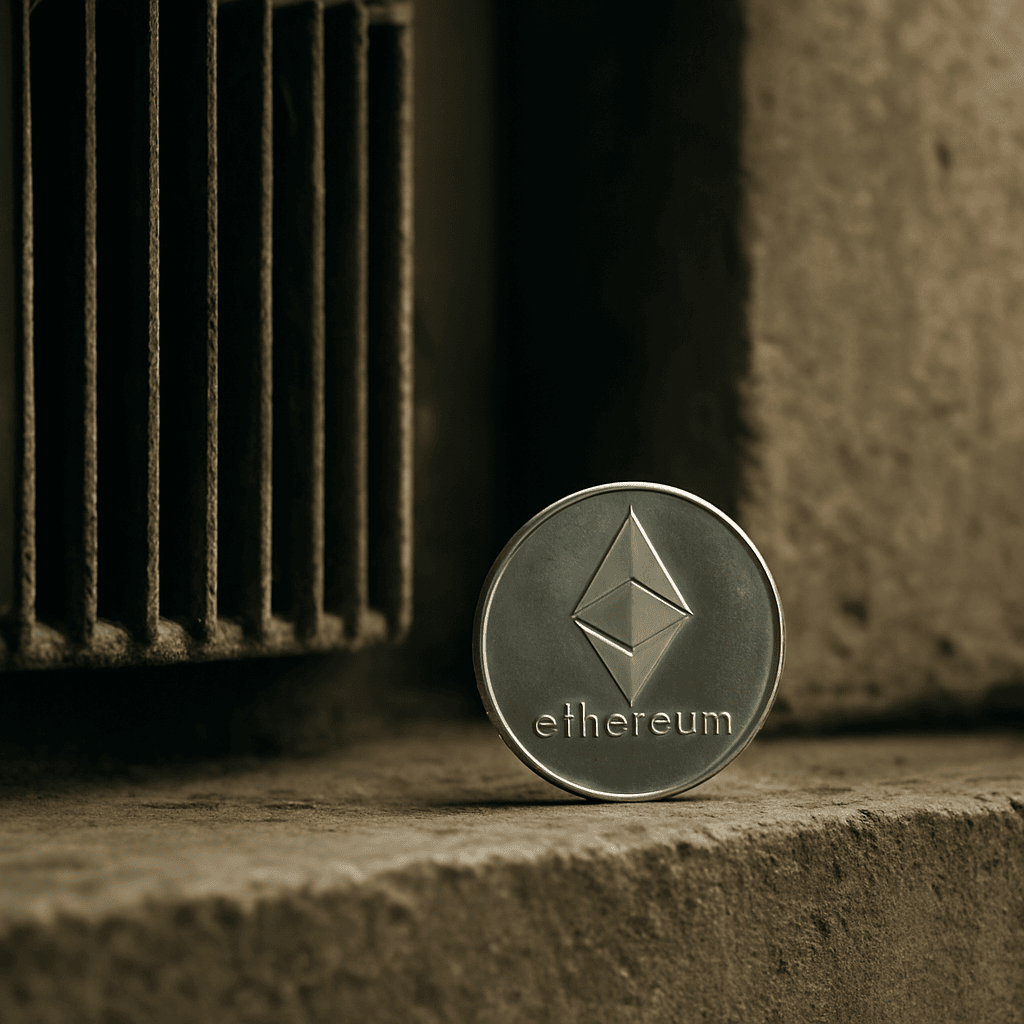
ethereum energy consumption looks modest in Cambridge study, with ethereum energy intensity near the bottom of PoS peers and proof of stake energy use falling.
Ethereum energy consumption is now best understood as a post-Merge feature, not a legacy liability. Cambridge’s latest estimate puts the network at roughly 7.87 GWh a year – tiny by public-blockchain standards and far below the scale most investors still associate with Ethereum. The more interesting point, though, isn’t the absolute number. It’s the energy intensity ranking: among proof-of-stake networks studied, Ethereum lands near the lower end. That matters because markets tend to treat “PoS” as a single category with uniform efficiency, which is far too blunt an instrument. The network’s operating profile now resembles a lean settlement layer far more than it does an industrial-scale compute race.
For investors, ethereum energy consumption carries weight because it shapes how institutions frame the asset across sustainability screens, tokenization pilots, and infrastructure mandates. The contrast with Ethereum’s proof-of-work era is still doing reputational work – and not always accurately. Even today, that historical memory can distort how treasury desks, ETF allocators, and corporate finance teams think about the protocol. Put simply, the chain has evolved faster than the market’s shorthand for it.
The Cambridge result sits comfortably alongside the broader consensus that Ethereum’s proof-of-stake design slashed power demand after the Merge. The network no longer relies on miners competing with hardware; it depends on validators staking capital, which shifts the energy profile from compute-intensive to coordination-intensive. That distinction is anything but cosmetic. It’s the core reason why ethereum energy consumption now belongs in the same conversation as low-footprint financial infrastructure rather than heavy industrial processing.
A useful reference point: Ethereum’s own documentation describes annual energy use in the ~0.0026 TWh range, while noting that estimates vary by methodology and validator mix. The gap between that figure and Cambridge’s framework isn’t a contradiction – it’s a reminder that measurement conventions matter. Investors should read ethereum energy consumption as a range of estimates anchored by one consistent conclusion: the network is structurally energy-light relative to its economic throughput. As tracked by Ethereum protocol smart contracts, the data reflects a mature proof-of-stake system whose costs are overwhelmingly software and coordination, not raw electricity burn.
The market has largely moved on from Ethereum’s energy story. That’s only half the picture. The direct electricity bill is now small, but perception still carries pricing power. Institutional adoption rarely turns on engineering facts alone – it turns on whether those facts clear an allocator’s policy filter. That’s why ethereum energy intensity remains relevant even after the technical debate has been settled. A lower footprint eliminates one friction point for pensions, sovereign vehicles, endowments, and public companies that must justify digital-asset exposure against ESG mandates or internal governance screens.
It’s equally important not to overstate the narrative victory. Lower energy use doesn’t make Ethereum risk-free or automatically superior on every axis – it simply removes one of the easiest objections. The chain’s live debates are now about scaling, fee volatility, sequencing, and economic design. Those are harder questions than electricity consumption, but they’re also the right ones. If the old critique was that Ethereum burned too much power for its utility, the new challenge is whether it can keep expanding that utility without reintroducing complexity the market can’t easily underwrite.
Ethereum’s roadmap helps explain why the energy debate is receding but not gone. Layer 2 adoption, data-efficiency upgrades, and continued protocol refinement all reinforce the case that ethereum energy consumption will stay low even as the network absorbs more activity. That’s where Ethereum Price Outlook 2026 becomes a useful lens: valuation is increasingly tied to throughput, fees, and utility capture, not electricity optics.
Ethereum energy consumption should no longer be treated as a material bear argument against the asset. If anything, the Cambridge framing strengthens the case that Ethereum now behaves like digital infrastructure with a comparatively small environmental footprint. For portfolio allocators, that’s meaningful – it clears a common committee objection and makes the asset easier to position within broader digital-asset or tokenization themes. The investment case that remains is built on usage, fees, and network effects, not a fading environmental critique.
The signals worth watching from here are clear enough: validator participation rates, Layer 2 activity, and whether institutional players continue to separate Ethereum from older proof-of-work narratives. If the market keeps updating its mental model – and the evidence suggests it is – ethereum energy consumption will settle into a background variable rather than a headline risk.
Focus: ethereum energy consumption is now low enough that the real debate has shifted decisively from power draw to economic utility.
Arrianna Vaz, Portfolio Strategy Analyst, The Chain Journal
A weekly briefing on Bitcoin price action, Ethereum, crypto market analysis, Bitcoin ETF flows, regulation, digital assets, and the narratives shaping crypto investing.
One sharp weekly read. No daily alerts. No recycled headlines.




