THE CHAIN JOURNAL
Independent Crypto Editorial

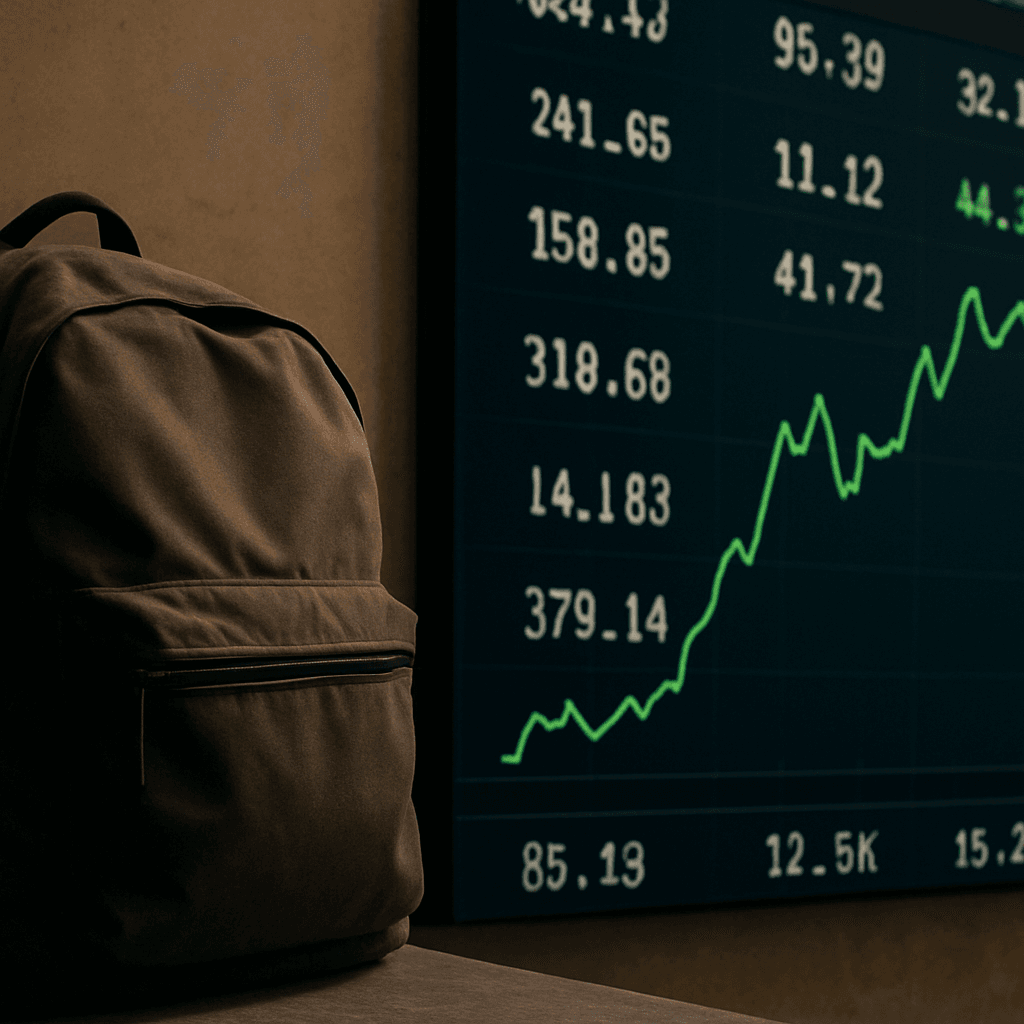
Tokenized stocks are moving fast as Backpack expands tokenized equities and 24/7 stock trading, pressuring old market hours.
Tokenized stocks are no longer a niche experiment at the edge of crypto – they are becoming a direct challenge to the long-standing assumption that equity markets must sleep. Backpack’s latest push matters because it treats time as a feature, not a limitation. When a share-like instrument can trade through the weekend, it stops behaving like a wrapper around Wall Street hours and starts behaving like a continuous risk asset. That shift changes how traders position around earnings, macro headlines, and the gaps that open between cash sessions. It also changes who gets to set the first price when traditional exchanges come back online. Tokenized equities, in other words, are not simply about access. They are about who owns the price-printing function when the major venues are dark.
Backpack is entering a field that has moved from theory to genuine competition in months rather than years. The recent wave of launches and platform roadmaps reveals a consistent pattern: exchanges, broker-dealers, and crypto-native venues alike now view 24/7 stock trading as a strategic moat worth defending. The logic is hard to argue with. Crypto already conditioned users to expect continuous markets, and once investors can rotate between spot coins, synthetic equity exposure, and on-chain stock proxies inside a single venue, the old trading day starts to look increasingly artificial. That does not mean the model is frictionless. It means the market is being forced to re-examine what a “close” even is.
Backpack’s move fits a broader realignment in market structure. The firm has built its offering around on-chain securities designed to move continuously, and that ambition mirrors the wider push from both crypto platforms and incumbent finance to make tokenized stocks tradable beyond the bell. One recent launch placed 24/7 trading and wallet-to-wallet transferability at the center of its pitch, while another major platform has already signaled plans to expand into tokenized equity products. The message is consistent: the sell-side no longer wants to cede the overnight window to unregulated venues and synthetic derivatives. If an issuer can deliver crypto stocks with tighter compliance, better infrastructure, and simpler distribution, liquidity will eventually follow.
This is also why the sharpest comparison here is not with meme-driven speculation but with market infrastructure. As tracked by crypto market prices, the appetite for around-the-clock trading already exists; the open question is whether the quality of that liquidity can mature fast enough to support serious capital. Recent research suggests that even when assets can trade continuously, activity still gravitates toward traditional equity hours. That means the weekend price may be informative – but not always authoritative. For investors, the implication is subtle yet significant: tokenized equities may improve access long before they improve price efficiency.
The biggest mistake would be assuming that tokenized stocks automatically eliminate market frictions. They may reduce delay, but they do not erase the structural gap between on-chain trading and the underlying share register. That gap can generate discounts, arbitrage noise, and a persistent question about what a token holder actually owns. Does the token deliver economic exposure, transfer speed, or genuine equity rights? Different structures answer that question differently, and the result is a market that looks unified on the screen while still carrying the legal and liquidity seams of two separate systems underneath. That is not a flaw – it is, at present, the business model.
The more compelling point is that tokenized equities may ultimately function as a pressure test for legacy venues rather than a replacement for them. If Backpack and its peers can sustain meaningful volume, incumbents will face hard choices about settlement speed, extended hours, and portable collateral. That dynamic could make the entire market more responsive to news that breaks outside U.S. trading hours – from earnings releases to geopolitical shocks. It also raises the probability that overnight moves in 24/7 stock trading begin feeding back into the opening auction on major exchanges, establishing a new hierarchy between continuous and conventional liquidity. The bridge between those two worlds is still under construction, but the traffic is already heavy.
Tokenized stocks matter because they expose a deeper truth: markets do not need another ticker – they need a better clock. Backpack’s entry suggests the next competitive edge will belong to whoever can combine deep liquidity, clean compliance, and the ability to merge weekend price discovery with institutional-grade controls. If that combination holds, tokenized equities could become a genuinely useful overlay for active traders and a credible threat to the monopoly of traditional trading hours. If it falters, the exercise will still have taught the market something valuable: investors want continuous access, but they will not tolerate fragile structure for long.
What to watch next is execution, not slogans. Track whether trading volume holds after the initial burst of novelty fades, whether spreads stay tight under real conditions, and whether the roster of crypto stocks available on-chain continues to grow. Watch, too, whether traditional venues accelerate their own competing launch plans. The debate is no longer about whether 24/7 stock trading will arrive. It is about which infrastructure earns trust first – and keeps it.
Focus: tokenized stocks are less a product than a referendum on whether equity markets can survive – and thrive – as an always-on system.
Antonio Quinn, Director & Lead Bitcoin Analyst, The Chain Journal
A weekly briefing on Bitcoin price action, Ethereum, crypto market analysis, Bitcoin ETF flows, regulation, digital assets, and the narratives shaping crypto investing.
One sharp weekly read. No daily alerts. No recycled headlines.




