THE CHAIN JOURNAL
Independent Crypto Editorial

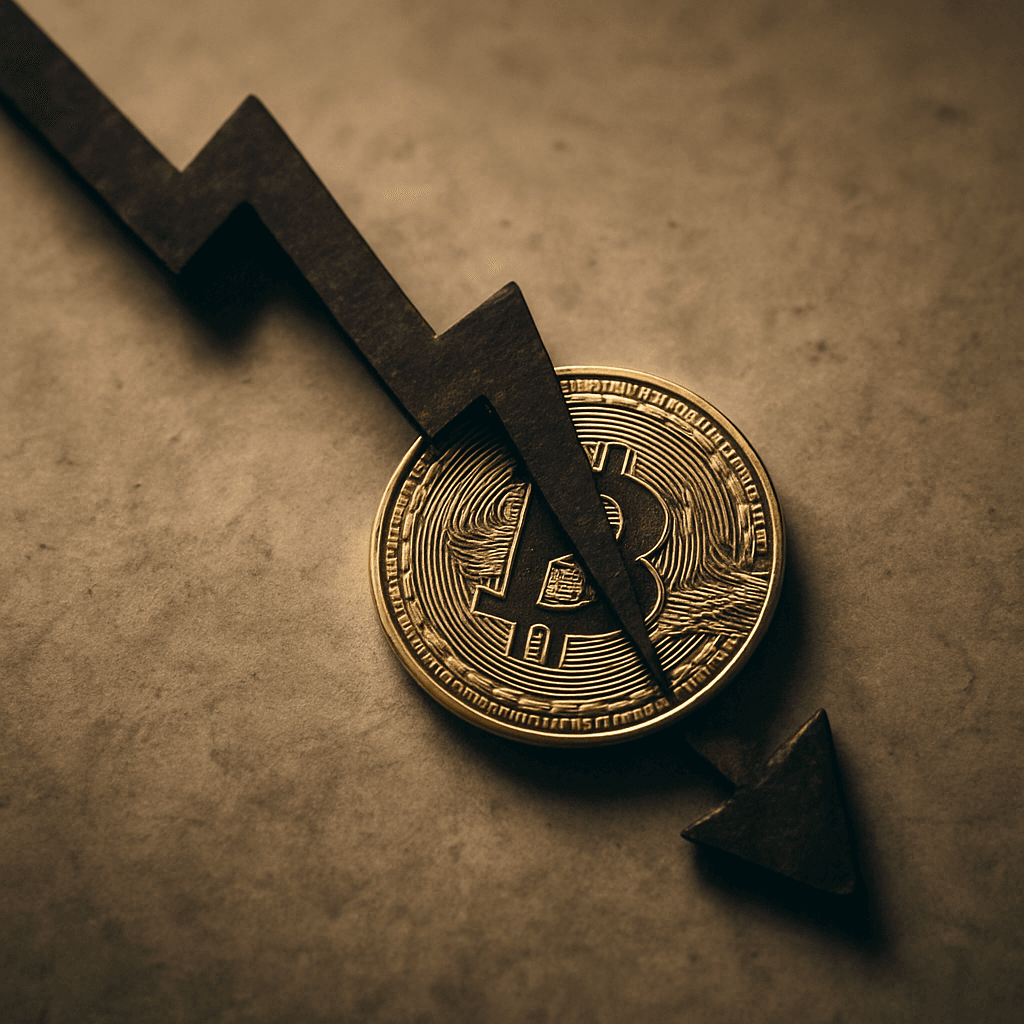
bitcoin price analysis of the TD9 reversal, bitcoin outlook, and bitcoin market update as flows and momentum diverge.
Bitcoin price analysis has shifted from a simple trend-following exercise into a genuine test of whether the 2022-style capitulation phase has already run its course. The latest TD9 reversal signal carries weight precisely because it arrives after a prolonged stretch of lower highs, failed rallies, and a market that spent much of 2026 grinding against a fragile macro backdrop. For traders, that is not a guaranteed bottom. It is, however, a meaningful sign that downside momentum may be losing its sharpest edge. In bitcoin price analysis, that distinction matters far more than any headline. Markets have a habit of turning before narratives catch up, and first technical signals rarely come gift-wrapped with perfect confirmation.
What makes this particular bitcoin price analysis compelling is the timing. Bitcoin recently spent several weeks consolidating within a broad support area in the low-$70,000s – a zone that has drawn both bargain hunters and fresh skeptics in equal measure. That is precisely where bear-market transitions tend to get messy: liquidation pressure eases, volatility compresses, and late sellers begin to outnumber forced buyers. In that kind of environment, the bitcoin outlook becomes less about prediction and more about probability. The signal suggests the bear case is losing conviction. It does not yet declare the bull case dominant.
The current bitcoin price analysis hinges on a deceptively simple question: is this a cyclical rebound inside a still-broken trend, or the early stages of a genuine regime change? The answer remains unsettled. Bitcoin’s recent technical behavior resembles a market that has already shaken out weak hands but still needs stronger confirmation before a durable reversal can be declared. TD9 readings matter because they tend to cluster near exhaustion points rather than in the middle of healthy uptrends. Even so, a single reversal print rarely overrides the broader structure on its own. What the market actually needs is a sequence – higher lows, improving breadth, and a clean reclaim of prior resistance – to convert one signal into a credible trend shift.
There is also a structural dimension to this bitcoin market update that traders cannot afford to dismiss. Spot ETF demand has fundamentally changed how dips get absorbed, even when momentum looks uninspiring. That is one reason the old “crypto winter” template no longer maps cleanly onto today’s market. Selloffs can still be severe, but the post-2024 capital base is different – more institutional in character, and more sensitive to macro liquidity conditions than to retail exuberance. That shift has been one of the most consequential inputs to strong ETF inflows this quarter, and it helps explain why every meaningful drawdown now gets met with faster passive demand than anything seen in prior cycles.
The deeper question in bitcoin price analysis isn’t whether one indicator flashed green – it’s whether the market has already priced in enough bad news to absorb the next macro shock. That is where dominant narratives so often fail traders. Most people treat technical reversal signals as binary events, when in practice they are conditional. A reversal signal is not a verdict; it is a warning that the prior trend is losing authority. Should Bitcoin continue defending its current support band and avoid a fresh breakdown into lower-liquidity territory, the probabilities tilt toward range repair rather than renewed collapse. Should that support give way, the very same signal will be remembered as an early but ultimately incomplete call.
This is where comparisons with prior bear-cycle behavior become instructive. The 2022 lows materialized only after repeated failed bounces, severe sentiment damage, and a market structure that finally, exhaustedly capitulated. The present setup is less violent, but the underlying logic rhymes: technical exhaustion arrives first, then comes the debate over whether the worst is truly behind us. For anyone tracking the broader macro frame, the relationship between Bitcoin and gold remains a live question – particularly when assessing whether Bitcoin is behaving more like a risk asset or a monetary hedge. That debate is worth following alongside Bitcoin vs Gold Inflation Hedge, because how investors answer it shapes how they interpret every new reversal print.
For investors, bitcoin price analysis at this juncture should be framed around risk management rather than triumphalism. The TD9 signal improves the odds that the bear market has entered a later stage, but it does not rule out one more flush to the downside. Put simply, the market may be closer to a bottom than it was several weeks ago while still being far from a cleanly confirmed new uptrend. That reality puts a premium on position sizing, time horizon, and entry discipline – not on trying to pinpoint the exact low. The better question to ask is whether the market is building enough absorption capacity to sustain a base worth trading.
The next signals to watch are relatively clear: weekly closes above nearby resistance levels, stability in ETF flows, and Bitcoin’s ability to hold the current support zone on retests. If momentum firms while flows remain constructive, the bitcoin outlook can improve quickly. If support cracks and sellers reassert control, TD9 will be remembered as a useful early warning rather than a definitive call. Either way, bitcoin price analysis now sits squarely at the junction of technical fatigue and structural demand – and that is a more interesting place to be than most of 2026 has allowed.
Focus: Bitcoin price analysis now suggests the bear market is weakening, but confirmation still depends on whether support holds and buyers keep showing up.
Monica Ramires, Senior Markets Analyst, The Chain Journal
A weekly briefing on Bitcoin price action, Ethereum, crypto market analysis, Bitcoin ETF flows, regulation, digital assets, and the narratives shaping crypto investing.
One sharp weekly read. No daily alerts. No recycled headlines.




