THE CHAIN JOURNAL
Independent Crypto Editorial

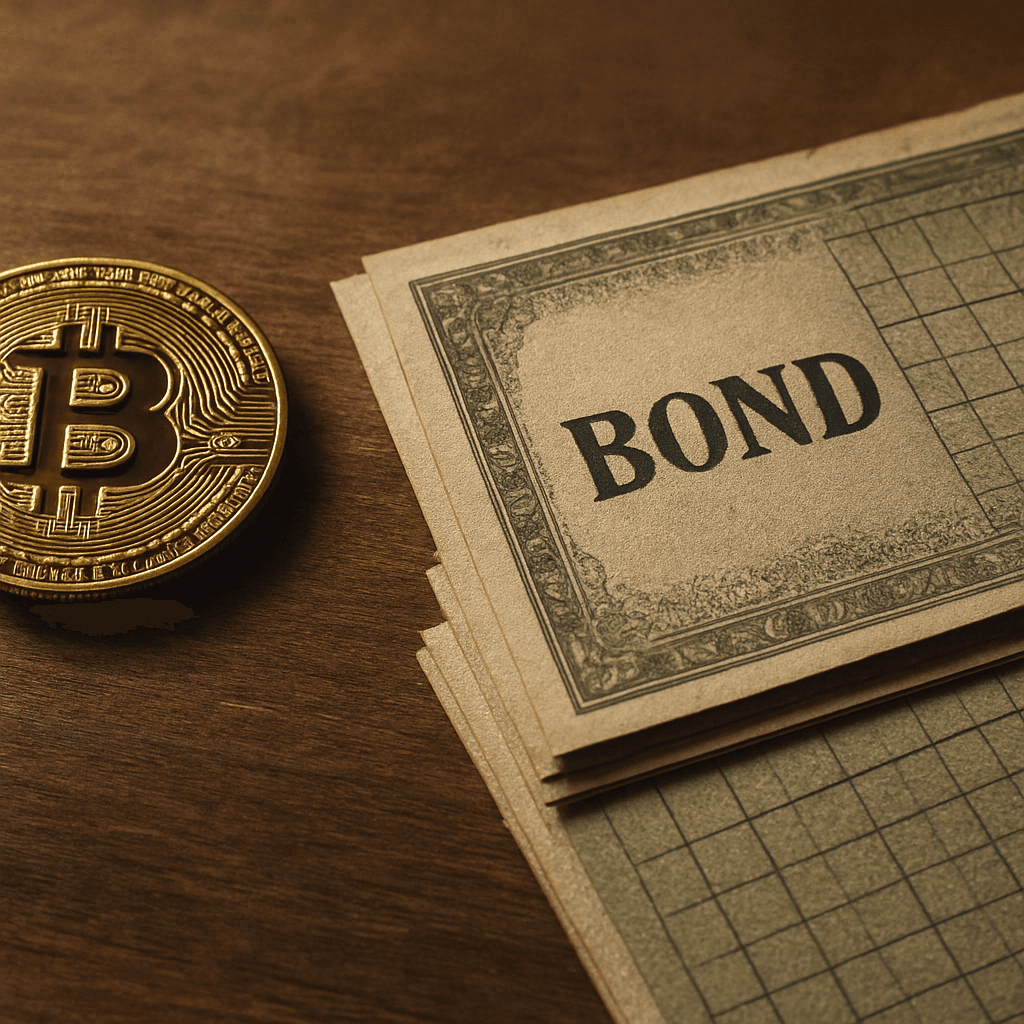
crypto regulation 2026 meets tokenized government bonds as the Bank of Korea pushes unified ledger ideas for faster settlement and cleaner collateral.
crypto regulation 2026 is increasingly about who controls settlement, not just who issues tokens. The Bank of Korea’s latest push around tokenized government bonds and a unified ledger frames that debate in sharply institutional terms: if sovereign debt can move natively on programmable rails, then custody, collateral, and payment finality all shift closer to the central bank balance sheet. That matters because bond markets still depend on fragmented post-trade processes that add cost and operational drag. The governor’s remarks at the ECB Forum suggest Korea wants to test whether tokenization can strip out that friction without loosening monetary control.
The signal here is not that bonds suddenly become speculative crypto assets. It is that the infrastructure around them becomes more digital, more integrated, and more governable – which is exactly why this story belongs inside crypto regulation 2026 rather than a niche blockchain column. The policy question is whether regulators can permit new issuance models while preserving existing safeguards around settlement, reporting, and risk management.
Korea is also drawing from a playbook already visible across central banking circles. The Bank of Korea has spent years exploring digital settlement models, and the logic has now extended from deposits to public debt. That evolution is significant because sovereign instruments are the least controversial assets to tokenize first: they are highly standardized, liquid, and already embedded in regulated market infrastructure. If they work on-chain, the rest of the capital markets can follow with far less resistance.
Recent central bank work has made the direction of travel clearer. The BIS has argued for a tokenized unified ledger that brings central bank money, commercial bank deposits, and government bonds onto a single programmable platform, while the ECB separately moved to accept certain DLT-based assets as collateral from March 2026. Together, those steps signal a shift from theory to operational design. In that context, tokenized government bonds are not a side experiment – they are the cleanest stress test for next-generation market infrastructure. (bis.org)
The practical appeal is straightforward. When issuance, settlement, and collateral use sit on compatible rails, authorities can eliminate reconciliation overhead and shorten the gap between trade execution and final settlement – improving liquidity management for both dealers and issuers in the process. The Bank of Korea’s argument is therefore less about chasing novelty than about trimming structural inefficiency. As tracked by central bank digital infrastructure research, the data shows that central banks now treat tokenization as a settlement architecture question, not a branding exercise. (bis.org)
Korea’s approach also fits a broader pattern visible in the ECB’s own discussions at the 2026 Bank of Korea conference, where officials focused on tokenization, stability, and the future of money. That context matters because central banks are converging on a narrow set of concerns: interoperability, legal finality, and the limits of private rails. Where crypto regulation 2026 does become more permissive, it will almost certainly do so through controlled pilots rather than open-ended liberalization. (ecb.europa.eu)
The phrase unified ledger sounds abstract, but the policy stakes are concrete. It implies a market structure where settlement assets and tokenized instruments move together, eliminating the layers of messaging and reconciliation that still slow modern finance. That does not eliminate risk – it relocates it. Operational failures, governance gaps, and legal ambiguity become more exposed when markets run on a single programmable stack. That is precisely why central banks care. They are not trying to build a more exciting market. They are trying to build a more controllable one.
The dominant crypto narrative holds that tokenization is automatically bullish because it expands the addressable market. That reading is too simple. The more consequential effect may run in the opposite direction: tokenization can compress margins for intermediaries, expose weak market plumbing, and push issuers toward stricter standards across the board. If public debt becomes easier to issue and manage on-chain, the winners are likely to be institutions that can integrate compliance, treasury, and settlement fastest – not the most speculative players. Readers following crypto regulation 2026 should watch implementation details, not slogans.
Korea may also be testing whether a state-backed digital market structure can coexist with private innovation rather than crowd it out. That is the deeper significance of the governor’s comments. A tokenized government bond market would not simply modernize debt issuance – it would create a template for how regulated finance absorbs blockchain technology without surrendering supervisory control. For that reason, the story connects naturally to stablecoin regulation 2026, because both debates ultimately turn on the same question: who gets to define settlement finality.
crypto regulation 2026 is moving from abstract policy language into concrete infrastructure decisions, and that shift should matter to investors more than the headlines suggest. If the Bank of Korea can demonstrate that tokenized government bonds function reliably inside a unified ledger, it strengthens the case for regulated tokenization across broader capital markets. But the first beneficiaries are unlikely to be the most speculative assets – they are far more likely to be firms providing custody, compliance tooling, settlement connectivity, and treasury infrastructure.
The key watchpoint is whether Korea moves beyond pilots into live issuance frameworks, and whether the ECB-style acceptance of tokenized collateral spreads to other jurisdictions. Either development would make Bank of Korea policy a useful leading indicator for how quickly crypto regulation 2026 transitions from market commentary into infrastructure mandate.
Focus: crypto regulation 2026 is becoming a test of market plumbing, not crypto rhetoric.
[James Okafor, DeFi & Emerging Protocols Reporter, The Chain Journal]
A weekly briefing on Bitcoin price action, Ethereum, crypto market analysis, Bitcoin ETF flows, regulation, digital assets, and the narratives shaping crypto investing.
One sharp weekly read. No daily alerts. No recycled headlines.




