THE CHAIN JOURNAL
Independent Crypto Editorial

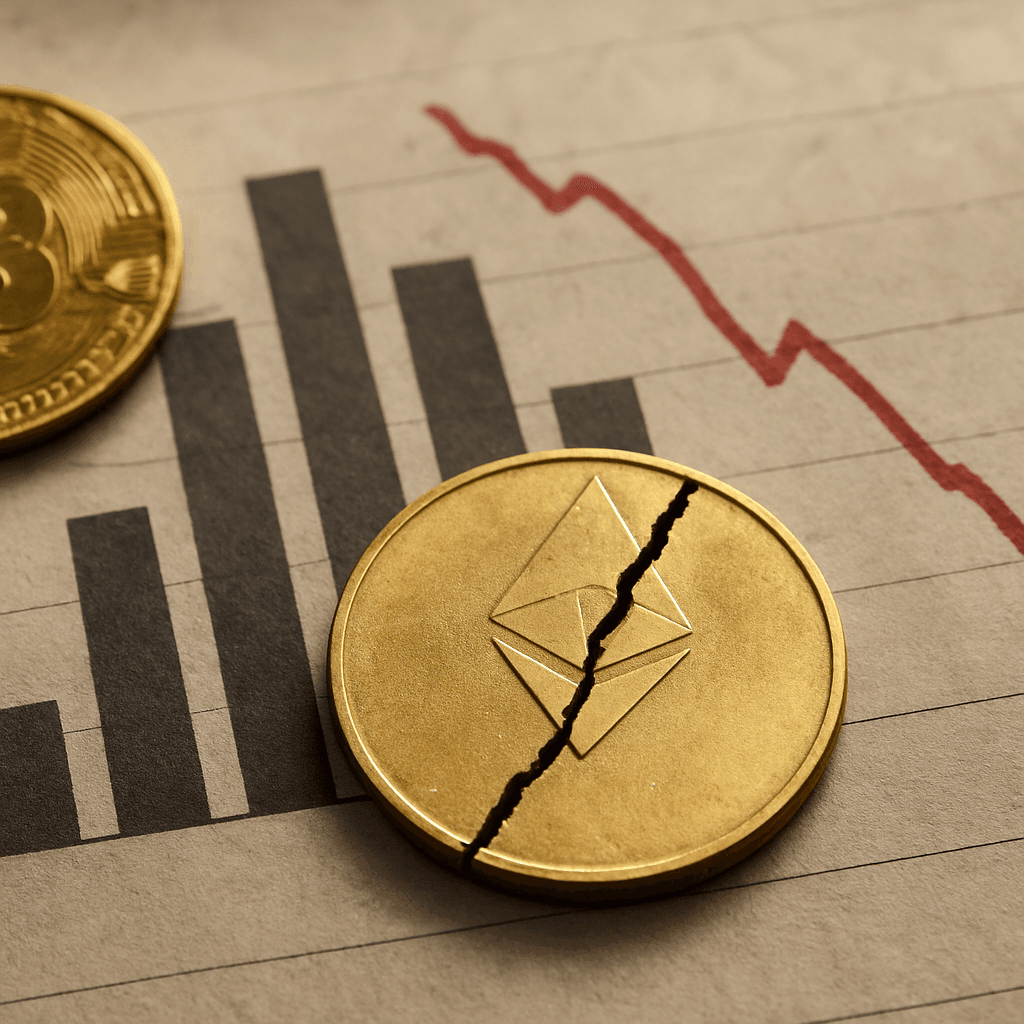
Ethereum etf flows weaken as eth outflows rise and institutional demand for ethereum struggles to offset price pressure.
Ethereum ETF flows have become the cleanest read on sentiment right now, and what they’re showing is caution rather than conviction. The latest fund data reveal meaningful redemptions while ether trades in a zone that has forced market participants to confront a pointed question: is this just another drawdown, or the beginning of a deeper reset? For the moment, the market is treating institutional demand for ethereum as supportive in theory but inadequate in practice. That gap matters, because price rarely respects the long-term story until the marginal buyer returns. In the near term, eth outflows are doing more damage than any bullish narrative can repair.
That doesn’t mean Ethereum’s investment case has evaporated. It means the market is separating utility from price. Tokenization, settlement infrastructure, and stablecoin activity still anchor Ethereum’s relevance – but none of that prevents a de-risking phase. When traders see a weak tape, they sell what they can, not what they admire. That is precisely why ethereum ETF flows now function as a signaling mechanism: they reveal whether institutions are accumulating on weakness or simply waiting for better entry levels. At this stage, the evidence favors patience over chase behavior.
Recent market data suggests the pressure remains very real. Ethereum-linked products have seen sizable redemptions, and the headline figure keeping markets on edge sits at roughly $345M in ETF outflows over a compressed window. Meanwhile, Bitmine-style treasury buying has not been enough to offset the broader selling impulse. That imbalance explains why ethereum price analysis keeps arriving at the same conclusion: demand exists, but it isn’t yet strong enough to absorb supply at current prices. As tracked by Ethereum ETF flows, the ETF channel continues to function as the market’s fastest sentiment thermometer.
What’s equally striking is what the market isn’t rewarding. Ethereum’s tokenized RWA footprint has expanded sharply over the past year, and the network still hosts a commanding share of tokenized asset activity. Yet that fundamental progress hasn’t translated into durable bid support. The reason isn’t complicated: markets price cash flows, adoption, and positioning simultaneously, and right now positioning is the loudest variable in the room. Even robust institutional demand for ethereum can be overwhelmed when macro liquidity tightens and speculative leverage begins to unwind.
The key mistake is assuming fundamental strength should produce immediate price strength. It rarely does. Ethereum’s network still benefits from tokenization tailwinds, payments experimentation, and a deep developer ecosystem – but the market has shifted from narrative expansion to demanding proof. That is where a careful Ethereum Price Outlook 2026 becomes more useful than generic optimism: the asset needs a catalyst that changes flows, not just commentary that shifts sentiment. If eth outflows persist while spot demand stays thin, a move toward the low $1.5K area can’t be dismissed as an extreme scenario – it becomes a reasonable stress test.
There’s a structural dimension here as well. Ethereum competes with faster-moving tradeable themes, and capital tends to migrate toward whatever offers cleaner momentum. That’s why sluggish DApp activity carries more weight than enthusiasts typically acknowledge. If users and fee revenue don’t accelerate in a visible and measurable way, treasury accumulation alone will struggle to reprice the asset. Analysts often frame Ethereum as a long-duration infrastructure bet, but traders mark it like a liquidity-sensitive risk asset. Those are not the same thing, and the current tape is reminding everyone of that distinction.
Ethereum ETF flows matter because they tell investors whether the market is still distributing risk or beginning to absorb it. In the short run, that distinction carries more weight than any abstract debate about Ethereum’s long-term roadmap. If redemptions continue, the path of least resistance stays lower and a retest of the $1.5K zone grows more plausible. If flows stabilize, the market can begin pricing the expanding tokenization stack and improving on-chain utility through a less defensive lens. Until that shift arrives, ethereum ETF flows remain a warning signal rather than a buy signal.
Three things are worth watching closely: daily fund redemptions, whether treasury buyers continue stepping in with consistency, and whether ETH can hold key support levels during broader risk-off sessions. If price holds while flows stabilize, the market may be quietly building a base. If not, downside momentum has a way of feeding on itself. That is the setup investors need to respect.
Focus: Ethereum ETF flows are now telling the market that fundamentals alone do not set the floor.
Arianna Vaz, Portfolio Strategy Analyst, The Chain Journal
A weekly briefing on Bitcoin price action, Ethereum, crypto market analysis, Bitcoin ETF flows, regulation, digital assets, and the narratives shaping crypto investing.
One sharp weekly read. No daily alerts. No recycled headlines.