THE CHAIN JOURNAL
Independent Crypto Editorial

bitcoin geopolitical risk keeps traders cautious as bitcoin market update gauges $60K support, bitcoin safe haven bids, and Iran peace hopes.
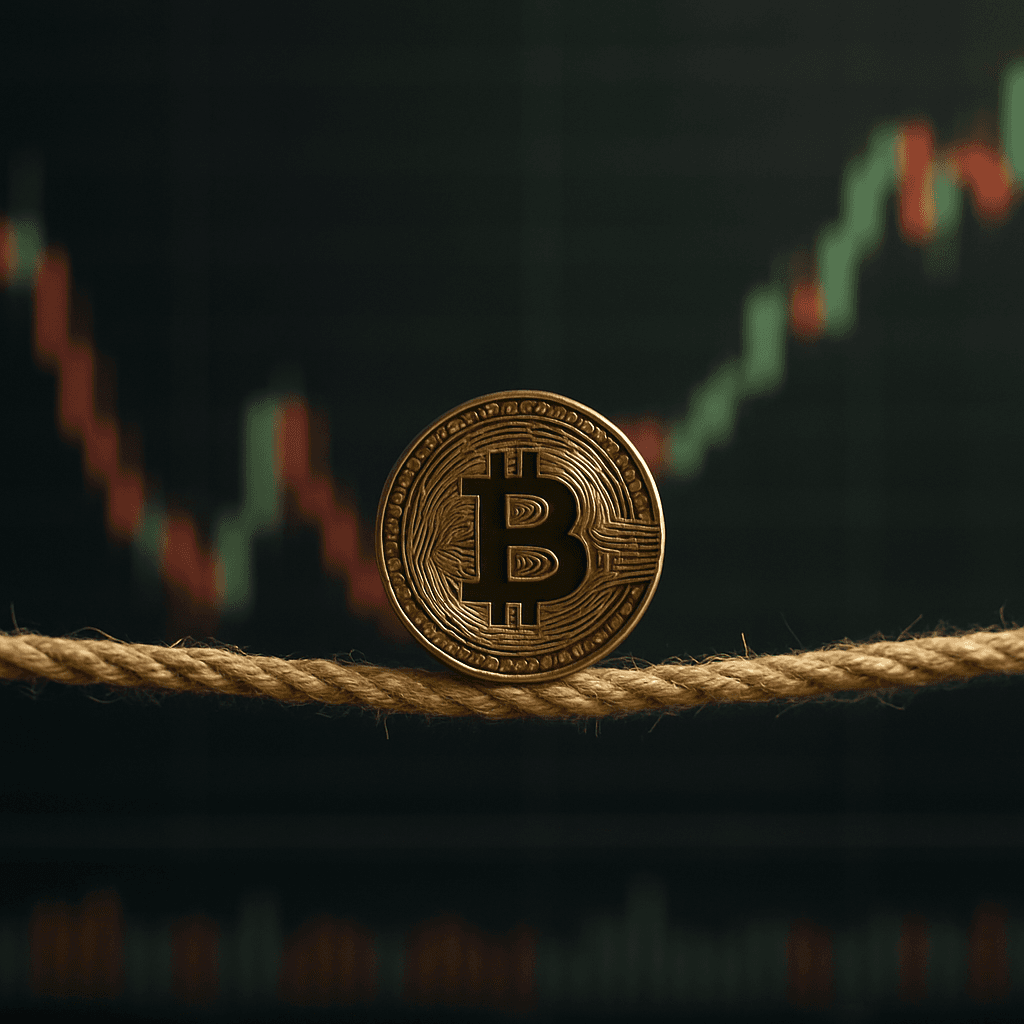
Bitcoin geopolitical risk is back on the tape, but not in the way evangelists like to frame it. The market is treating the latest Iran peace hopes as a relief event for equities and energy first, while Bitcoin is still fighting for conviction around the $60K area. That split matters. When stocks can rally on lower oil and fading conflict risk but BTC cannot extend the move, it usually means buyers are selective rather than aggressive. The market is not rejecting the bullish case outright – it is simply demanding cleaner confirmation.
The problem is that Bitcoin geopolitical risk rarely works as a one-way trade. In early June, the same broad risk-off pressure that hit energy and parts of crypto also exposed how quickly positioning can reverse. Recent price action around the mid-$60Ks suggests traders are willing to buy dips, but not yet willing to chase. A market with shallow conviction can defend support for days and still fail to build a durable trend.
At the moment, Bitcoin geopolitical risk is less about a single headline and more about a collision between three forces: peace-deal hopes, fading safe-haven demand, and unresolved macro skepticism. Bitcoin recently rebounded into the mid-$60Ks as US-Iran tensions eased and global risk assets recovered, but the move has not looked clean or self-sustaining. The broader mood remains sensitive to every shift in oil, rates, and equities – and in that sense, Bitcoin is behaving like a high-beta macro asset rather than a pure store of value.
For investors, that means the most important context is not whether conflict risk exists, but whether it is enough to override other headwinds. Bitcoin geopolitical risk can lift prices when it triggers a broad de-escalation trade, yet the rebound can stall if liquidity, policy, and ETF flows do not cooperate. The price may respond to the headline, but the trend still needs follow-through.
The dominant narrative says Bitcoin should benefit whenever global uncertainty rises. That is too simple. In practice, Bitcoin geopolitical risk often competes with the same forces that support equities: lower volatility, easier financial conditions, and stronger risk appetite. When conflict fears ease, investors tend to rotate back into stocks, credit, and cyclicals faster than into crypto – leaving BTC in an awkward middle ground, too volatile for defensive buyers and not strong enough yet for momentum buyers.
One useful lens is to compare crypto with broader market sentiment indicators. As tracked by Bitcoin sentiment analysis, the market has not reached the kind of euphoric reading that typically supports a clean breakout. That does not mean upside is impossible. It means the burden of proof stays on Bitcoin bulls, especially while the market keeps asking whether any given move is driven by real accumulation or just short covering. In that environment, bitcoin safe haven demand remains a thesis, not a settled fact.
The other point worth stressing is structural. Bitcoin geopolitical risk becomes more powerful when it intersects with tight supply and active institutional demand. But if spot demand is uneven, every relief rally becomes a patience test. Traders should not confuse a bounce with a regime change.
Bitcoin geopolitical risk is telling investors that BTC still trades as a hybrid: part macro asset, part narrative asset, and only sometimes a haven. The current setup says more about market psychology than about fundamentals. Buyers are willing to respond to peace headlines, but they are not yet paying up for certainty – a classic sign of a market in transition rather than one entering trend acceleration. If the next leg higher does materialize, it will likely need confirmation from broader risk appetite, steadier liquidity, and fewer contradictions between crypto and equities.
The more interesting question is whether Bitcoin can convert geopolitical relief into a higher base. Failure to hold the $60K region would make the latest move look like another tactical bounce inside a wider consolidation. A sustained hold, on the other hand, would shift bitcoin market update narratives from defense to expansion. Until then, the market is still asking the same question it has been asking for months: is Bitcoin a hedge, or just another asset that reacts late?
Focus: bitcoin geopolitical risk matters most when price action confirms the narrative – and right now, the market is still asking for proof.
Bitcoin geopolitical risk is not a buy signal on its own. It can support price, but only when the market also sees improving liquidity, firmer spot demand, and a better risk backdrop. Right now, the setup reads more like a range trade than a breakout story. That means investors would be better served focusing less on dramatic headlines and more on whether BTC can keep defending the low-$60K zone without repeated intraday reversals.
What to watch next: whether Bitcoin can close above nearby resistance, whether equities continue to price in relief, and whether ETF flows improve enough to validate the move. If those signals align, bitcoin geopolitical risk could become a genuine tailwind once more – rather than just another distraction.
[Clara Reyes, Markets & Data Reporter, The Chain Journal]
A weekly briefing on Bitcoin price action, Ethereum, crypto market analysis, Bitcoin ETF flows, regulation, digital assets, and the narratives shaping crypto investing.
One sharp weekly read. No daily alerts. No recycled headlines.