THE CHAIN JOURNAL
Independent Crypto Editorial

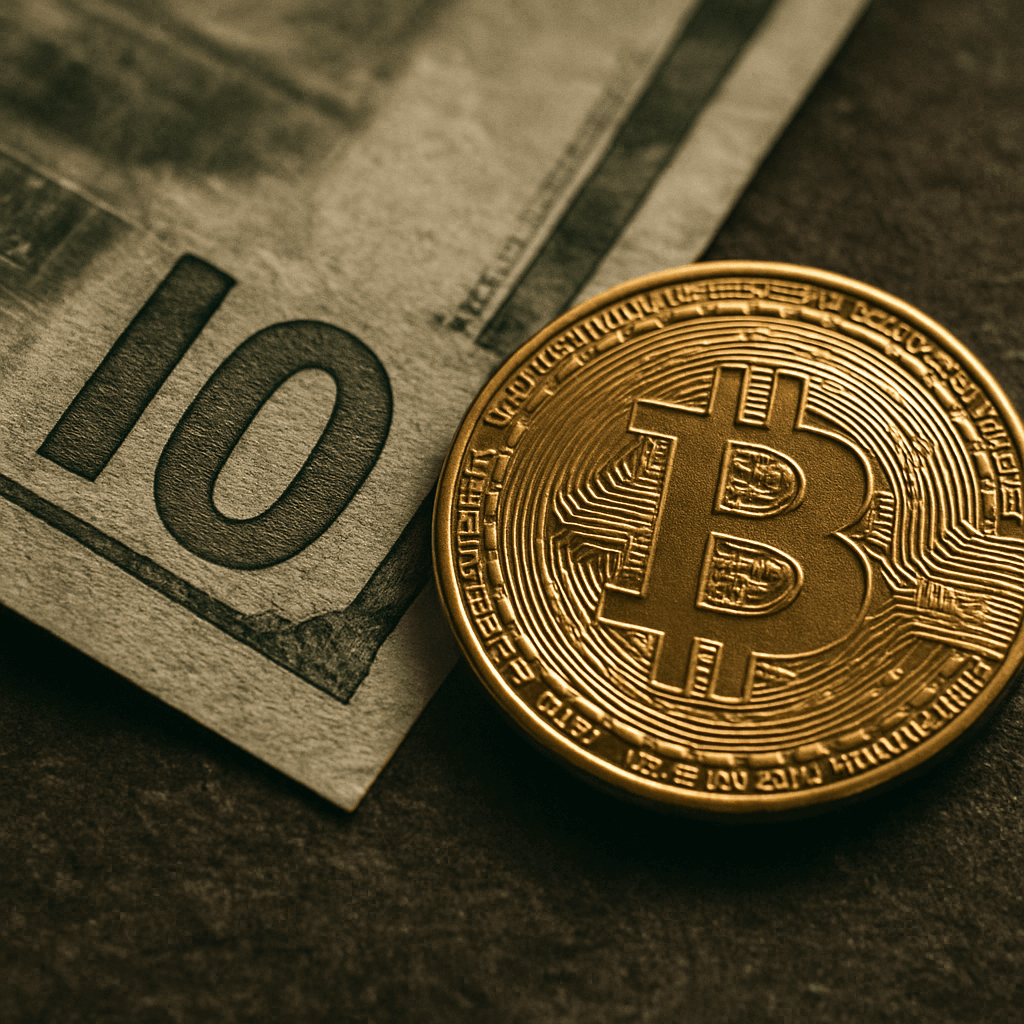
bitcoin sanctions risks widen as TRM traces CoinEx flows; crypto and geopolitics now shape exchange due diligence and crypto regulatory update debates.
Bitcoin sanctions scrutiny is no longer a niche compliance issue – it has become a core test of exchange quality. TRM Labs’ tracing of roughly $3.8 billion in activity tied to more than 60 Iranian entities through CoinEx suggests that sanctions risk can accumulate quietly across years before surfacing as a full-blown governance problem. The scale matters, and not simply because of one platform’s exposure. What it reveals is whether counterparties, market makers, and routing behavior can be distinguished from ordinary trading flow before regulators do the distinguishing for them. For investors, crypto and geopolitics is no longer a peripheral theme – it is part of the operating environment.
The most striking detail here is not the dollar figure. It is the concentration. When a single venue repeatedly becomes a preferred bridge for sanctioned flow, the market begins pricing a different category of risk: enforcement action, restricted banking access, and reputational spillover that reaches well beyond the platform itself. That is precisely why bitcoin sanctions analysis now belongs alongside liquidity, custody, and reserve transparency in any serious due diligence framework. Viewed in that light, the CoinEx case reads less like an isolated headline and more like a reminder that sanctions exposure can quietly harden into a structural discount on exchange trust.
The reported data points to something that looks systematic rather than incidental. TRM’s analysis indicates that CoinEx accounted for around 8% of illicit transaction volume in the sample – a share far above the benchmark associated with more compliant peers. In the same work, CoinEx emerged as a major counterpart for Iran’s domestic crypto ecosystem, particularly Nobitex, which has long functioned as a key liquidity node. Those numbers reframe bitcoin sanctions not as an abstract policy debate, but as a measurable, mappable flow problem.
That distinction carries real weight for traders and asset allocators. A venue with persistent sanctions-linked traffic faces a fundamentally different risk profile than one that simply lists contentious assets. Banking partners can tighten their terms or walk away entirely. Market access can narrow. And once compliance teams begin treating a platform as elevated risk, the effects tend to spread well beyond that platform’s own order book. The more relevant question is not whether sanctioned flows exist – in a permissionless system, they always will – but whether a venue’s flow profile looks abnormal relative to the broader market. On that measure, the picture for CoinEx looks unfavorable.
The deeper issue is that bitcoin sanctions enforcement has become a proxy battle over the permeability of the crypto system itself. Iran has consistently used digital assets to route around financial isolation, and exchanges are the chokepoints where that activity either slows or scales. Seen that way, this story is not about one company’s bad compliance record – it is about a network design problem. When a single venue can absorb years of suspicious flow without generating obvious friction, the market learns that compliance is uneven and that global liquidity remains segmented by geography, jurisdiction, and enforcement intensity.
That is where the policy implications begin to widen considerably. A more aggressive sanctions regime tends to push activity toward smaller venues, opaque intermediaries, and less regulated rails. A more permissive one invites direct exposure at larger exchanges. In either case, bitcoin sanctions pressure shifts costs onto the industry: more screening, more monitoring, more documentation, and more friction for legitimate users. For anyone tracking crypto regulatory update developments, the key takeaway is that enforcement is increasingly data-driven. Analytical firms can map counterparty relationships with precision, regulators can benchmark patterns across the industry, and exchanges can no longer treat scale as a substitute for clean flow behavior.
The broader market lesson also intersects with strong ETF inflows this quarter. Institutional demand can lift prices, but it does not erase operational risk. A market can absorb significant capital while still carrying hidden compliance liabilities underneath – and that tension is exactly why bitcoin sanctions deserve serious investor attention even when headline sentiment looks constructive.
Bitcoin sanctions risk has graduated into a balance-sheet issue for the entire exchange stack, not a legal footnote to be managed by compliance departments alone. The CoinEx case illustrates how counterparty relationships, banking access, and supervisory pressure can converge around a single platform and then reverberate outward, eroding market confidence well beyond its immediate circle. That is not a reason to abandon crypto exposure – it is a reason to sharpen the distinction between protocol risk and venue risk, and between raw liquidity and genuine compliance quality. As institutional adoption deepens, that distinction will only matter more.
The concrete signals worth watching are straightforward: formal enforcement actions, material changes in banking relationships, and whether competing exchanges begin publishing more rigorous screening standards in response. If those standards tighten industry-wide, cleaner venues may earn a durable trust premium. If they do not, bitcoin sanctions will continue functioning as a hidden tax on the sector – one that accrues slowly, invisibly, and then all at once.
Focus: bitcoin sanctions are now a measurable venue risk, not a theoretical headline.
Clara Reyes, Markets & Data Reporter, The Chain Journal
A weekly briefing on Bitcoin price action, Ethereum, crypto market analysis, Bitcoin ETF flows, regulation, digital assets, and the narratives shaping crypto investing.
One sharp weekly read. No daily alerts. No recycled headlines.




