THE CHAIN JOURNAL
Independent Crypto Editorial

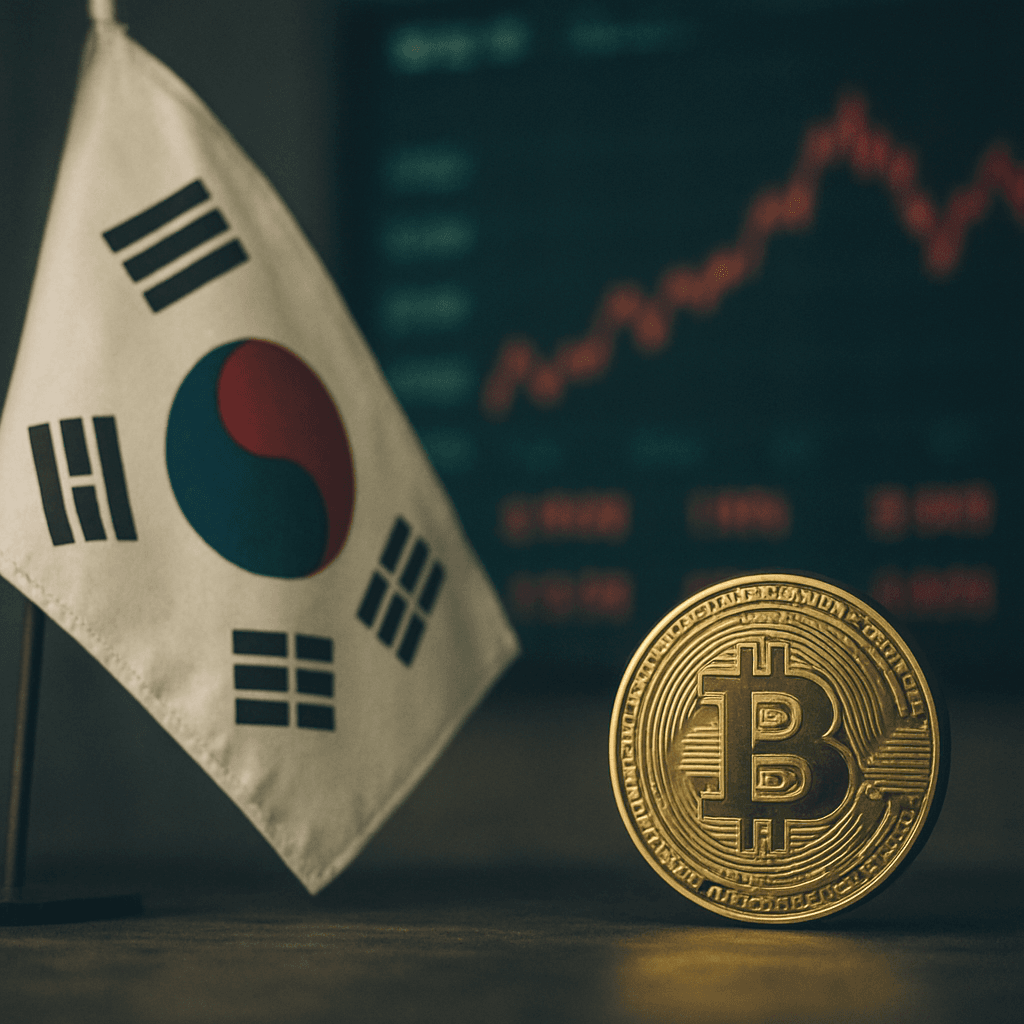
Crypto regulatory update in South Korea pairs token securities with faster settlement and longer hours, reshaping crypto policy news for institutions.
South Korea’s latest crypto regulatory update is more interesting for what it implies than for what it says on the surface. By placing token securities infrastructure inside a broader capital-market modernization plan, the Financial Services Commission is signaling that digital assets are no longer being treated as a side policy track. The policy mix now includes faster settlement, longer trading hours, and digital transformation – features designed to make the market more elastic and more competitive. That matters because market structure typically shifts before narrative catches up. If Korea can knit tokenized instruments into its mainstream plumbing, it could become a regional test case for how regulated digital assets scale beyond speculation.
Timing adds another dimension. South Korea already has a working precedent for extended trading through Nextrade’s 12-hour session, which demonstrated that regulators are willing to challenge old exchange conventions when liquidity and accessibility are genuinely at stake. The new crypto regulatory update reads as a continuation of that logic rather than a one-off experiment. For investors, the signal is straightforward: policy has moved from “can this exist?” to “how should it clear, trade, and settle?” That is a more mature question – and one that tends to attract more serious capital.
The practical effect of this crypto regulatory update is that token securities move closer to being treated as market infrastructure rather than an innovation category. That distinction carries real weight. Once the debate shifts to settlement timing, exchange hours, custody, and post-trade processing, the conversation becomes operational rather than ideological. The bottleneck is no longer whether blockchain can be useful; it is whether it can meet the standards of a modern capital market. The link between tokenization and market modernization has been visible in Korea’s broader capital-market reform push for some time, and the state-backed drive for efficiency now reinforces it through crypto regulation news 2026.
The strongest read-through here is that token securities may earn credibility only by fitting inside existing safeguards rather than routing around them. That is precisely where this crypto regulatory update becomes analytically important. The more regulators discuss faster settlement and extended trading hours, the more openly they acknowledge that legacy rails impose a real cost on liquidity. A market that closes too long and settles too slowly invites fragmentation. Korea appears to be working to reduce that friction without abandoning oversight – a far more durable model than the boom-and-bust approach that has defined digital-asset policy elsewhere.
Probably yes, but only in a limited sense. Korea is not trying to turn token securities into a retail frenzy. It is trying to modernize the rails. That distinction is crucial. A serious crypto regulatory update does not need a marketing story; it needs a settlement story, a custody story, and a supervisory story. When those three elements align, tokenization can become a lower-friction distribution layer for financial claims rather than a separate speculative ecosystem. That is why process reform deserves more attention than headline labels. The infrastructure choice matters more than the branding choice.
There is also a meaningful second-order effect on market psychology. When authorities fold trading hours and faster settlement into the same reform package as token securities, they are implicitly telling institutions that digital assets belong in the same conversation as market access and execution quality. That may sound subtle, but it shifts how allocators evaluate risk. Institutional desks do not need another slogan – they need predictable rules and clean market plumbing. The broader lesson from this crypto regulatory update is that tokenization becomes investable when regulators reduce operational uncertainty, not when they simply promise innovation.
For investors, this crypto regulatory update signals that Korea has entered an execution phase, not a conceptual one. That matters for any strategy built around tokenized finance, exchange infrastructure, custody, or regulated digital-asset products. The market is likely to reward platforms that can connect compliance, settlement, and trading access without adding friction – and may well punish projects that depend on regulatory ambiguity to justify their adoption. In that sense, Korea is offering a useful template: the winners will probably be the firms that look least like crypto theater and most like financial infrastructure.
What to watch next is whether the policy hardens into rulemaking, pilot programs, or exchange-level implementation. A credible crypto regulatory update will show up in the operational details: who can issue, who can settle, and how quickly trades clear under the new framework. If those answers stay vague, the market should discount the story. If they solidify, token securities could graduate from policy language to actual balance-sheet relevance.
Focus: The real crypto regulatory update is not tokenization itself, but the decision to embed it inside market infrastructure.
Adam McCauley, Senior Blockchain Analyst, The Chain Journal
A weekly briefing on Bitcoin price action, Ethereum, crypto market analysis, Bitcoin ETF flows, regulation, digital assets, and the narratives shaping crypto investing.
One sharp weekly read. No daily alerts. No recycled headlines.




