THE CHAIN JOURNAL
Independent Crypto Editorial

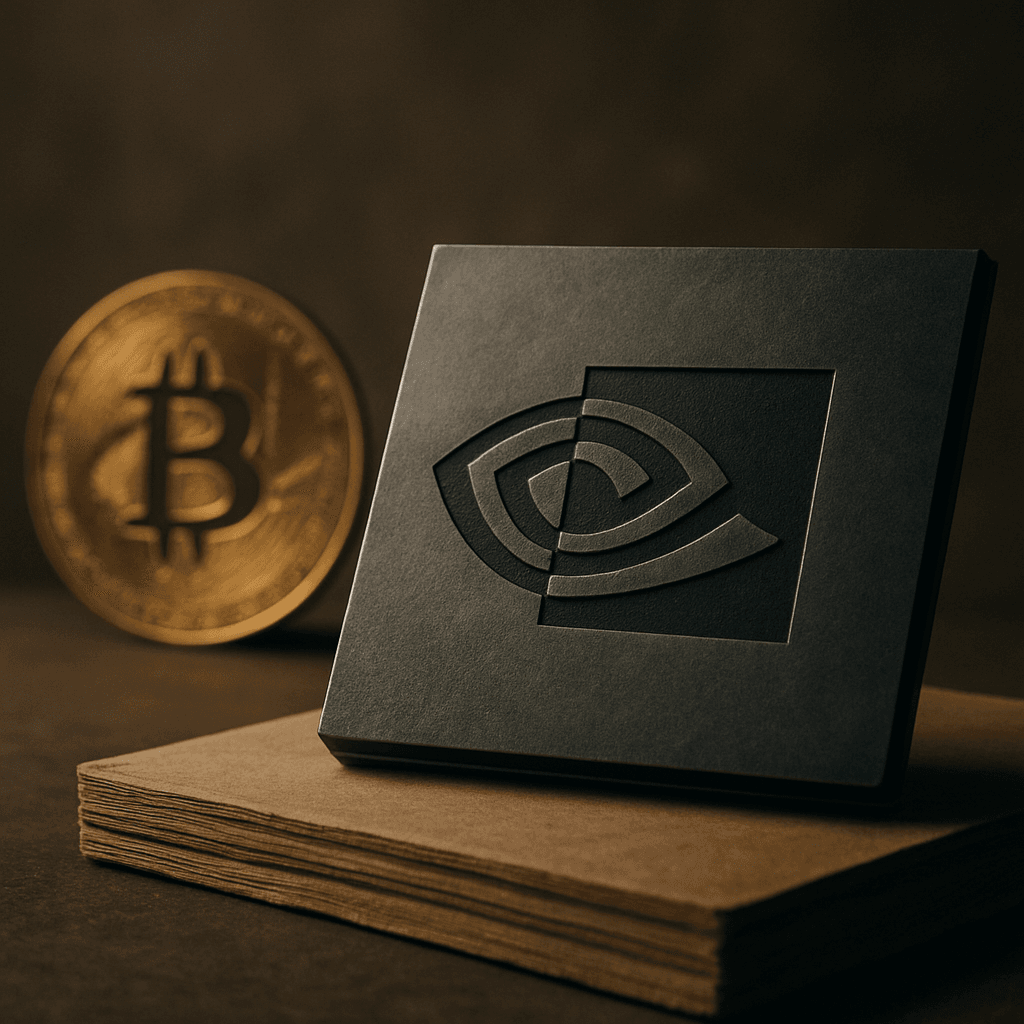
bitcoin miners pivot to ai as nvidia ai data centers absorb capital and push mining stocks toward a second act.
bitcoin miners pivot to ai for a simple reason: the market now rewards controlled power, land, and connectivity more than raw hash rate alone. Nvidia’s latest financing plans sit inside a broader capex cycle that keeps ai infrastructure demand elevated, even as investors grow more selective about who actually gets paid for building it. The result is a cleaner trade than pure mining – fewer boom-bust mechanics, more recurring contracts, and genuinely better visibility on cash flow.
That does not mean the mining model disappears. It means the asset base gets repriced. A site built for heavy power draw, cooling, and rapid deployment can serve two masters: bitcoin production when the economics justify it, and AI hosting when they do not. In that sense, bitcoin miners pivot to ai because the same infrastructure can now earn in multiple ways – a structural advantage that pure miners simply cannot replicate.
The market has already begun separating operators with real utility from those still selling a story. bitcoin mining stocks that can secure long-term tenants, not just expand hash rate, are attracting the premium. Capital markets are asking a blunt question: who owns energy optionality, and who merely owns exposure to the next difficulty adjustment?
Recent corporate financing across the AI stack confirms that debt investors still believe compute scarcity is real. Nvidia’s own ecosystem messaging has consistently pointed to expanding demand for AI factories and large-scale GPU deployment, while major tech borrowers have leaned on the bond market to fund their buildouts. That is the key signal: the market is not financing “AI” in the abstract but concrete, deployable capacity – and that helps explain precisely why bitcoin miners pivot to ai at this moment. (investor.nvidia.com)
The miner side of the equation is shifting just as quickly. A growing number of public operators have announced AI or HPC plans, sold bitcoin to fund conversions, or moved capacity toward data center services outright. Some have begun describing themselves less as miners than as infrastructure landlords – and the logic holds up. If a facility already has megawatts, cooling infrastructure, and grid access, the marginal cost of repurposing it for AI hosting can be substantially lower than building from scratch. That is why bitcoin miners pivot to ai rather than sitting out another speculative cycle. (coindesk.com)
For investors, the important detail is not the headline figure attached to any single financing deal – it is the direction of travel. Once the market demonstrates it will pay for nvidia ai data centers through debt, leases, and long-dated contracts, miners gain a durable reference point for valuation. Their power infrastructure stops looking like a sunk cost and starts looking like an adaptable industrial platform. That is the real reason bitcoin miners pivot to ai, and it is far more than a passing narrative.
The common mistake is treating this shift as a binary choice between bitcoin and AI. In practice, it is a capital allocation problem. The strongest operators can stagger the transition – keep mining where margins still make sense and dedicate spare capacity to hosting. Others will need to sell bitcoin, dilute shareholders, or take on debt just to stay relevant. That divergence is where the real dispersion will come from, which is why bitcoin miners pivot to ai is not a sector-wide thesis so much as a filter for balance-sheet quality. The better the balance sheet, the more optionality a miner actually owns.
There is also a power-market angle that equity investors consistently underweight. Grid connections, interconnect queues, water rights, and cooling infrastructure are not merely operational details – they are genuine barriers to entry. As tracked by institutional crypto derivatives, the market already prices bitcoin as a macro asset, but miner equities are increasingly behaving like infrastructure names with digital optionality attached. That distinction matters because AI hosting can support longer-duration contracts, while mining remains an inherently variable-margin trade. Investors who miss that split may end up overpaying for “AI exposure” that is really just recycled mining hardware. (investing.com)
The next phase should also produce a clear ranking effect. Companies with existing sites, low-cost power, and proven execution will likely command better multiples than pure-play miners lacking conversion credibility. If Nvidia and its peers keep borrowing into the cycle, the financing window stays open. If credit tightens, the weakest miners will have to prove they can earn their keep without leaning on a hot equity tape. bitcoin miners pivot to ai – but not all of them will complete the journey.
For investors, bitcoin miners pivot to ai creates a cleaner framework for thinking about the sector: not as a directional bet on bitcoin alone, but as an industrial infrastructure trade with crypto optionality attached. The companies that matter now are those that can monetize power twice – first through mining, then through hosting. If the AI buildout keeps absorbing capital, those operators may deserve rerating even as their coin production slows.
Watch three things closely: contract announcements, debt or equity raises tied to data center conversion, and whether management teams continue selling bitcoin to fund the shift. Equally important is whether ai infrastructure demand stays strong enough to justify longer leases and higher build-out spending. The market will reveal quickly enough who is building a real operating business and who is simply chasing a hotter multiple.
Focus: bitcoin miners pivot to ai because power-rich infrastructure is becoming more valuable than hash rate alone.
Mauricio Pompilii Marquez, Macro & Commodities Analyst, The Chain Journal
A weekly briefing on Bitcoin price action, Ethereum, crypto market analysis, Bitcoin ETF flows, regulation, digital assets, and the narratives shaping crypto investing.
One sharp weekly read. No daily alerts. No recycled headlines.