THE CHAIN JOURNAL
Independent Crypto Editorial

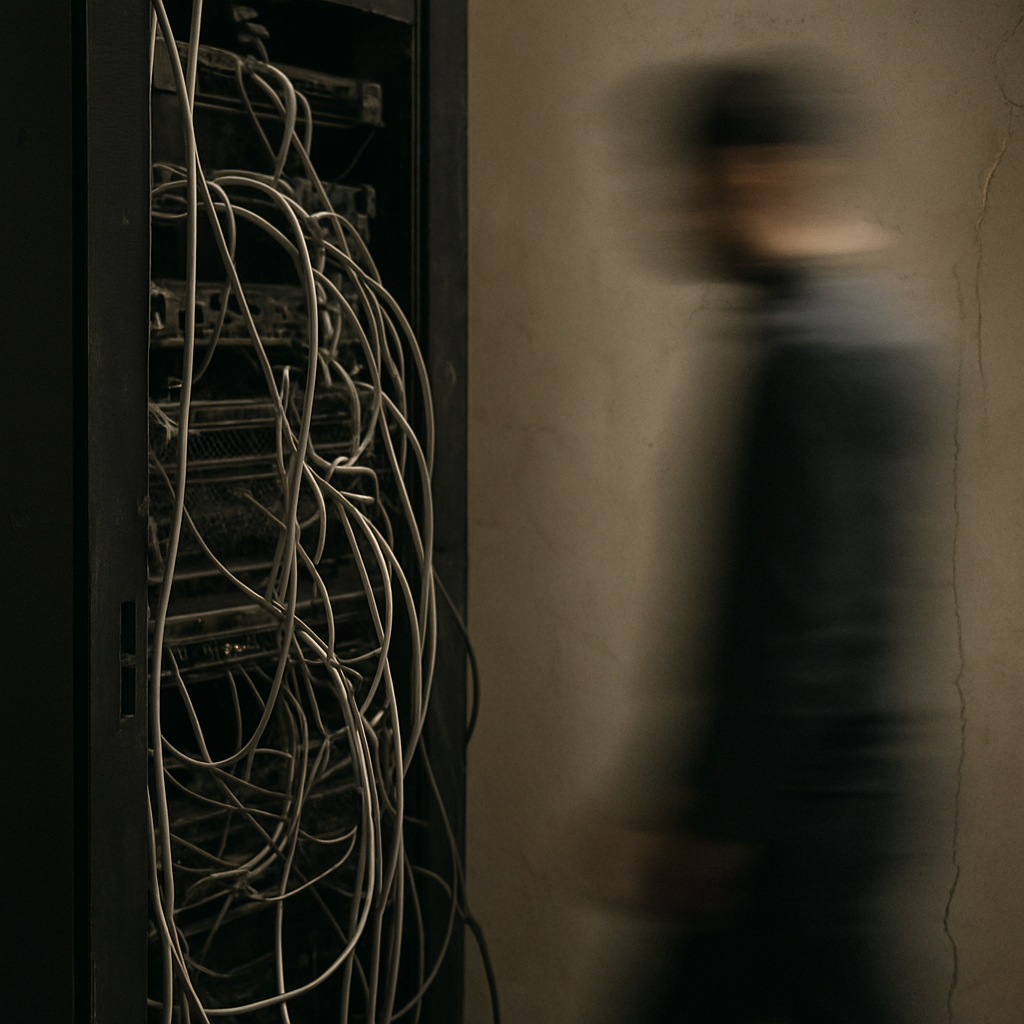
sui network outage returns after a bug-triggered stall, while sui stalled again raises fresh questions about resilience and governance.
The latest sui network outage is less interesting as an isolated incident than as a pointed reminder that performance claims mean little when the control plane can still freeze. A second stall in a short window points to a recurring engineering problem – not a random hiccup. The public record already shows that Sui previously suffered a roughly six-hour interruption caused by an internal consensus bug, and the current event traces back to software behavior again rather than demand shock or market stress. That matters because it narrows the explanation considerably: this is not a usage problem, but a resilience design problem.
For builders and allocators, the more pressing question is not whether sui network outage headlines generate noise – they will. It is whether the network can keep its promise under failure conditions. The fact that sui stalled again following a prior fix suggests the protocol’s safety-first architecture may be functioning as intended, but at a price. Safety that halts finality is still safety, yet it feels indistinguishable from downtime to users, exchanges, and market makers who depend on predictability as much as speed.
The immediate trigger for the sui network outage appears to belong to the same class of update bug that previously disrupted mainnet. That is the most consequential detail here: this was not a broad collapse driven by congestion, and it was not evidence that the chain ran out of demand capacity. Instead, the network appears to have struck an edge case in software coordination – the kind of failure that rarely surfaces in marketing decks but shows up reliably in production. A chain can advertise throughput all day. The market only starts pricing reliability when the system actually breaks.
That is why the sharpest lesson here has nothing to do with competing Layer 1 slogans. It has to do with how crypto market sentiment works in practice: traders typically forgive bad headlines faster than they forgive uncertainty. With sui blockchain downtime, uncertainty is the product itself. If users cannot determine whether a future upgrade will stall settlement, they begin building contingency behavior into their own systems – wider exchange buffers, more conservative bridge routing, harder withdrawal limits. The chain may remain technically viable, but its operational reputation absorbs damage each time sui network temporarily stalls.
The deeper issue is whether the sui network outage exposes a single-client or single-path dependency problem. When one software update path can bring a live network to a halt, the architecture may be fast, but it is not yet robust by any institutional definition of the word. The critical distinction in Sui’s design is that it can preserve safety while sacrificing liveness – a valid theoretical trade-off. In practice, however, recurring stalls signal that the network’s resilience margin may be considerably thinner than its throughput narrative implies.
The conversation around institutional crypto adoption is instructive here precisely because institutions do not acquire technology on the strength of whitepaper elegance alone. They acquire operating confidence. When a chain pauses repeatedly, treasury teams and market infrastructure providers start discounting its reliability premium, sometimes permanently. The broader high-throughput space – including the Solana blockchain network – is increasingly benchmarked not just on raw speed but on visible, rapid recovery when things go sideways. Speed is one variable; recoverability is the other, and right now Sui is underperforming on the second.
For investors, the sui network outage should be read as a reliability event with genuine valuation implications, not merely a technical embarrassment. Sui stalled again after a previous incident, and that repetition reframes the story: a single stall can be rationalized as misfortune, but repeated stalls suggest the risk is embedded deeper in the stack. That does not automatically invalidate the network’s long-term thesis, particularly if developers keep shipping and on-chain activity holds. What it does mean is that the “ultra-fast” narrative deserves a discount until the protocol demonstrates it can sustain uptime under real-world upgrade pressure, not just in controlled benchmarks.
The signals that follow will matter far more than the apology cycle. Watch whether Sui releases a thorough root-cause analysis, whether validators upgrade cleanly in subsequent rollouts, and whether major applications or exchanges quietly alter their operational posture. If sui network outage solidifies into a recurring pattern, the market will respond accordingly – higher risk premiums, lower tolerance for ecosystem friction, and a more skeptical reception to future performance claims. If recovery proves fast and the fix demonstrably holds, the damage may stay contained. Either way, confidence will remain fragile until the streak is broken.
Focus: Sui network outage is no longer a one-off headline; it is becoming a live test of whether Sui can match its performance pitch with the operational discipline the market actually demands.
James Okafor, DeFi & Emerging Protocols Reporter, The Chain Journal
A weekly briefing on Bitcoin price action, Ethereum, crypto market analysis, Bitcoin ETF flows, regulation, digital assets, and the narratives shaping crypto investing.
One sharp weekly read. No daily alerts. No recycled headlines.




