THE CHAIN JOURNAL
Independent Crypto Editorial

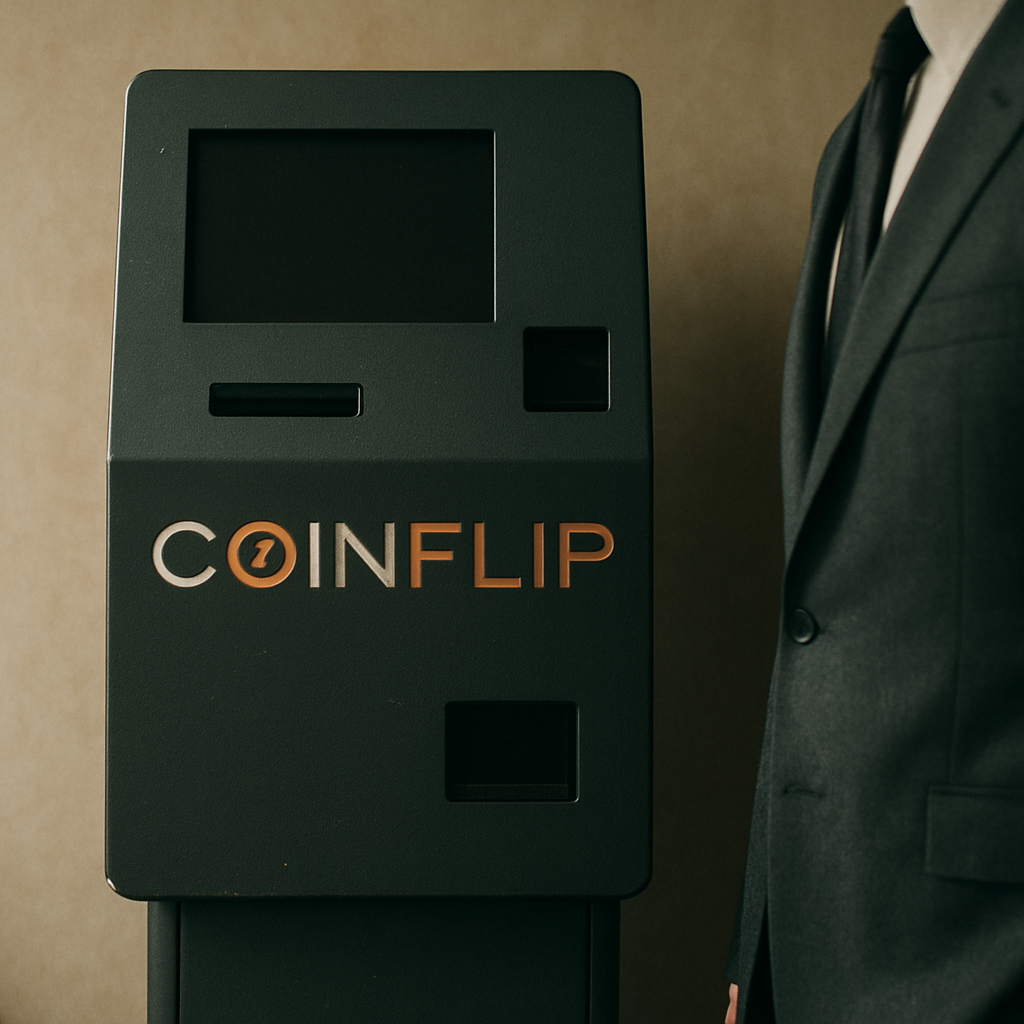
Crypto regulation 2026 tightens as Missouri targets CoinFlip. Crypto policy news now centers on scam exposure, fees, and bitcoin legal risk.
Crypto regulation 2026 is shifting from abstract policy debate to direct enforcement, and Missouri’s lawsuit against CoinFlip is a sharp illustration of why. The state alleges the operator helped facilitate fraud through crypto kiosks while layering on convoluted fees that made the economics even worse for victims. That is not simply a consumer-protection story – it is a business-model question. If a cash-to-crypto machine can function as a scam endpoint while still charging premium spreads, regulators will keep treating it as a liability rather than a neutral payment rail. The calculus is straightforward: the more kiosks become associated with fraud, the harder it gets for operators to argue they are ordinary infrastructure instead of a regulated risk channel. Crypto regulation 2026 is now being shaped by exactly that distinction.
CoinFlip is not being singled out in isolation. Missouri’s move followed a broader investigation into crypto ATM firms after authorities flagged deceptive fee structures and a mounting pile of scam complaints. That matters because regulators are no longer asking merely whether fraud happens around these products – they are asking whether the product design itself helps fraud scale. A machine that converts cash into irreversible transfers sits in precisely the part of the market where retail users are least protected and scammers are most efficient. For that reason, bitcoin legal exposure is no longer a niche concern for kiosk operators. It is becoming a template for how states may approach consumer harm, fee disclosures, and operator accountability more broadly.
Missouri’s suit lands after a string of state-level actions suggesting the pressure is only widening. The legal theory is growing familiar: operators allegedly benefit from transactions they should recognize as suspicious, while victims absorb the loss. The complaint also follows a statewide investigation launched in December 2025 into several kiosk operators – a detail that makes clear this is no one-off enforcement headline. The policy signal is stronger than the headline itself. Crypto kiosks are being recast as a consumer-fraud problem rather than a convenience product, and as that framing hardens, crypto policy news will likely keep moving away from self-regulation and toward mandatory disclosures, identity checks, and tighter operator obligations. That is the real crypto regulatory update markets should be watching.
The broader context matters even more than the Missouri filing on its own. US regulators have increasingly treated crypto ATM losses as a repeatable pattern rather than the work of isolated bad actors. Fraudsters steer victims into fast, irreversible transfers because those rails remove friction at the exact moment friction is most needed. That is why the kiosk debate keeps colliding with older questions around bank compliance, money transmission, and disclosures under SEC securities regulation. The SEC link is relevant not because kiosks are securities venues, but because the underlying regulatory philosophy is converging: when a product repeatedly enables retail harm, agencies will push for sharper warnings and clearer accountability rather than trust market discipline to sort things out. Missouri is simply the latest state to make that logic explicit.
The dominant market narrative has long cast crypto ATMs as neutral access points. That story is weakening. Once a machine becomes a preferred instrument for fraud, its fee schedule, placement strategy, and onboarding flow all become part of the enforcement question. That is the uncomfortable reality for operators: a business can remain profitable even when the user experience is structurally hostile to the consumer. The issue is not only fraud at the margins – it is whether the system was designed to tolerate it. For crypto regulation 2026, that shift carries more weight than any single lawsuit because it drags compliance out of the paperwork layer and into product design itself. Missouri is testing whether operators can keep profiting while pleading ignorance of obvious misuse.
There is a second-order market effect worth watching as well. If states increasingly classify kiosks as high-risk consumer channels, operators may face higher compliance costs, more local restrictions, and slower expansion through convenience-store networks. That would not eliminate the sector, but it would compress margins and likely thin out the number of low-friction locations. The result could be a more concentrated market – better compliance, fewer impulse-use transactions, and a smaller but more defensible footprint. For investors and policymakers alike, the real takeaway is that bitcoin legal risk now travels with distribution. The deeper crypto penetrates physical retail infrastructure, the more it inherits the legal standards of consumer finance and payment oversight. Those watching strong ETF inflows at the institutional level should not assume that regulatory momentum stops at the kiosk.
Crypto regulation 2026 is no longer an abstract macro theme – it is becoming a balance-sheet issue for operators and a diligence issue for anyone with exposure to the payments stack. In the near term, markets may be underpricing how quickly state attorneys general can reshape the economics of kiosk distribution. If Missouri’s case gains traction, other states will feel emboldened to follow with their own actions, deepening the crypto regulatory update cycle considerably. The most vulnerable names are not necessarily the biggest brands, but businesses whose profit models depend on high-fee, low-friction retail flow.
Several things are worth monitoring closely: whether other states adopt Missouri’s legal theory, whether kiosk operators move toward stronger warnings and verification steps, and whether fees get repriced to absorb growing legal risk. Also pay attention to any shift in enforcement language – specifically, a move from fraud complaints toward disclosure standards and duty-of-care arguments. That would signal clearly that crypto policy news is transitioning from episodic lawsuits into a more durable regulatory regime.
Focus: Crypto regulation 2026 is moving from theory to enforcement wherever retail harm is easiest to prove.
James Okafor, DeFi & Emerging Protocols Reporter, The Chain Journal
A weekly briefing on Bitcoin price action, Ethereum, crypto market analysis, Bitcoin ETF flows, regulation, digital assets, and the narratives shaping crypto investing.
One sharp weekly read. No daily alerts. No recycled headlines.