THE CHAIN JOURNAL
Independent Crypto Editorial

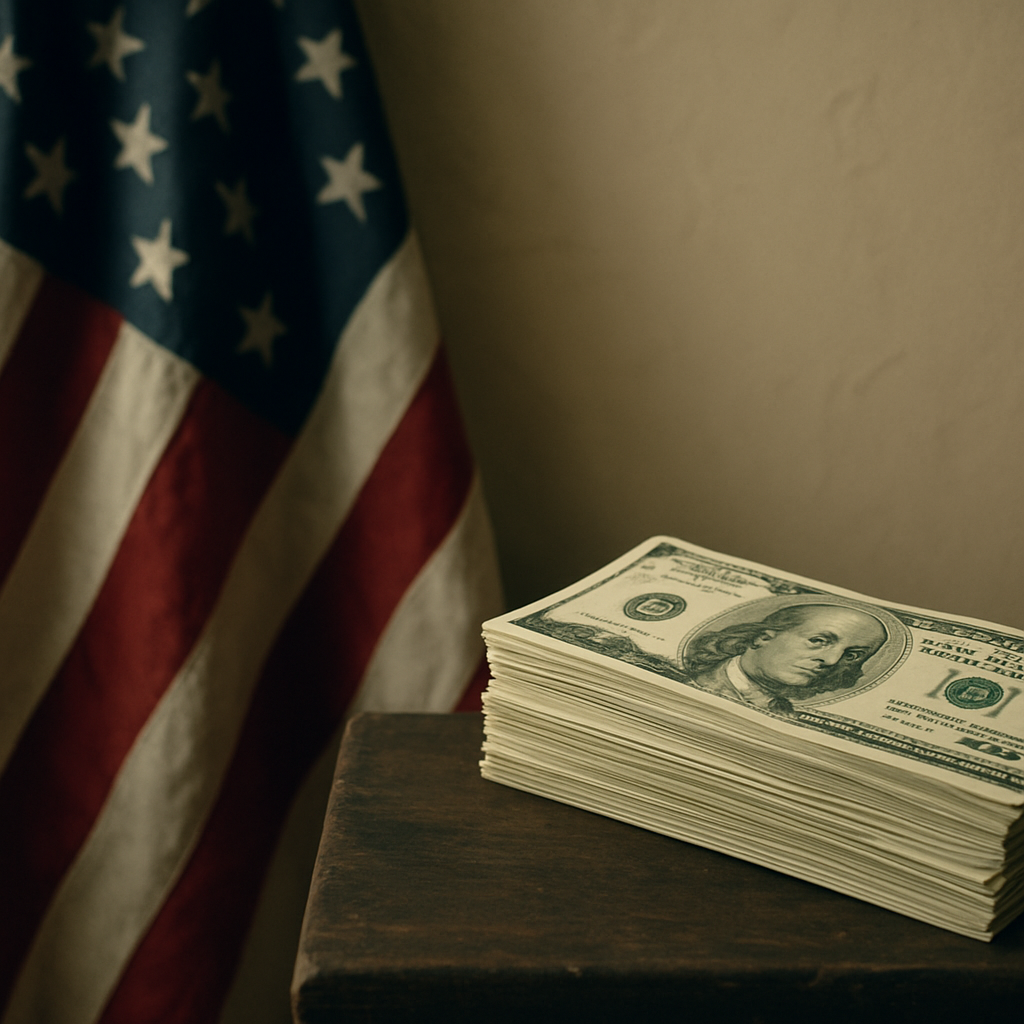
Crypto regulation 2026 gets a fresh political read as Fairshake’s spending shapes primaries and shifts crypto policy news.
Crypto regulation 2026 is no longer an abstract Washington story. It is being stress-tested in state primaries, where a crypto-backed PAC can move hundreds of thousands – sometimes millions – of dollars into local media and reshape the field around candidate viability. In Georgia, Alabama, and Kentucky, the immediate result was not a clean ideological sweep but a pragmatic one: five Republicans and one Democrat advanced or forced runoff contests after heavy outside spending. That tells us something important about crypto policy news in election season: influence often works best when it avoids branding itself as influence. The ads don’t need to mention token policy to matter. They only need to define the race early.
The larger point is that crypto regulation 2026 is being negotiated in two places simultaneously – the ballot box and the committee room. Fairshake’s affiliates have spent aggressively because the industry understands a basic political truth: regulators respond faster when lawmakers fear losing donors, validators, and future officeholders. In that sense, this is not just a story about primaries. It is a story about bargaining power. The spending pattern also suggests that crypto’s political operation has matured well beyond simple defense against enforcement, moving into a more disciplined push for friendlier bitcoin government policy over the long term.
In the latest round, crypto-linked groups reportedly put roughly $20 million into media and ads across the three states. The clearest practical outcome was candidate filtration rather than any headline-grabbing ideological upset – and that kind of result matters, because primaries are where the most responsive politicians get selected and where industry preferences can be translated into long-term legislative probability. The strategy works for two reasons. First, scale: a late-cycle ad buy can still dominate local attention in low-turnout contests. Second, message discipline. Crypto PACs have learned to stay one step removed from explicit policy argument, leaning on generic attack messaging instead. That makes the spending harder to pin down and considerably easier to deploy.
The credibility problem for critics is that this approach has already worked elsewhere. Earlier this cycle, similar spending in other states demonstrated that crypto money can be surgically targeted even when it doesn’t guarantee victory. The broader environment matters too. With regulation, stablecoins, and agency oversight all in motion, even a modest shift in candidate composition can carry outsized consequences. For readers tracking crypto regulatory update trends, the key signal isn’t whether every dollar wins – it’s whether the money steadily narrows the range of acceptable positions in Congress and at the state level. Worth noting: the spending arrived just as several primary calendars tightened ahead of summer runoffs, including crucial June dates.
The most revealing part of this story isn’t the winning or losing of specific candidates. It’s the fact that crypto now behaves like any mature policy industry: it doesn’t need unanimous public support, only enough targeted leverage to keep allies competitive. That’s why the industry’s preferred playbook looks less like a grassroots movement and more like a patient capital allocation strategy. The spending can be read as a market signal in political form. When a sector commits this much to primaries, it isn’t betting on headline optics – it’s pricing in the value of regulatory access. In that sense, crypto regulation 2026 reflects a deeper structural shift: policy formation is becoming a balance-sheet question.
This matters because the next phase of lawmaking will likely reward candidates who can sound cautious without sounding hostile. The industry doesn’t need perfect champions. It needs enough legislators willing to delay, dilute, or redesign proposals – and that is the structural edge embedded in the current pattern. As tracked by Crypto regulation enforcement, the data shows that enforcement pressure and political fundraising often move in tandem, even when the public debate treats them as entirely separate channels. For investors, that convergence should change how they read policy headlines: the real market impact frequently comes from who survives the primary, not who delivers the loudest speech about digital assets.
Crypto regulation 2026 is likely to matter less as a slogan than as a filter on policy risk. Markets shouldn’t assume that every pro-crypto outcome automatically lifts prices, but they should pay close attention to who gains access to the next round of legislative negotiations. That includes state-level races that look local on the surface but quietly shape federal coalitions later. For crypto investors navigating an evolving institutional landscape, the essential question is whether the political map keeps tilting toward pragmatic, industry-aware lawmakers capable of supporting clearer rules without triggering a crackdown.
The next signals to watch are straightforward: runoff results in Georgia, any follow-through spending in Alabama and Kentucky, and whether these PACs continue targeting candidates positioned near committee power. If that pattern holds, crypto regulation 2026 will remain a live trading variable – not just a policy headline. The market typically prices law after it passes. Smart money tries to price it before the vote.
Focus: Crypto regulation 2026 now looks like a contest over political access, not just legal language.
Clara Reyes, Markets & Data Reporter, The Chain Journal
A weekly briefing on Bitcoin price action, Ethereum, crypto market analysis, Bitcoin ETF flows, regulation, digital assets, and the narratives shaping crypto investing.
One sharp weekly read. No daily alerts. No recycled headlines.




