THE CHAIN JOURNAL
Independent Crypto Editorial

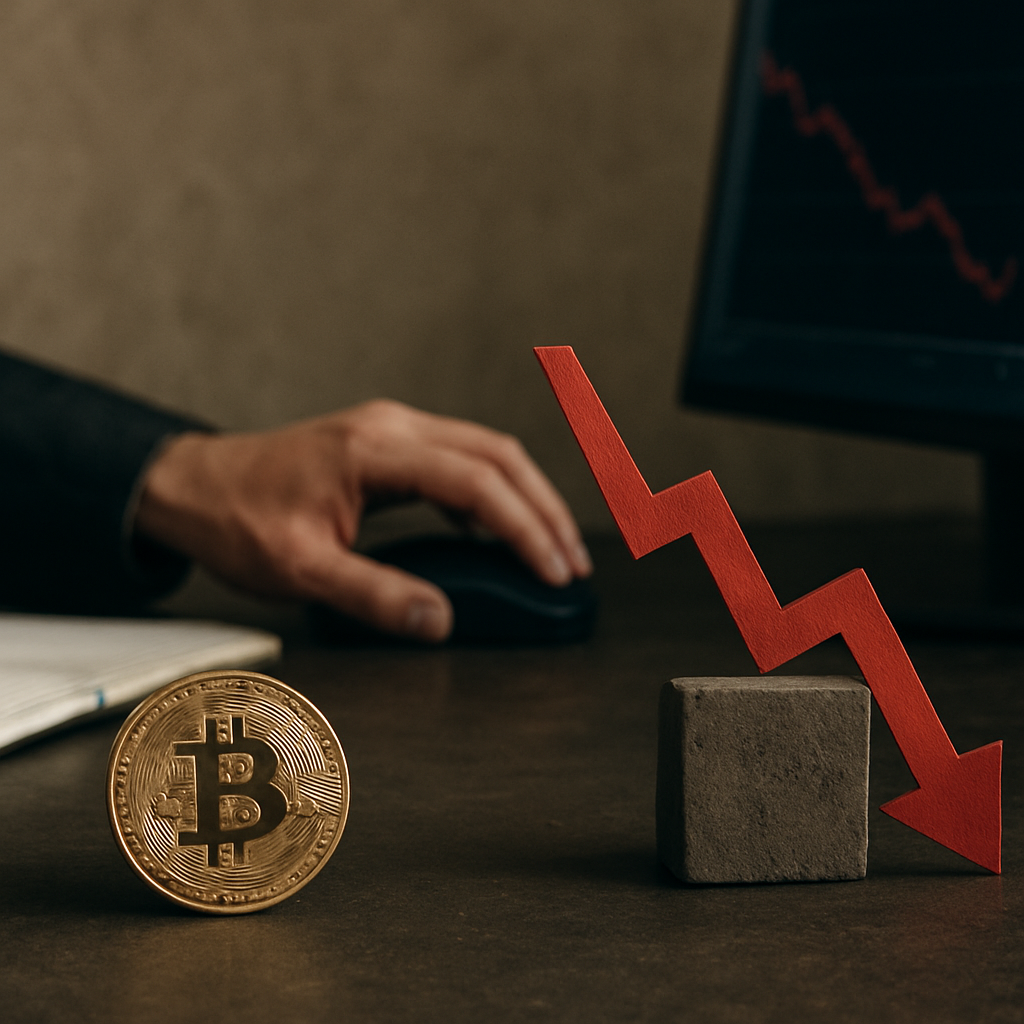
Bitcoin portfolio allocation in South Korea is shifting as stock demand rises, even as bitcoin safe haven debates and bitcoin dollar correlation persist.
Bitcoin portfolio allocation is losing ground in South Korea as local investors increasingly see better near-term opportunity in equities. The latest market snapshot shows crypto holdings have roughly halved in just over a year, sliding from around $83 billion to approximately $41 billion. That is not a collapse in conviction so much as a shift in preference.
When domestic stocks rally hard enough, liquidity chases momentum rather than ideology. In that sense, bitcoin portfolio allocation is behaving like any other discretionary risk bucket: it expands when conviction runs high and contracts when a competing asset class starts delivering cleaner returns. The shift carries real weight because Korea has long been one of crypto’s most active retail markets – meaning allocation changes there tend to reflect broader sentiment shifts well before they surface elsewhere.
The more important point is that this rotation does not automatically undermine the long-term case for digital assets. What it does expose, however, is how fragile the bitcoin safe-haven narrative remains outside genuine stress periods. Investors who once treated BTC as a hedge are now measuring it against a market that feels more immediate, more legible, and in many cases more rewarding. That is a rational response, not a referendum on the asset’s future. It does tell us, though, that bitcoin portfolio allocation remains highly conditional on price action, liquidity conditions, and the opportunity cost of simply holding on.
South Korea’s equity market has absorbed a growing share of domestic risk appetite, and that shift has come directly at crypto’s expense. A rallying stock market offers a cleaner story: earnings, policy support, and sector leadership can all be translated into a straightforward allocation decision. Bitcoin portfolio allocation, by contrast, depends on a more abstract set of assumptions – monetary debasement, long-run adoption curves, macro liquidity cycles. Those arguments can be compelling, but they rarely compete well against a fast-moving equity tape. For investors tracking the mood, the crypto market sentiment gauge tends to confirm the same dynamic: enthusiasm improves when price momentum returns, not when the thesis is merely restated.
The data also fits a pattern that repeats across cycles. When risk assets compete for the same capital, money tends to migrate toward the instrument with the most visible upside and the least friction. In Korea, that instrument has been equities. Elsewhere, a similar dynamic has been partly offset by strong ETF inflows this quarter – but that support has not been evenly distributed across regions or investor types. Bitcoin portfolio allocation can remain structurally significant while still losing tactical share in a specific local market. That distinction matters: a decline in holdings says more about positioning than about any death of underlying conviction.
Increasingly, the honest answer is “sometimes, but not always.” Bitcoin portfolio allocation looks strongest when investors fear inflation, capital controls, or currency instability. It looks far weaker when domestic equities are trending and the macro backdrop is calm. That is precisely why the bitcoin-as-inflation-hedge argument remains useful but incomplete – a hedge only works when the market is actively seeking one. Outside those moments, BTC behaves less like insurance and more like a high-beta macro asset. Within that framework, bitcoin’s correlation to the dollar becomes a critical variable, since a stronger greenback typically tightens global financial conditions and dampens appetite for speculative exposure.
What Korea is demonstrating is not entirely unique, but the signal is unusually clean. Investors are effectively ranking asset classes by immediacy of payoff. Stocks offer cash flows and a familiar policy narrative. Crypto offers optionality and a longer time horizon. The trouble is that optionality gets repriced aggressively the moment sentiment softens. That is why bitcoin portfolio allocation can fall sharply even without a structural bear case materializing. For a broader lens on this dynamic, the Bitcoin Macro Analysis framework remains instructive: macro regimes ultimately matter more than slogans.
Bitcoin portfolio allocation is not disappearing from South Korea – it is being stress-tested by a stronger equity market and a more selective risk environment. The core lesson is that crypto demand remains both cyclical and comparative. When stocks offer clearer momentum, capital moves. When macro uncertainty rises, that same capital can return surprisingly quickly. Korea functions as a useful leading indicator precisely for this reason: it shows how fast enthusiasm can evaporate when another domestic asset class starts working better.
Three signals are worth watching closely from here: whether local equities continue to outperform, whether crypto volumes stabilize and find a floor, and whether BTC reclaims relative strength against the dollar. Should those trends reverse, bitcoin portfolio allocation could recover faster than the headline numbers imply. A sustained rebound would also hinge on whether institutions keep underpinning the market through bitcoin ETF institutional flows rather than leaving the recovery to retail speculation alone.
Focus: bitcoin portfolio allocation is still a macro-sensitive risk choice, not a permanent conviction trade.
Adam McCauley, Senior Blockchain Analyst, The Chain Journal
A weekly briefing on Bitcoin price action, Ethereum, crypto market analysis, Bitcoin ETF flows, regulation, digital assets, and the narratives shaping crypto investing.
One sharp weekly read. No daily alerts. No recycled headlines.