THE CHAIN JOURNAL
Independent Crypto Editorial

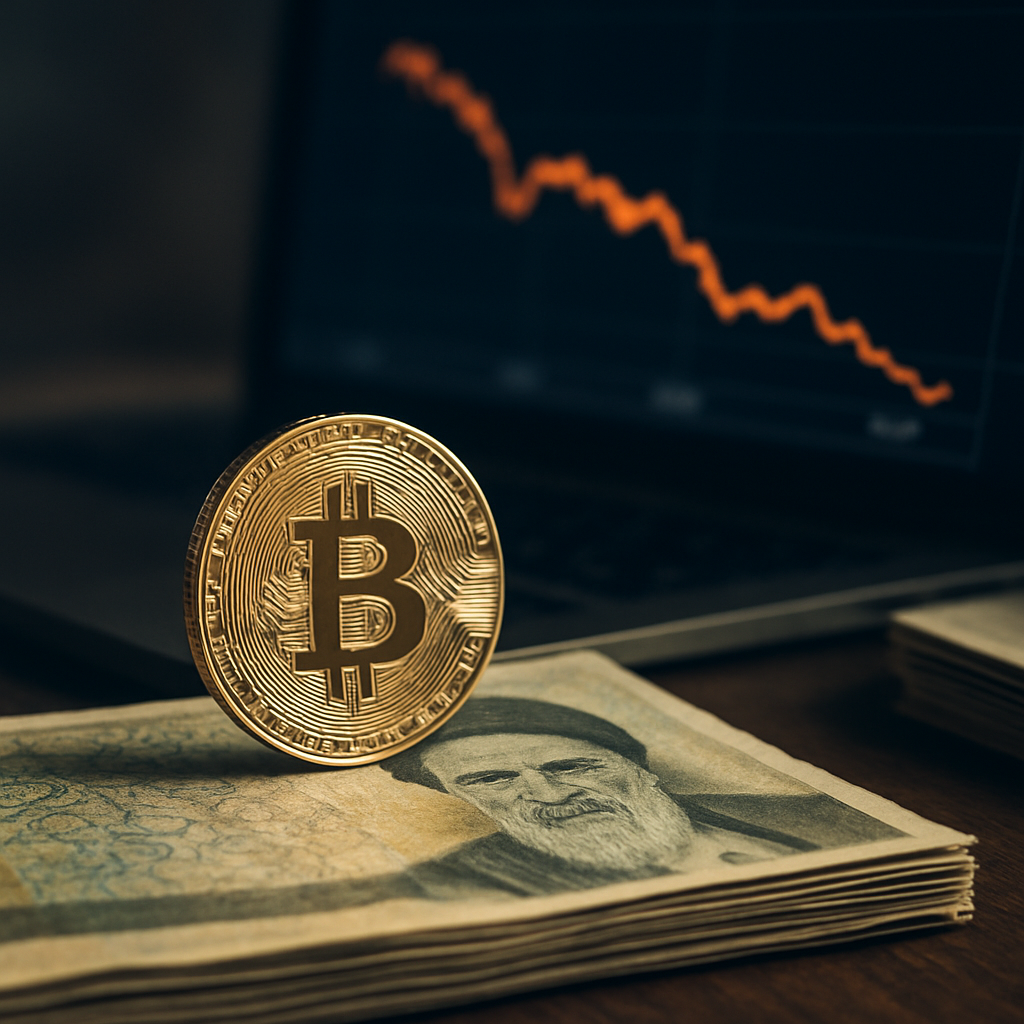
Nobitex and the Kharrazi family sit at the center of Iran crypto exchange scrutiny, with sanctions evasion and 11 million users in focus.
Nobitex is more than a trading venue; it sits inside Iran’s financial pressure system. Reuters reported that the exchange was founded by brothers tied to the Kharrazi family, a politically connected dynasty with links to Iran’s leadership. That matters because the exchange has long been viewed as part of the country’s parallel financial plumbing, not just a retail app for local users. Recent reporting also points to continued use by state-linked actors and to the exchange’s central role in moving value inside a heavily restricted economy. For crypto readers, the story is less about branding than about control: who built the rails, who uses them, and who benefits when traditional channels are closed.
The deeper point is structural. When a large domestic exchange grows inside sanctions pressure, it often becomes both utility and policy instrument. That dual role can hide inside ordinary trading volume. It can also distort how outside observers read Iranian crypto activity, because the market may look commercial on the surface while functioning as a strategic financial workaround underneath.
Reuters’ reporting ties the platform to Ali and Mohammad Kharrazi, who used a different family name in parts of the business history. Other recent coverage says the exchange serves a very large user base, with one estimate putting it around 11 million users, though that figure should be treated as approximate unless independently verified. Separate analysis from blockchain risk firms has also described Nobitex as the dominant domestic venue in Iran and as a recurring node in sanctions-exposed flows. A June 2025 cyberattack, widely reported at the time, further underlined how politically sensitive the platform has become.
The key facts most investors should retain are straightforward:
– Nobitex operates as Iran’s largest crypto exchange.
– Reuters linked its founders to the Kharrazi family.
– The exchange sits in a sanctions-heavy environment.
– Outside scrutiny has intensified after cyber and compliance reporting.
That combination makes the exchange unusually relevant for compliance teams, surveillance analysts, and anyone studying crypto adoption under capital controls. The issue is not whether an exchange exists in Iran. It is whether it functions as a retail venue, a state-adjacent liquidity bridge, or both.
The market should not read this as a simple scandal story. It is a reminder that crypto infrastructure in restricted economies rarely develops in a neutral way. In places where banking access is limited, an exchange can become a de facto settlement layer, a remittance route, and a political asset all at once. That makes headline volume a weak proxy for economic health. It also means foreign observers often overestimate how “open” a market really is when they see on-chain activity without the institutional context.
For nobitex, the real issue is reputational and operational resilience. If regulators, sanctions monitors, or counterparties treat the platform as a high-risk node, access to liquidity becomes more fragile. That can affect spreads, deposit behavior, and user confidence even if domestic demand stays firm. The broader lesson extends beyond Iran: crypto exchanges in closed systems are often built for survival first, transparency second. That order matters when pressure rises.
The investment read-through is not about chasing a trade in isolation. It is about understanding how geopolitical friction can shape crypto liquidity, routing, and exchange concentration. When one venue dominates a restricted market, it can accumulate importance far beyond normal exchange metrics. That creates binary risk: if the platform keeps operating, it reinforces network effects; if it comes under pressure, the local market can reprice quickly. Investors should watch whether more sanctions-related analysis, cyber pressure, or compliance action follows.
The clearest signal to monitor is whether alternative domestic venues gain share or whether users keep clustering around the same center of gravity. A second signal is whether international surveillance firms continue flagging the exchange in sanctioned-flow analysis. Those developments matter more than daily price noise.
Focus: The real story is not that Iran uses crypto; it is that one exchange may have become part of the state’s financial operating system.
Arianna Vaz, Portfolio Strategy Analyst, The Chain Journal
A weekly briefing on Bitcoin price action, Ethereum, crypto market analysis, Bitcoin ETF flows, regulation, digital assets, and the narratives shaping crypto investing.
One sharp weekly read. No daily alerts. No recycled headlines.